

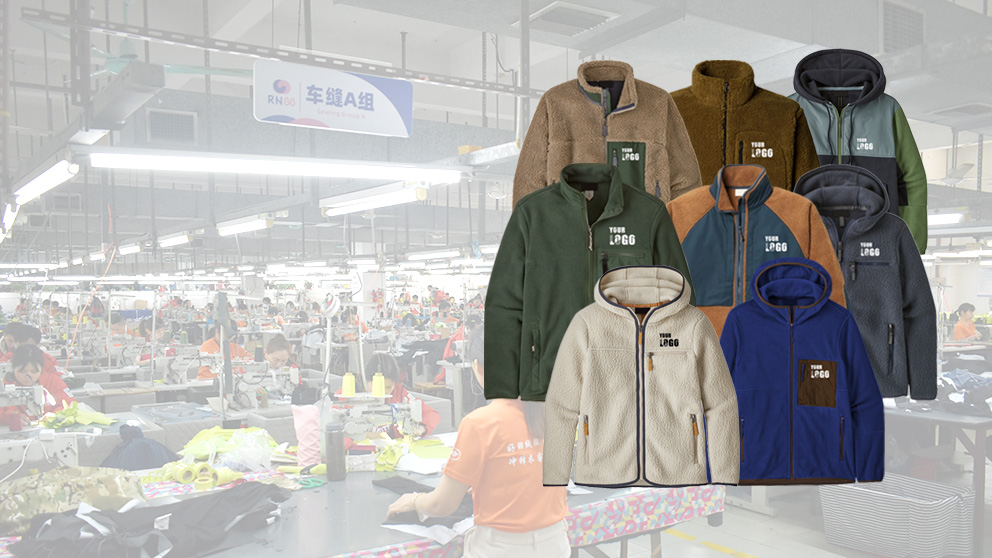
A branded men's fleece jacket program depends on consistent fabric, fit, colour, logo application and repeat-order control. Buyers should specify the product as a retail or uniform program rather than treating branding as a logo added to any available fleece.
Fabric weight, pile, anti-pilling performance, zipper quality and care durability determine whether the jacket still represents the brand after repeated wear.
Quick answer
Define the fleece specification, size range, colour standard, logo method, label set, packaging and reorder plan. Approve branding on the actual fabric and test appearance, adhesion, distortion and colour after the required care cycle.
| Area | What to specify | Approval |
|---|---|---|
| Fabric | Composition, weight, pile, finish and colour | Bulk swatch and test results |
| Fit | Customer profile, layers and size grading | Fit sample across key sizes |
| Branding | Artwork, size, location, colour and method | Logo strike-off on actual fabric |
| Labels | Main, size, care, content and tracking labels | Text, placement and market requirements |
| Reorder | Material codes, shade standard and trim references | Repeat-order comparison process |
Lightweight fleece suits active layering; midweight fleece works for everyday outdoor and uniform programs; heavier fabrics offer more warmth but add bulk. Confirm pilling, shrinkage and colourfastness for the expected wear and washing.
Decide whether the jacket is worn over a T-shirt, work shirt or base layer. Review chest ease, shoulder, sleeve length, hem and collar comfort. Grading should preserve the intended silhouette across the size range.
Embroidery: durable and premium, but needs stabilisation and can distort light fleece.
Heat transfer: supports detail, but adhesion and stretch compatibility must be tested.
Woven patch: offers a clean branded element and controlled colour.
Rubber or silicone patch: creates a technical look but adds weight and requires wash testing.
Brand colours should be approved under an agreed light source and tolerance. Keep supplier codes, lab dips, trim references and approved samples. Reorders may still show lot variation, so define how comparisons will be made.
Approve the nominated fleece and colour standard.
Fit key sizes over intended layers.
Test the logo on actual fabric.
Check labels, content and care wording.
Review washed appearance, pilling and shrinkage.
Store material and trim references for reorders.
Browse RUINIU's custom fleece jacket range for style options.
It depends on fleece weight, pile, artwork and care. A strike-off on the actual fabric is the safest comparison.
Possibly, but fabric and trim minimums may apply per colour. Confirm the colour split before quoting.
Keep approved samples, colour standards, artwork files and material codes, then compare every repeat lot.
Share your wearer profile, colours, logo artwork, quantity and reorder plan. RUINIU can review fabric and branding options for sampling.