
Knitted fabric is made from interlocking loops; woven fabric is made by crossing warp and weft yarns. This structural difference affects stretch, shape stability, breathability, drape and the type of garment each fabric suits.
For jacket buyers, the choice is not simply knit versus woven. The fibre, yarn, weight, finish and construction all matter. This guide provides a practical starting point for material selection and supplier discussions.
Quick comparison
Choose knitted fabric when comfort, stretch and soft drape are priorities. Choose woven fabric when shape stability, wind resistance and structured construction matter more. Stretch wovens and stable knits can narrow this difference, so always evaluate the actual material rather than relying on the category name.
| Property | Knitted fabric | Woven fabric |
|---|---|---|
| Structure | Interlocking yarn loops | Crossed warp and weft yarns |
| Stretch | Usually higher, especially across width | Usually lower unless elastane or stretch construction is used |
| Shape | Soft drape; may grow or curl | More stable and structured |
| Air movement | Often more open and breathable | Can be tightly woven for wind resistance |
| Typical use | Fleece, jersey, cuffs and stretch layers | Windbreakers, shells, trousers and structured jackets |
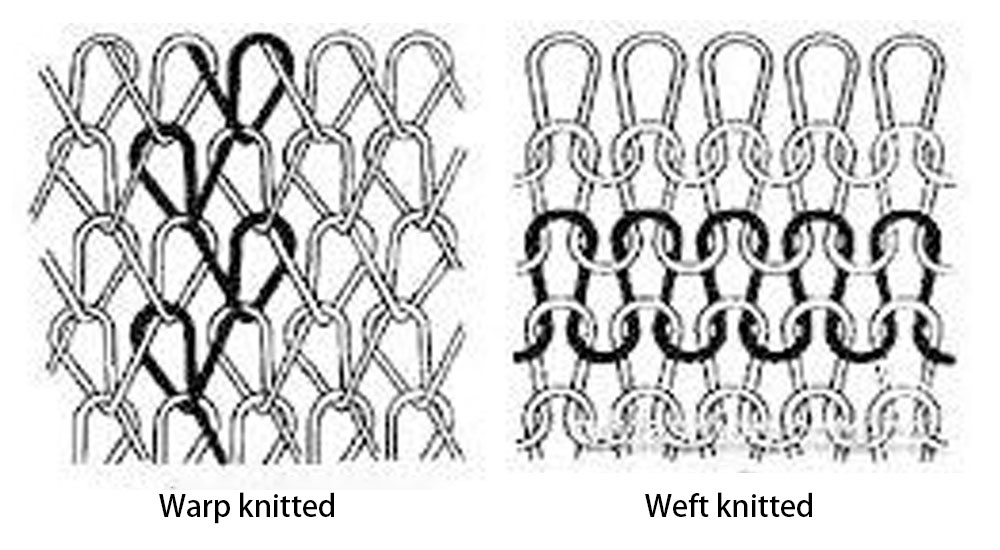
Look closely at the surface. Many knits show small V-shaped loops on the face and curved loops on the reverse. Gently pull the fabric across its width; it will usually stretch more easily than a comparable woven. Cut edges may curl, and a snag can sometimes cause a loop to run.
Common examples include single jersey, interlock, rib, French terry and knitted fleece. These fabrics are useful where the garment needs comfort and movement. A custom fleece jacket may use a knit body fabric, while rib knit is often used at bomber cuffs and waistbands.
Woven fabric commonly shows a grid or diagonal structure where two yarn systems cross. It tends to stretch less in the length and width, although it may move on the bias. Cut edges usually fray rather than curl.
Plain weave, twill, ripstop and satin are woven constructions. Tightly woven nylon and polyester are widely used for windbreaker jackets because the stable structure supports coatings, finishes, pockets and shaped panels.
Lightweight shells and wind-resistant jackets usually rely on woven fabrics. Midlayers, fleece styles and comfort-led garments often use knits. Softshell jackets may use a stretch-woven face bonded to a knitted backing, combining external stability with comfort next to the body.
The garment design should drive the choice. A fitted hiking jacket needs different stretch and recovery from a casual fleece. A packable windbreaker needs low weight and tear resistance, while a work jacket may prioritise abrasion resistance and shape retention.
鈥淧olyester knit鈥?or 鈥渘ylon woven鈥?is not a complete fabric specification. Two materials with the same fibre and structure can perform very differently. Include the following information when requesting options:
fibre content and blend percentage;
fabric weight and usable width;
construction or weave;
stretch direction and recovery;
coating, membrane, brushing or water-repellent finish;
colour, hand feel and appearance standard;
required test method and target.
Testing should match the garment's use. Buyers commonly review dimensional stability, colourfastness, pilling, abrasion, tear or tensile strength, stretch recovery and seam performance. Weather-resistant outerwear may also need water-resistance or breathability tests. Test the approved bulk material when performance is critical.
Material approval checklist
Compare the swatch with the intended end use.
Confirm stretch, recovery and drape on a garment sample.
Record weight, colour and finish in the bill of materials.
Approve test methods before ordering bulk fabric.
Keep a signed or sealed reference for incoming inspection.
Usually, but not always. A dense stable knit may stretch less than a woven fabric containing elastane. Test the actual material in the required direction.
Durability depends on fibre, yarn, density, finish and use. Wovens often provide good shape and abrasion resistance, while some technical knits are engineered for demanding performance.
Yes. Jackets often combine a woven shell with knitted cuffs, stretch panels, mesh or fleece backing to place different properties where they are needed.
Share your jacket design, intended use, target market and performance requirements with RUINIU. We can review practical woven, knitted and bonded material options for sample development.