
The right clothing manufacturer is not necessarily the factory with the lowest price or the largest workshop. It is the supplier whose product experience, order-size range, quality-control process and communication model match your project.
For overseas brands, the main sourcing risks usually appear after development begins: the bulk fabric differs from the approved sample, the factory cannot meet a performance requirement, the actual minimum order quantity is higher than expected, or production is subcontracted without clear approval. A structured supplier review helps identify these issues before you pay for samples or materials.
This guide explains how to shortlist and verify a clothing manufacturer in China, with additional considerations for technical outerwear such as custom windbreakers, softshell jackets, insulated down jackets and waterproof shells.
At a glance
Quick supplier checklist
Before placing an order, confirm: product specialization, realistic MOQ, sample process, material sourcing, in-line inspection, testing responsibility, production ownership, compliance documents, lead time and communication contacts.
China remains an important apparel sourcing market because it combines fabric and trim suppliers, pattern development, specialized garment production and export services within established manufacturing networks. The practical advantage is not simply lower labor cost. It is the ability to coordinate several parts of a complex product in one supply chain.
Broad material access: Buyers can compare shell fabrics, linings, insulation, zippers, tapes, labels and packaging through established supplier networks.
Different manufacturing models: Suppliers range from high-volume factories to specialized OEM/ODM manufacturers and smaller production workshops.
Technical specialization: Some factories focus on particular categories such as knitwear, uniforms, sportswear or weather-resistant outerwear.
These advantages only matter when the supplier is suitable for the product. A factory that performs well with basic hoodies may not have the machinery, construction experience or testing process required for a seam-sealed waterproof jacket.
Before contacting suppliers, define what the factory must be able to produce. Your first brief should include the garment category, target market, expected order quantity, size range, target price, required delivery date and any performance or compliance requirements.
| Requirement | What to provide | What to confirm |
|---|---|---|
| Product | Tech pack, reference sample or clear specification | Similar products currently made by the factory |
| Quantity | Units per style, color and size range | Factory MOQ plus fabric and trim minimums |
| Performance | Waterproof, breathability, insulation or durability targets | Test method, responsible party and approval standard |
| Compliance | Destination market and buyer requirements | Current certificates and their exact scope |
| Timeline | Target sample and delivery dates | Material, sample and production lead times |
Best for: established brands and high-volume programs
Large factories are usually structured for repeatable, high-volume programs. They can be a good fit for established brands with stable forecasts, but their development process and minimum quantities may not suit a small seasonal order.
Best for: technical garments and category-specific products
A specialized manufacturer concentrates on a narrower product category. For technical outerwear, relevant capabilities may include fabric evaluation, seam sealing, pattern engineering, insulation handling and garment performance checks. Ask to see recent examples that are comparable to your design.
Best for: straightforward garments with standard construction
General factories may be competitive for straightforward garments. However, buyers should confirm whether specialist operations, testing or material sourcing will be completed in-house or by an approved partner.
Best for: buyers needing multi-factory sourcing coordination
A trading company coordinates production through one or more factories. This model is not automatically unsuitable, but the buyer should know who owns production, who approves changes and who is responsible for quality issues. Transparency matters more than the label a supplier uses.
For a document-by-document process, use this clothing factory verification checklist, covering business records, live production checks, audits, samples and payment details.
Ask for the registered company name, business licence, production address and export entity. The names shown on quotations, invoices, certificates and payment instructions should be explained if they are different.
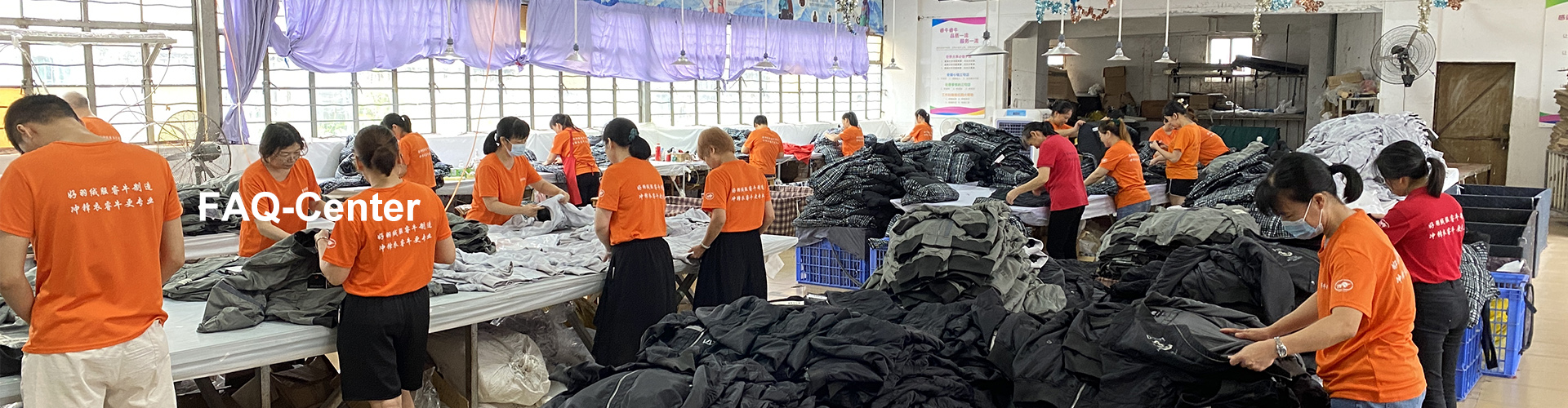
Use an on-site visit, third-party audit or live video tour to review the sample room, cutting area, sewing lines, special processes, quality checkpoints, packing area and warehouse. A tour should show current production rather than only a showroom.
Request comparable samples and discuss construction details with the merchandiser or technician. For waterproof outerwear, this may include seam-tape compatibility, seam allowance, zipper construction, hood adjustment and the agreed test method.
If a project requires ISO 9001, BSCI, SMETA, OEKO-TEX, GRS, RDS or another standard, request the current document and verify the certificate holder, validity period, product scope and facility address. A material certificate does not automatically certify the finished garment or every product made by the factory.
Before development starts, compare the custom jacket cost structure and confirm sample charges, included rounds and bulk quotation terms.
A development sample is often made with extra attention and may use substitute materials. Before bulk cutting, approve a pre-production sample made with the confirmed construction, fabric, trims, labels, colors and size specifications.
The production agreement should record:
approved bill of materials and color standards;
measurement tolerances and workmanship criteria;
required laboratory or in-house tests;
inspection stages and acceptance method;
rules for substitutions, repairs and production changes;
packing, labelling and shipping requirements.
For a first order, consider an in-line inspection while corrections are still possible and a final inspection before the goods are released.
Which similar products have you made recently?
What is the MOQ for each style and color, and do material minimums differ?
Which operations are completed at your facility and which are subcontracted?
Who will review the tech pack and raise technical questions?
How many sample rounds are expected, and what does each round cost?
How are bulk materials approved and controlled?
What inspections and tests are included in the quotation?
What is the estimated lead time after all approvals and deposits are complete?
There is no single industry-wide MOQ. The final minimum depends on the factory model, garment complexity, fabric availability, custom dyeing, trims and the quantity per color. Ask for both the garment MOQ and the material minimum before starting development.
Check the registered business information, production address and payment entity, then inspect the production site through a visit, third-party audit or live video. Also ask which processes are completed at that address and which are outsourced.
Certifications can support due diligence, but they do not replace product evaluation and production control. Verify that each document is current and relevant to the factory, material or product covered by your order.
Approve the pre-production sample, measurements, construction, bulk fabrics, trims, colors, artwork, labels, packing method, testing plan and inspection criteria in writing before authorizing bulk cutting.
RUINIU supports OEM and ODM development for windbreakers, softshell jackets, insulated jackets, ski apparel and other outdoor outerwear. Share your tech pack, reference sample, expected quantity, target market and required performance so the team can review feasibility, material options and the applicable MOQ.
Email: jacket3@ruiniufashion.com
WhatsApp: +86 189 2865 0351
Contact: Request a project review