
Custom down jackets make sense when fit, materials, brand identity and repeatability matter. Ready-made jackets make sense when speed, low commitment and a simple logo application matter more. The right choice depends on order volume, launch date, budget and how different the product must be from existing market styles.
Buyers should compare total project cost rather than unit price alone. Sampling, testing, labels, packaging, freight, excess stock and future reorder consistency can change the result.
Quick answer
Choose custom manufacturing for a distinctive product, controlled specifications and planned repeat orders. Choose ready-made stock for a short deadline, smaller trial or promotional need. A semi-custom route—an existing block with selected fabric, colour and branding changes—can sit between the two.
| Decision point | Custom production | Ready-made stock |
|---|---|---|
| Product control | Fit, shell, fill, baffles, trims and labels can be specified | Limited to available styles, colours and sizes |
| Development | Pattern, samples and approvals required | Usually limited to stock confirmation and branding |
| Order commitment | Depends on material and production minimums | Can be lower if stock is available |
| Best for | Brands building a repeatable outerwear range | Events, tests, uniforms and urgent small orders |
| Main limitation | More decisions and a longer approval path | Less differentiation and uncertain replenishment |
Custom production is useful when the jacket must match a house fit, climate, customer price point or visual identity. The brand can define fill type, fill power where relevant, fill weight by size, baffle construction, shell weight, hood shape, pocket layout and trim finish.
The advantage is control, not unlimited choice. Every special material or trim must be available in the required quantity and compatible with the construction.
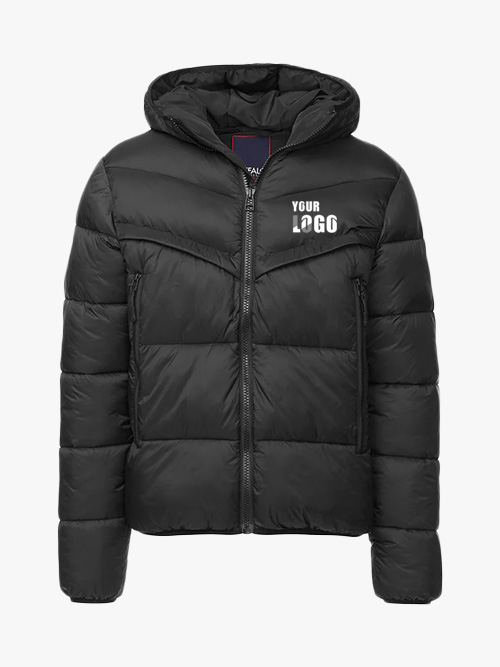
Ready-made jackets can work for a market test, team order or short promotion. They reduce development work, but buyers should inspect the available size ratio, care label, fill documentation, colour continuity and branding method. Reorders may not match if the original stock is exhausted.
A factory may offer an established pattern that can be adapted with selected shell colours, trims, labels and logos. This can shorten development while creating more brand distinction than stock decoration. Confirm which changes affect MOQ, price and timing.
Down or synthetic fill type and documented composition
Fill power and test method when it is part of the specification
Fill weight by size and body zone
Baffle layout, cold spots and leakage control
Shell downproofness, weight and water resistance
Care, labelling and destination-market requirements
For quotation planning, review the guide to down jacket manufacturing cost factors.
Add sample, pattern and testing charges.
Separate material minimums from garment MOQ.
Include labels, packaging and freight.
Estimate markdown risk for fixed stock size ratios.
Check repeat-order availability and colour continuity.
Compare delivered cost for the same specification and terms.
Yes, depending on material availability and the factory's production terms. Keeping one fabric and fewer colours usually makes the first order easier to place.
Not always. It can reduce development expense, but stock price, branding, size availability and replacement risk should be included.
A reference can communicate fit and construction, but brands should avoid copying protected designs and should create their own specification.
Tell RUINIU your quantity, deadline, price level and required changes. We can help determine whether custom, semi-custom or available stock is realistic.