
There is no single minimum order quantity for every custom jacket made in China. MOQ is normally quoted per style and often per colour. It depends on whether the fabric and trims are available from stock, how many colourways and sizes are required, and how much production setup the design needs.
Short answer: many custom jacket discussions start somewhere around 100–500 pieces per style, but this is only a planning range—not a factory promise. A simple jacket using stock materials may be workable at the lower end. Custom-dyed fabric, specialised membranes, unique trims or complex construction can move the minimum higher.
MOQ means the smallest production quantity a supplier can accept under a particular specification and price. The important phrase is “under a particular specification.” Changing the shell fabric, colour, zipper, logo method or size breakdown can change the answer.
When comparing quotations, check the unit behind the number. “300 pieces” could mean 300 pieces in one style and one colour, or 300 pieces across several colours with a minimum for each colour. It may also exclude samples. Ask the supplier to write the MOQ basis directly on the quotation.
| Factor | Why it affects the minimum | Lower-risk option for a first order |
|---|---|---|
| Shell fabric | Mills set their own weaving, knitting, dyeing or coating minimums | Choose an approved stock or running fabric |
| Colour | Each custom colour may require a separate dye lot | Launch with one or two commercially useful colours |
| Trims | Custom zippers, snaps, pullers, labels and elastic have supplier minimums | Use standard trims and customise labels or pullers selectively |
| Construction | Seam taping, quilting, bonding and multi-layer assembly require more setup | Keep the first style focused on essential features |
| Size range | Very small quantities in each size make cutting and line balancing inefficient | Use a realistic size ratio based on the target market |
| Factory schedule | Small runs are harder to place during peak production months | Plan earlier and allow a flexible shipment window |
Product category is a useful starting point, but material availability is often more decisive. A custom fleece jacket made from a running fabric and standard zipper can be relatively straightforward. The same fleece style with a custom-matched colour, branded zipper tape and several contrast panels may require a larger commitment.
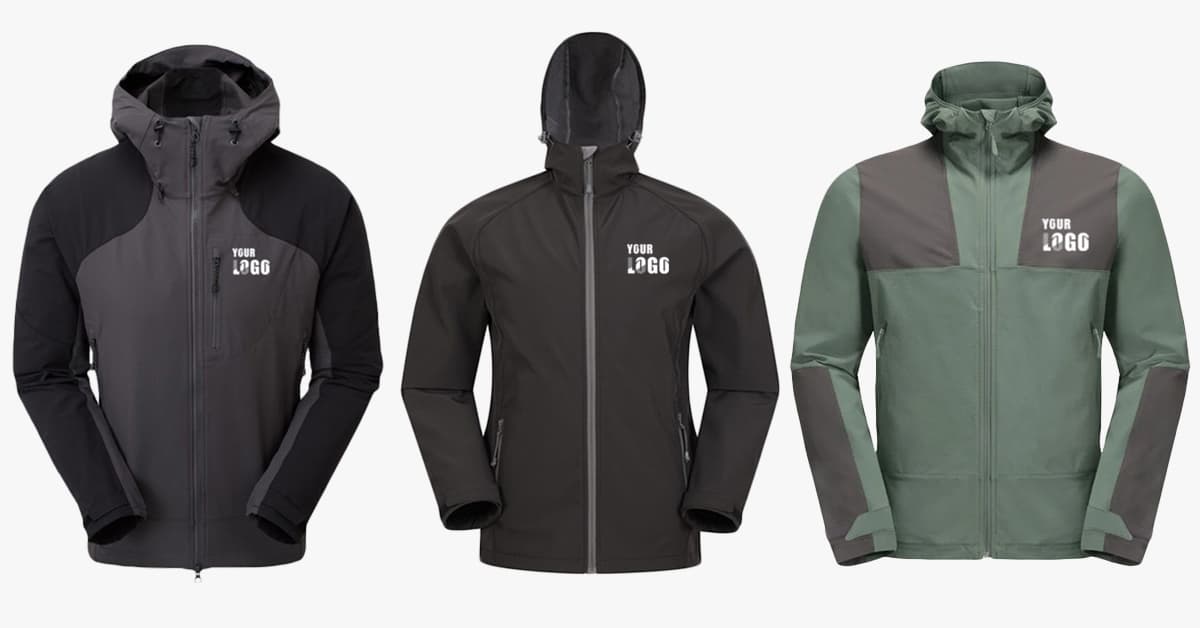
A custom softshell jacket can use an existing bonded quality, while a waterproof shell may involve a specific membrane, coating, seam tape and compatibility tests. Down and puffer jackets add fill sourcing, baffle construction and fill-weight control. The factory therefore needs the actual tech pack before confirming a reliable minimum.
A quotation should state all three levels clearly:
Per style: the total quantity for one design and construction.
Per colour: the minimum needed for each shell colour or dye lot.
Per size: the smallest practical quantity for each size within the total order.
For example, a supplier may accept several sizes within one colour because all pieces use the same fabric lot. Adding a second custom colour can be more difficult than adding another size. This is why “Can I order 100 pieces?” is incomplete without a colour and size breakdown.
Sometimes, but the solution usually involves changing the commercial setup. A lower quantity may carry a higher unit price, use available materials, limit colour choices or require the buyer to purchase excess fabric and trims. The factory still has real setup and sourcing costs even when fewer jackets are sewn.
The most practical ways to discuss a smaller first run are:
Use an existing fabric quality and available colour.
Start with one style and one or two colours.
Use standard zippers, snaps, cord and elastic.
Customise the parts customers actually see: label, embroidery, print or puller.
Ask for two quotations: the requested trial quantity and the factory's efficient quantity.
A very small run lowers inventory exposure, but it can increase the cost per jacket and leave less room for replacement pieces. If the material is custom-made, the buyer may still need to pay for a full fabric lot. Shipping and testing costs are also spread across fewer units.
Compare the landed cost, not only the sewing price. Include sampling, testing, labels, packaging, freight, duties and any unused material liability. For some programmes, a slightly larger but production-efficient order is safer than a tiny order with high surcharges and no repeat-material guarantee.
MOQ enquiry checklist
Jacket type and end use
Tech pack or clear reference sample
Fabric composition, performance targets and preferred colour
Number of styles and colourways
Estimated size ratio
Logo methods, labels, trims and packaging
Target quantity, target price level and required delivery window
Destination market and any mandatory testing requirements
If your design is still being defined, begin with the custom outdoor jacket options and identify the construction closest to your range. Buyers planning weather protection can compare a custom windbreaker with more technical waterproof constructions before requesting a production minimum.
Usually per style, with additional minimums per colour. Do not assume that unrelated designs can be combined. Ask the factory to confirm the rule in writing.
Usually yes, provided the size ratio is workable. Extremely small quantities in individual sizes can still create cutting and production problems.
Not automatically. It can change if fabric is discontinued, a trim supplier changes its minimum, the colour must be redyed or the repeat order is placed during a different production season. Confirm availability before planning a replenishment date.