
Quick answer: Polar fleece is usually polyester‑based and is widely used for lightweight, quick‑drying outdoor layers. Cotton fleece often has a familiar cotton‑rich hand feel and is common in casual or lifestyle garments, but it generally absorbs more moisture and dries more slowly. For a brand, the right choice depends on the intended use, fabric weight, hand feel, care requirements and target cost.
| Factor | Polar fleece | Cotton fleece |
|---|---|---|
| Common fiber | Polyester | Cotton or cotton blend |
| Moisture behavior | Lower absorption and faster drying | More absorbent and usually slower drying |
| Typical use | Outdoor mid‑layers and lightweight jackets | Casual jackets, sweatshirts and lifestyle pieces |
| Hand feel | Varies from smooth microfleece to high pile | Soft, familiar cotton‑rich touch |
| Dimensional stability | Generally easier to control after proper finishing | Shrinkage should be checked carefully before bulk production |
| Common product positioning | Outdoor, workwear and active layers | Casual, lifestyle and streetwear |
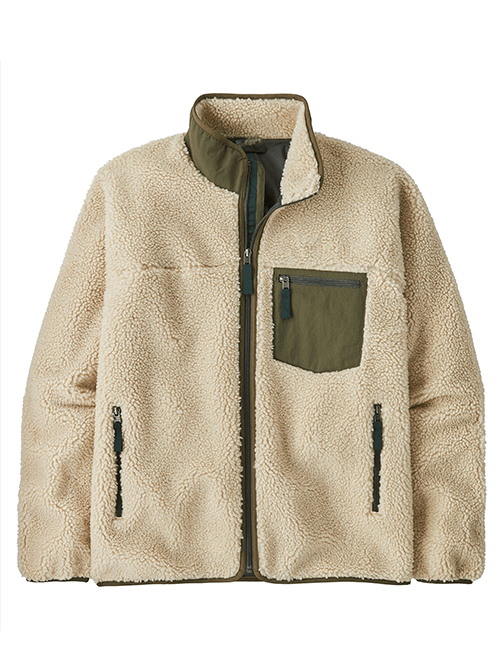
Polar fleece is a knitted fabric with a raised surface that traps air. It can be produced in different weights, pile heights and finishes. Outdoor brands often choose it for mid‑layers because it provides warmth at a relatively low weight and absorbs less moisture than cotton‑rich fleece.
Not all polar fleece performs the same. Density, yarn, knit structure, brushing and anti‑pilling treatment can change the appearance, warmth and durability. Buyers should approve the actual production fabric, including finished GSM and surface appearance, rather than specifying only “polar fleece.” For other performance considerations, see our guide to the disadvantages of fleece jackets.
Cotton fleece is commonly a knitted fabric with a smooth face and a brushed or looped inside. Some fabrics are 100% cotton, while many use cotton‑polyester blends to improve dimensional stability and durability or to balance fabric cost. Cotton‑rich fleece is commonly used for casual jackets, sweatshirts and lifestyle garments where hand feel is a higher priority than quick drying.
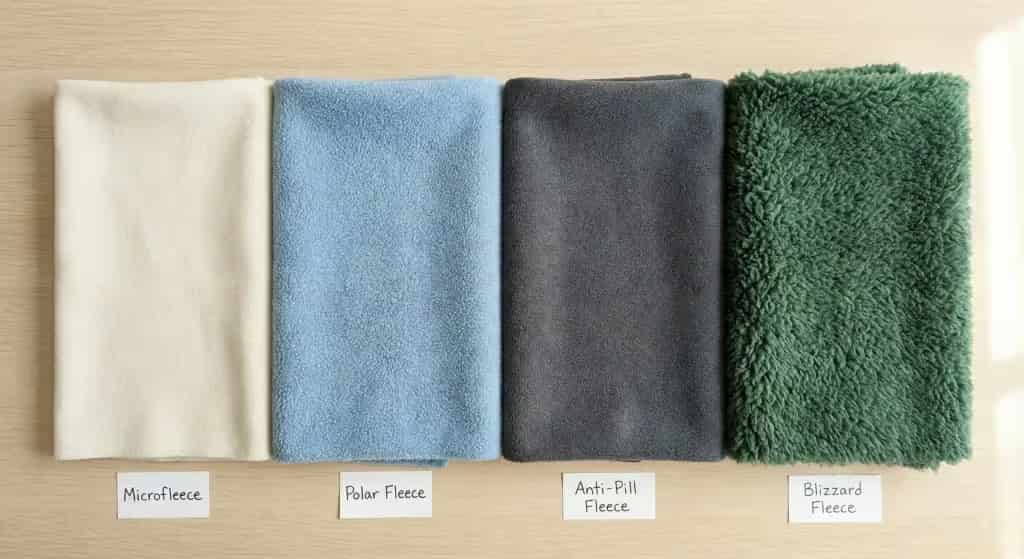
Fiber name alone cannot answer this. Warmth depends on fabric weight, thickness, density, pile and garment construction. A heavier cotton fleece may feel warmer than a lightweight polar fleece, while a high‑loft polar fleece may provide comparable or greater warmth at a lower fabric weight. For product development, compare actual fabric swatches and finished samples rather than relying only on the fiber name.
Polar fleece is usually the more practical starting point for hiking, travel and outdoor layering because it offers a good warmth‑to‑weight balance and dries faster than cotton‑rich fleece. Cotton fleece may suit urban outdoor collections, casual workwear or lifestyle products where hand feel and garment weight are part of the design. For wet or windy conditions, neither material should be treated as a substitute for a protective outer shell.
Fiber composition and finished GSM
Pile height, surface appearance and anti‑pilling finish
Shrinkage, colorfastness and dimensional stability
Stretch and recovery where the design requires it
Embroidery, printing or other logo compatibility
Care instructions and any buyer‑ or market‑specific testing requirements
The fabric should match the garment’s intended use, target customer and cost. Compare actual swatches for composition, finished GSM, hand feel, surface appearance and shrinkage. Once a fabric is selected, use that same construction for the garment sample before the specification is finalized. Different fleece constructions can change the drape and finished measurements of the garment.
For more detail on fabric selection, sampling and bulk production, see our fleece jacket manufacturing guide.
RUINIU develops custom fleece jackets for outdoor, workwear and private label programs. Before sampling, we can check whether the selected fleece suits the intended fit, garment construction and trim details.
Send us your tech pack, reference sample or product images for review. MOQ starts from 100 pcs per style/color, sample development normally takes 7‑10 days, and bulk production is normally 35‑50 days after sample and material approval.