
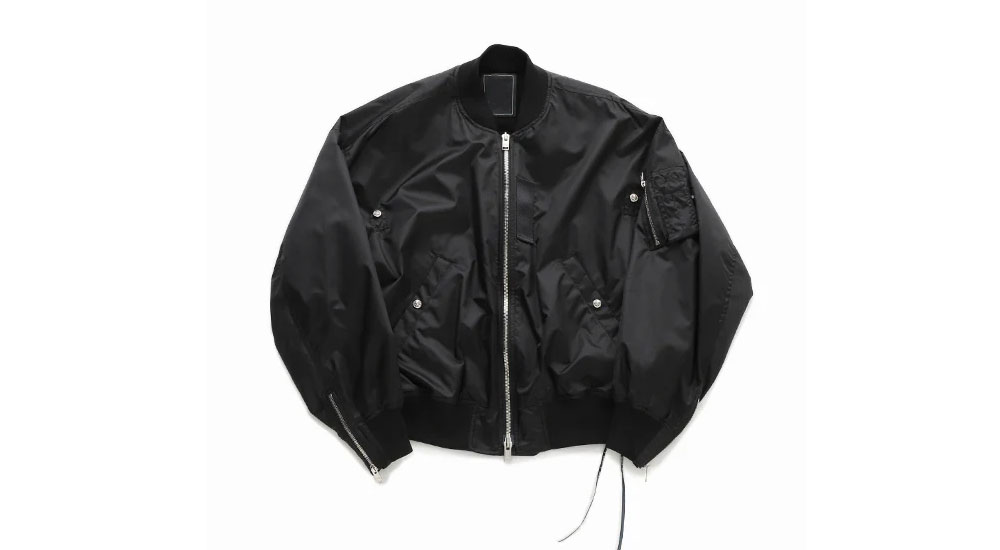
A high-quality bomber jacket should look balanced, move comfortably and remain stable after wear and cleaning. Fabric alone is not enough. Buyers should also inspect the rib, zipper, lining, stitching, pocket construction and measurements.
The checklist below is designed for fashion brands, uniform suppliers and sourcing teams reviewing a sample or pre-shipment inspection for a custom bomber jacket.
Quick inspection
Check eight areas: shell fabric, lining, rib stretch and recovery, zipper operation, seam appearance, pocket strength, measurement accuracy and overall symmetry. Compare the garment with the approved sample and written specification rather than judging appearance alone.
| Area | What to inspect | Common warning sign |
|---|---|---|
| Shell | Colour, hand feel, marks and shade consistency | Panel-to-panel shade difference |
| Rib | Recovery, density, colour and attachment | Loose cuffs or a stretched waistband |
| Zipper | Smooth travel, top alignment and reinforcement | Wavy zipper or catching slider |
| Stitching | Even seams, backtacks and clean thread ends | Skipped stitches or puckering |
| Fit | Measurements, sleeve balance and symmetry | Twisting body or uneven hem |
Quality is measurable only when the buyer and manufacturer use the same reference. Keep the approved sample, measurement chart, bill of materials, colour standards, artwork and workmanship notes together. A garment can look acceptable and still be wrong if the fabric weight, lining, zipper or dimensions differ from approval.
Check the shell under consistent light for stains, needle marks, coating damage and shade variation. Lightweight nylon and polyester shells should not show obvious pulling around seams. If the bomber is padded, the insulation should be evenly distributed without thin areas or clumps.
The lining should sit cleanly inside the jacket without hanging below the shell or restricting movement. Check that facing edges, interior pockets and care labels are securely attached.
The collar, cuffs and waistband define the bomber silhouette. Stretch each area gently and confirm that it returns to shape. Rib that is too loose gives a tired appearance; rib that is too tight can distort the zipper, hem or sleeves. Compare colour and texture across all rib components, especially when they come from different dye lots.
Open and close the front zipper several times. The slider should move smoothly, and the two front edges should meet at the same height. Inspect the bottom stop, zipper ends and nearby stitching for reinforcement. Put a hand into each pocket to check usable depth, pocket-bag attachment and sharp unfinished edges.
Look for consistent stitch density, straight topstitching, secure backtacks and trimmed thread ends. Turn the garment inside out where possible. Shoulder seams, sleeve seams and pocket positions should be symmetrical. Place the jacket flat and check whether the body, hem or sleeves twist.
Use the agreed measuring method and allow the garment to relax before checking it. Measure chest, body length, shoulder, sleeve length, bicep, cuff and hem. Record the result rather than marking only pass or fail. This makes recurring pattern or sewing issues easier to trace.
A sample review confirms design, fit and construction. Bulk inspection checks whether production follows the approved standard. For a new style, use an in-line inspection to catch systematic issues early, then complete a final inspection after packing. Agree in advance on sampling level, defect categories and acceptance criteria.
Before approving a bomber jacket, confirm:
shell, lining and rib match the approved materials;
measurements fall within written tolerances;
zippers and pockets work on every sample checked;
logos, labels and colours are correctly positioned;
packing matches the purchase order.
There is no single best fabric. Nylon and polyester suit lightweight or weather-resistant bombers, while cotton blends, wool blends and synthetic leather create different looks and uses. Select the material according to season, target price, care method and required performance.
Check stretch and recovery on the approved sample, then confirm colourfastness and dimensional stability when required. Bulk rib should match the approved density, width and colour.
Approve the pre-production sample, measurement chart, materials, trims, colours, artwork, labels, packing and inspection standard in writing.
RUINIU supports OEM and ODM bomber jacket development for brands and wholesale programs. Share your design, material direction, size range, quantity and target market for a practical production review.