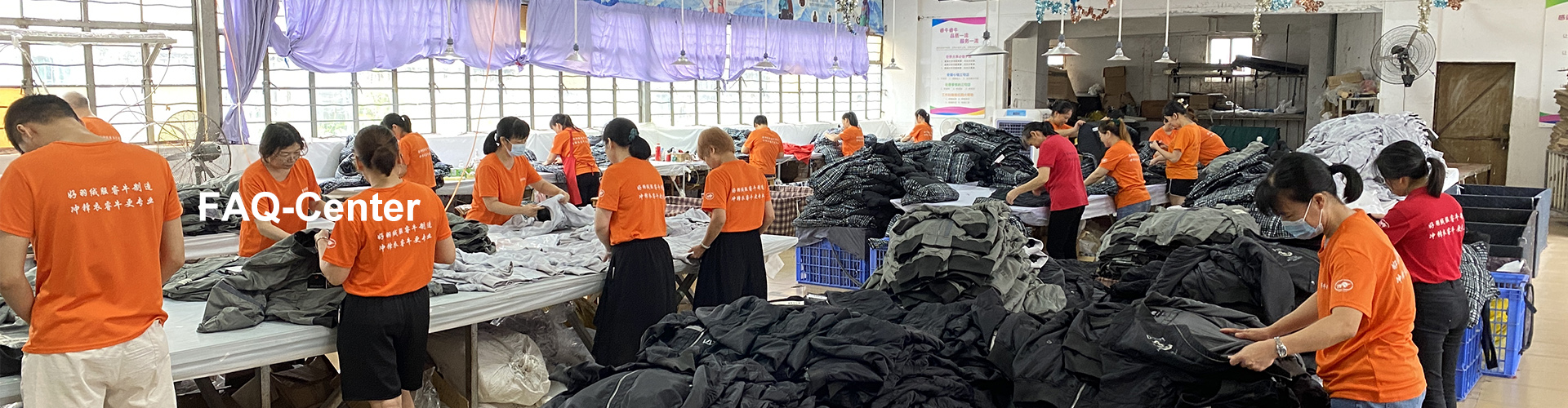

Clothing manufacturing in China can offer broad material access, specialised production clusters, flexible product development and export experience. These advantages are useful only when the buyer has a clear specification, verifies the actual factory and manages samples, quality, communication and delivery terms.
China is not automatically the lowest-cost or best source for every product. Compare landed cost, quantity, complexity, lead time and supply-chain risk with other available regions.
Quick answer
China is a practical manufacturing option for brands that need established fabric and trim networks, technical jacket processes and scalable production. Buyers should balance those benefits against communication, travel, compliance, freight, minimums and the need for active quality control.
| Potential advantage | Why it helps | Buyer control |
|---|---|---|
| Material network | Access to fabrics, zippers, trims and packaging | Approve supplier codes, bulk lots and documents |
| Specialised processes | Jacket clusters may support taping, bonding, quilting and filling | Verify the process on the intended product |
| Development options | OEM, ODM and semi-custom routes are available | Define ownership, sample stages and change limits |
| Scale | Production can grow with an established product | Check realistic capacity and repeat-order planning |
| Export experience | Many suppliers understand international documentation and packing | Confirm destination-specific responsibilities |
Outdoor jackets combine shell, lining, membrane, insulation, zippers, cord systems, labels and packaging. A developed supply network can shorten option searches and make coordinated sampling easier. Buyers still need traceable material codes and approval records.
Some factories specialise in waterproof shells, softshells, down or ski products. That can provide relevant machines and operator knowledge. Verify recent work with similar fabric and construction rather than assuming every apparel factory has the same capability.
Brands with complete tech packs can use OEM development, while buyers seeking a faster starting point may adapt an ODM style. A hybrid route can reuse a proven block with selected material and detail changes. Put design ownership and confidentiality in writing.
Language and time-zone gaps can delay decisions.
Material minimums may exceed the garment order.
A trading company may be presented as a direct factory.
Samples may use substitutes unless bulk materials are approved.
Freight, duties and inspections change landed cost.
Destination-market compliance remains a buyer responsibility unless otherwise agreed.
Confirm the legal company and production location.
Review recent products from the same category.
Send a consistent RFQ and tech pack.
Separate material, colour and garment minimums.
Approve a bulk-equivalent sample and test plan.
Document inspection, delivery basis and change control.
Use the detailed guide to verifying a real clothing factory in China before placing an order.
No. Product complexity, materials, MOQ, quality, freight and duties determine landed cost. Compare like-for-like specifications.
Yes, depending on the product and material minimums. Fewer styles, colours and custom trims usually make a first order easier.
Use clear specifications, approved samples, bulk material standards, milestone checks and an agreed final inspection plan.
Share your jacket type, quantity, specification and destination. RUINIU can review whether the available materials and production route fit the project.