
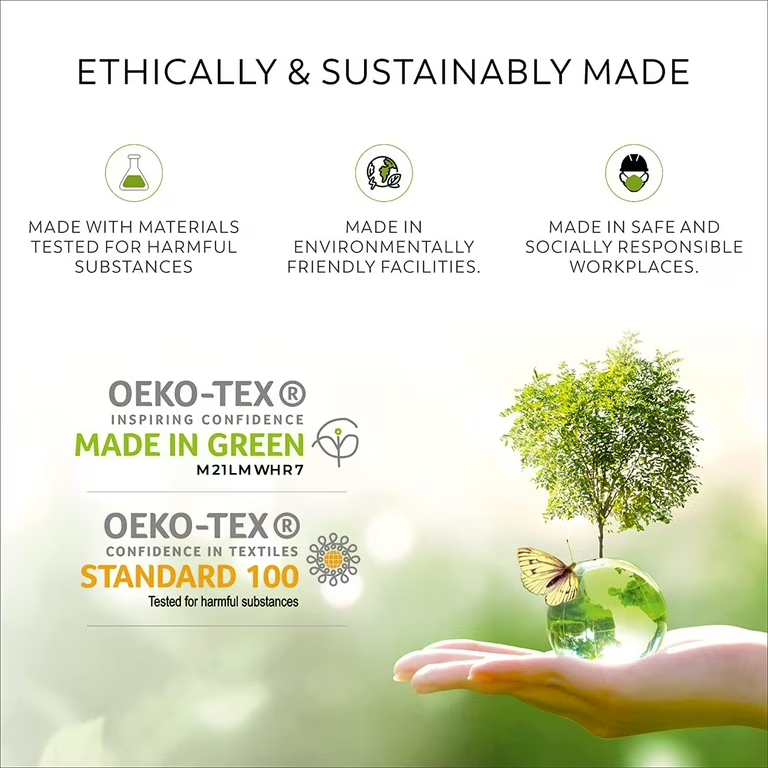
OEKO-TEX STANDARD 100 is a testing and certification system for textiles checked for harmful substances. It can apply to materials, components or finished textile articles, but the certificate is only useful when its holder, validity, product class and certified scope match the item a brand is buying.
It is not a universal legal requirement for every jacket or retailer. Some buyers request it as part of their chemical-management or product-safety program. Brands should confirm the exact customer and market requirements before adding certification to a sourcing brief.
Quick answer
Before accepting an OEKO-TEX claim, check the certificate number, holder, expiry or validity status, product class, article description and covered colours or components. Verify the number using the official OEKO-TEX label-check service and keep the document linked to the purchase order.
According to the official OEKO-TEX STANDARD 100 page, the standard addresses textiles tested for harmful substances, from yarn through finished products. The testing requirements depend on intended use and skin contact.
| Check | Why it matters | Buyer action |
|---|---|---|
| Certificate holder | Shows which company owns the certificate | Match the holder to the supplier or material source |
| Validity | Certificates and label numbers must be current | Use the official label check |
| Product scope | A certificate may cover only listed articles | Match fabric code, composition, colour and finish |
| Product class | Requirements depend on intended use and skin contact | Confirm suitability for the finished article |
| Components | Shell certification does not automatically cover every trim | Review lining, zipper, thread, print and labels |
STANDARD 100 uses four product classes. Class 1 covers products for babies and young children and has the strictest requirements. Class 2 covers direct skin contact, Class 3 covers products without direct skin contact such as jackets, and Class 4 covers decoration materials. The correct class depends on the certified article and intended use.
A certified shell fabric is valuable evidence for that material, but it should not be presented as proof that the complete jacket is certified unless the finished article falls within the certificate scope. Linings, insulation, sewing thread, zippers, prints, labels and other components may need separate review.
Which exact fabric or component is covered?
Who is the certificate holder?
What certificate or label number can be verified?
Which product class applies?
Are all ordered colours and finishes included?
Does the buyer require material evidence or finished-product certification?
Who pays for additional testing when the scope is insufficient?
A STANDARD 100 certificate does not replace all legal, retailer or product-performance requirements. Destination-market rules, buyer restricted-substance lists, labelling, fibre-content declarations and product-specific tests may still apply. Build a compliance checklist for the actual sales market instead of treating one logo as a complete approval.
Save the certificate or label number.
Verify it through the official OEKO-TEX service.
Record the covered material code and supplier.
Match the document to the bill of materials.
Review validity before repeat orders.
Keep marketing language within the documented scope.
Not universally. Some retailers or buyers request it, but legal and commercial requirements depend on the market, product and sales channel.
No, not automatically. Check whether the certificate scope covers the finished article and all relevant components.
Use the certificate or label number in the official OEKO-TEX label-check service, then review the holder, validity, product class and scope.
Tell RUINIU the destination market, buyer requirements and exact material claim. The team can review available documents and identify where additional testing or confirmation may be needed.