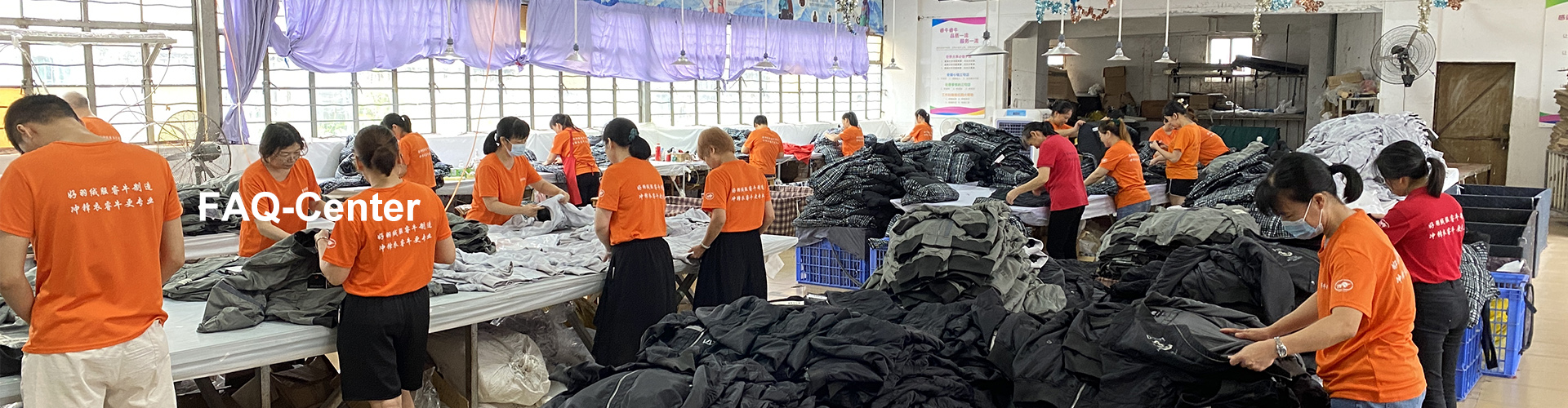

An OEM custom down jacket manufacturer should control shell selection, down containment, fill specification, baffle construction, pattern fit, filling consistency and documentation. Buyers need to define the wearer, climate, warmth target and price before comparing quotations.
Fill power alone does not define jacket warmth. Fill type, fill weight, baffle layout, shell, fit and cold spots all contribute to the finished product.
Quick answer
Give the manufacturer a specification covering shell, lining, down composition, fill power where applicable, fill weight by size, baffle map, leakage control, trims, tests and labels. Approve a production-representative sample and verify bulk filling against the agreed standard.
| Area | Buyer decision | Factory control |
|---|---|---|
| Shell | Weight, hand feel, downproofness and weather finish | Bulk fabric and needle compatibility |
| Fill | Composition, fill power, weight and documents | Storage, weighing and distribution |
| Baffles | Visual style and warmth mapping | Dimensions, fill access and cold-spot control |
| Fit | Layers, silhouette and movement | Pattern ease and insulation loft |
| Testing | Methods, care and acceptance criteria | Sample records and production checks |
Decide duck or goose down, composition and fill-power target according to the product position. Verify terminology and documents required by the destination market. Synthetic insulation may be a better option for some wet-weather, care or price requirements.
Set fill weight by size and, where necessary, by body zone. The filling process should prevent underfilled chambers and excessive variation. Record approved weights and check representative garments during production.
Narrow quilt lines create a different look and loft from larger chambers. Stitched-through and box-baffle constructions have different complexity and cold-spot behaviour. The baffle map should be reviewed with the target fill and garment silhouette.
Shell construction, pore size, needle selection, seam density and workmanship affect leakage. Test the nominated bulk fabric and finished sample. A few loose fibres may not indicate a defect, but persistent leakage needs investigation.
Confirm user, climate, layer system and warmth direction.
Approve shell, lining, down and trim codes.
Record fill specification and weights by size.
Fit a sample at the expected loft.
Test leakage, care, appearance and relevant performance.
Define bulk filling and final inspection records.
Review RUINIU's custom down jacket range for product directions.
Not by itself. Warmth also depends on fill weight, baffles, fit, shell and construction.
Yes, but waterproof construction, breathability, seam treatment and insulation protection need to be developed as one system.
Shell colour, material minimums, fill sourcing, trims, number of styles and branding are common drivers.
Send the target climate, style, warmth direction, quantity and price level. RUINIU can review shell, fill and construction options before sampling.