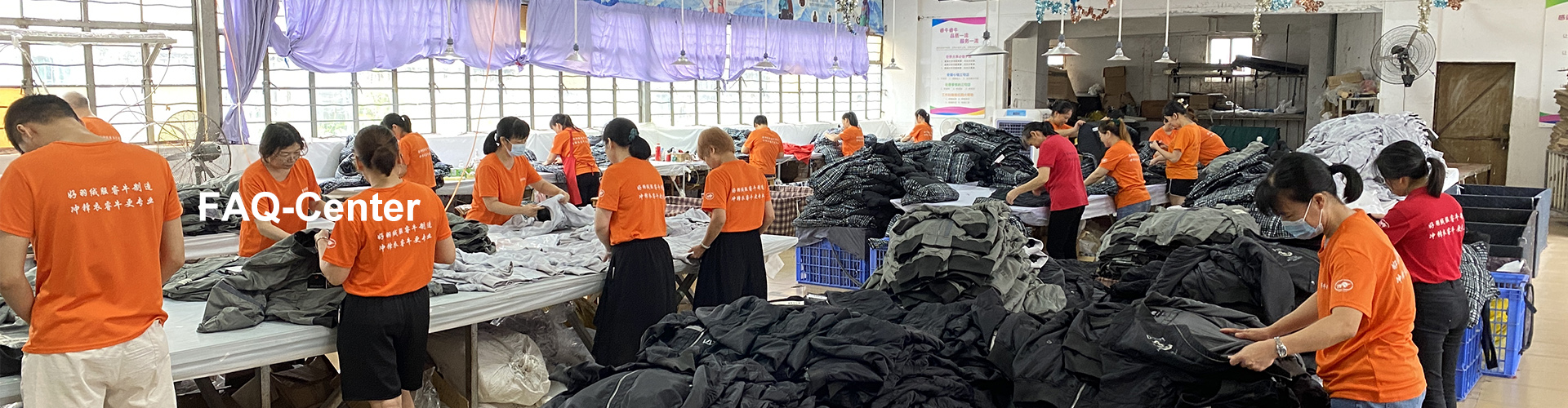

A polished website does not prove that a supplier owns or operates a clothing factory. The safest approach is to build a chain of matching evidence: legal entity, factory address, production activity, staff knowledge, sample quality, certificates, contract and payment account.
Quick verification checklist
Ask for the Chinese business license and legal company name, confirm the factory address, conduct a live video or on-site audit, review current production, inspect the sample room, verify certificates with the issuer, test a comparable sample and make sure the contract and receiving bank account match the approved entity. No single check is conclusive.
A manufacturer operates production facilities. A trading company buys from one or more factories and manages sales, sourcing or logistics. A sourcing partner may coordinate development and production across an approved supplier network.
These models are not automatically good or bad. A capable trading company can provide useful material access, small-order support and communication. The problem begins when a supplier claims to own a factory that it does not control. Buyers need to know who makes the goods, where production happens and who is responsible for quality.
| Evidence | Direct manufacturer | Trading or sourcing company |
|---|---|---|
| Business role | Production is a core registered and operating activity | Sales, export, sourcing or supply-chain coordination may be central |
| Production site | Can identify and show the assigned facility | Uses partner factories and should disclose the assigned site |
| Technical control | Direct access to production and quality teams | Control depends on contracts and supplier management |
| Buyer question | Will any operation be subcontracted? | Which factory will produce the order and may it change? |
Request a clear copy of the Chinese business license and record the unified social credit code, legal name, registered address and business scope. Search the entity through China's National Enterprise Credit Information Publicity System. Business scope helps, but it does not prove that the supplier currently operates the factory shown in its marketing.
Compare the registered address, office address, factory address, invoice details and pickup location. Differences may have a reasonable explanation, such as a separate sales office, but the supplier should explain the relationship and provide supporting documents.
Ask the contact to show the exterior sign, entrance, cutting area, sewing lines, specialist equipment, finishing, quality-control area, warehouse and current production in one continuous video call. Request a specific route or today's date to reduce the value of a reused recording.
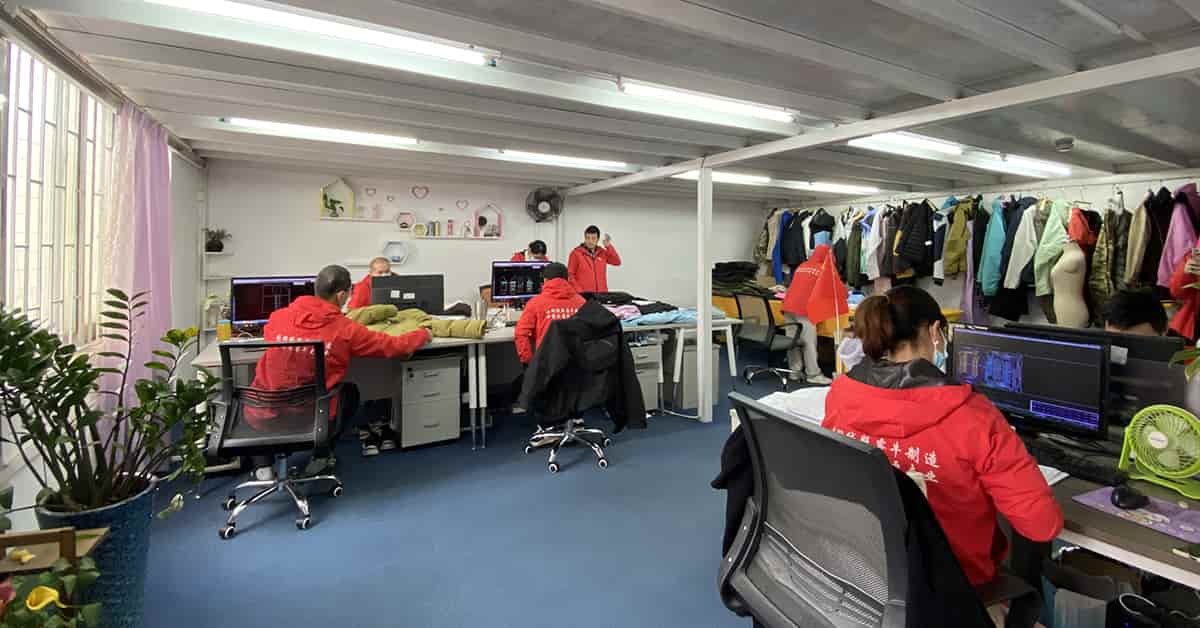
A sample room should be able to explain patterns, grading, construction, material substitutions and sample comments. Ask who will manage your project and whether the same technical team supports bulk production.

Seeing sewing machines is not enough. For technical jackets, verify the equipment and experience required for the actual design: seam sealing, quilting, down filling, bonding, laser cutting or other specialist operations. Ask which steps are performed in-house and which are subcontracted.
Check the legal company name, site, scope, issuing body and validity date. Factory-management certification, social-compliance audits, material certification and product test reports answer different questions. None of them alone proves product quality. Contact the issuing or audit body when verification is available.
Request a sample close to your product in fabric and construction, then evaluate measurements, workmanship, materials and performance. A good showroom sample is useful only if the factory can reproduce the approved specification in bulk.
The supplier named in the contract should have a clear relationship with the entity receiving payment and issuing commercial documents. Treat unexplained personal accounts, last-minute account changes or unrelated company names as reasons to stop and verify.
| Method | Useful for | Limitation |
|---|---|---|
| Document review | Legal entity, certification and basic screening | Documents may be expired, copied or outside scope |
| Live video | Early confirmation of site and activity | Limited depth and sampling |
| Buyer visit | Technical discussion and relationship building | Time, travel and limited audit independence |
| Third-party audit | Structured checks with documented findings | Scope and auditor competence must be defined |
The company name changes between website, license, contract and bank account.
The supplier refuses to identify the assigned production site.
Factory images appear copied or show inconsistent signs and locations.
Certificates have a different company, address, product scope or expired date.
Technical questions receive only sales language and no written specification.
Payment is rushed, redirected or requested through an unexplained personal account.
The supplier promises every product, quantity and deadline without reviewing the design.
A red flag is a prompt to investigate, not automatic proof of fraud. Record the explanation and supporting evidence before deciding.
Chinese and English legal company names
Unified social credit code
Registered, office and production addresses
Assigned factory and subcontracting policy
Product-specific equipment and recent examples
Certificates, reports, scope and validity
Sample findings and corrective actions
Contract entity, invoice entity and bank beneficiary
Audit date, reviewer and unresolved questions
No. It confirms the registered entity and scope but not current operations or control of a particular site. Match it with address, production and audit evidence.
No. Some trading and sourcing companies provide valuable coordination. The buyer should understand the model, approve the actual factory and define quality responsibility.
No single certificate proves finished-jacket quality. Use relevant material and product reports, factory systems, sample approval and production inspection together.
Risk, order value and product complexity should decide. A remote review can support early screening, while a buyer visit or third-party audit provides stronger evidence for higher-risk programs.
Reviewing an outdoor jacket supplier?
See RUINIU's factory tour, quality-control process and OEM/ODM services. Buyers can request current documents and a live factory walkthrough for project verification.