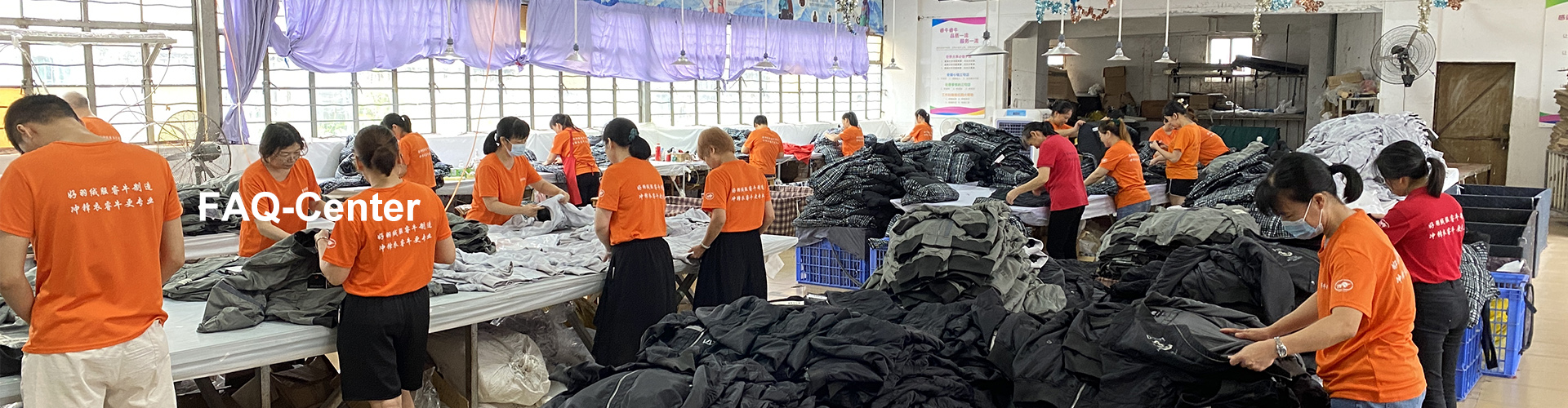

10K and 20K describe a fabric's resistance to water penetration under a specified hydrostatic-pressure test. A 20K result is higher than 10K, but that does not automatically make it the better specification for every jacket.
For brands developing waterproof outerwear, the rating should be considered together with the intended use, fabric construction, breathability, seam sealing, zippers, openings and target price. The fabric number is important, but it is only one part of the finished jacket.
Quick Answer
10K waterproof fabric is often considered for general rainwear, travel and recreational outdoor jackets, while 20K may be specified for products intended for longer or more demanding wet‑weather exposure. The final choice should be based on the product brief rather than choosing the larger number by default.
A 10K waterproof rating commonly refers to a hydrostatic‑head result of 10,000 mm. Hydrostatic‑pressure testing measures a textile fabric's resistance to water penetration under controlled test conditions.
In product development, 10K is commonly considered for rain jackets, travel outerwear and recreational outdoor products where the brief requires useful rain protection without automatically moving to a higher waterproof specification.
Whether 10K is enough cannot be decided from the number alone. Exposure time, activity, garment construction and the performance claim all matter.
A 20K waterproof rating commonly refers to a hydrostatic‑head result of 20,000 mm. Under the same test method and comparable test conditions, the fabric shows greater resistance to water penetration than a fabric with a 10,000 mm result.
Brands may consider 20K for technical ski wear, mountain shells and other products intended for longer or more demanding exposure to wet conditions. It should be selected because the product requires the higher target, not simply because 20K looks better on a specification sheet.
The direct difference is the measured resistance to water penetration under the specified test conditions. The table below compares the two ratings without assuming that either rating must use a particular membrane, layer construction or seam treatment.
| Factor | 10K Waterproof | 20K Waterproof |
|---|---|---|
| Hydrostatic head | 10,000 mm | 20,000 mm |
| Water penetration resistance | Lower than 20K under comparable test conditions | Higher than 10K under comparable test conditions |
| Common product direction | General rainwear, travel and recreational outdoor products | Technical ski, mountain and demanding wet‑weather products |
| Layer construction | Can vary | Can vary |
| Seam treatment | Determined by garment requirement | Determined by garment requirement |
| Breathability | Must be specified separately | Must be specified separately |
| Fabric cost | Depends on the complete fabric specification | Depends on the complete fabric specification; higher waterproof targets may increase cost depending on the selected construction |
Waterproof rating, membrane construction, layer construction, seam treatment and breathability are related specifications, but they are not interchangeable. A buyer should not assume that every 20K fabric is 3‑layer, fully seam taped or more breathable than every 10K fabric.
Two fabrics with the same stated waterproof rating can still differ in hand feel, stretch, breathability, durability and cost. One reason is that the waterproof layer itself can be constructed in different ways.
Polyurethane (PU) coatings are widely used in waterproof and water‑resistant outerwear. The coating formulation and application can be adjusted for different waterproof, hand‑feel and cost requirements. Performance should be evaluated from the actual fabric specification and test result rather than assuming that all PU‑coated fabrics perform at the same level.
TPU (thermoplastic polyurethane) membranes are used in many laminated waterproof fabrics. Depending on the membrane specification and lamination construction, they can be developed for different combinations of waterproofness, breathability, stretch and hand feel. TPU is available across a wide range of performance levels, so the membrane name alone does not determine whether a fabric is 10K or 20K.
ePTFE‑based membrane systems are another option used in technical waterproof outerwear. They can provide high levels of waterproof and moisture‑vapour performance, but material availability, approved supply channels, construction requirements, minimum quantities and cost vary by membrane supplier and program.
For sourcing, the practical question is not simply “PU, TPU or ePTFE?” Ask for the complete fabric construction, waterproof and breathability results, test methods, weight, stretch, hand feel and any material compliance requirements relevant to the target market.
This is one of the most important points to clarify before developing a waterproof jacket. The reported waterproof rating applies to the fabric sample tested under the specified test conditions. Once that fabric is cut and sewn into a garment, the jacket contains seams, needle holes, zippers, pocket openings, hood adjustments and other construction details that can create additional water‑entry points.
A higher fabric rating cannot compensate for poorly planned waterproof construction. During development, the shell specification therefore needs to be reviewed together with the seam layout, tape compatibility, zipper construction and openings.
Sewing creates needle holes through the shell. Where a garment is intended to provide waterproof protection, compatible seam tape can be applied to specified seams to reduce water entry through stitched areas.
Critical‑seam taping and full‑seam taping are different construction choices. The correct option should be defined from the garment's intended performance and design rather than selected automatically because the fabric is rated 10K or 20K.
Front zippers, pocket openings, ventilation openings and other entry points need to be reviewed separately from the shell fabric. Zipper type, zipper garages, protective flaps and the surrounding seam construction can all affect how the finished jacket manages rain.
Hood shape, drawcord exits, adjustment points and seam intersections are also part of the waterproof construction. These details are easy to overlook when a specification focuses mainly on the headline fabric rating.
DWR (Durable Water Repellent) is a surface treatment that helps water bead and roll off the face fabric. It is different from the waterproof membrane or coating. When the outer fabric becomes saturated, the garment may feel colder and less comfortable, and moisture transfer can be affected even when water has not passed through the waterproof layer.
Wet‑out should not automatically be treated as proof of membrane failure. Perceived leakage can also be related to seam construction, zippers and openings, membrane or coating damage, condensation, or deterioration of the surface treatment.
If a buyer requires a PFAS‑free DWR or another specific finish, that requirement should be confirmed with the fabric specification before sampling rather than assumed from the waterproof rating.
No. Waterproof rating and layer construction describe different things. A 20K rating describes resistance to water penetration under the specified test, while 2‑layer, 2.5‑layer and 3‑layer describe how the face fabric, waterproof layer and inner protection are constructed.
A 2‑layer construction normally combines the face fabric and waterproof layer with a separate lining. A 2.5‑layer construction uses a lighter protective treatment or print on the inside instead of a separate lining. A 3‑layer construction bonds the face fabric, waterproof layer and inner backer together.
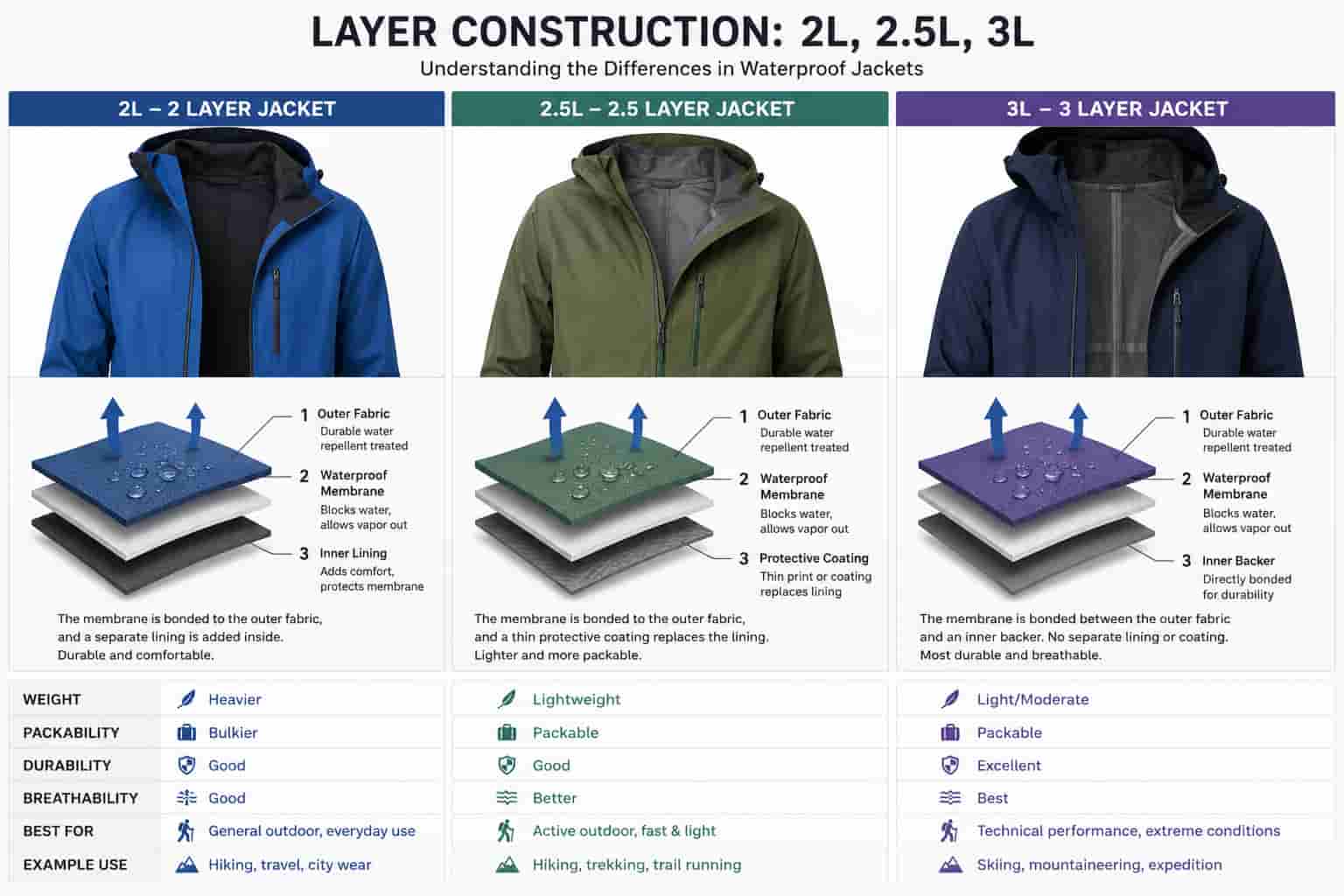
A 20K rating does not automatically mean a 3‑layer fabric, and a 3‑layer construction does not automatically mean 20K waterproofness. The right construction depends on the product. Weight, packability, durability, hand feel, lining requirements and cost should be reviewed alongside the waterproof target.
For many general outdoor and rainwear programs, 10K can be a reasonable target. It is commonly considered for hiking jackets, travel outerwear, urban rainwear and other products intended for recreational use.
The more useful question is not whether 10K is “good” in isolation, but whether it matches the conditions in which the jacket will be used. A well‑planned 10K garment can be more appropriate for a particular product brief than a higher‑rated fabric combined with unnecessary cost or unsuitable construction.
A 20K target becomes more relevant when the jacket is intended for longer wet‑weather exposure or more demanding technical use. Ski and snowboard shells, mountain outerwear and similar products are common examples where a brand may evaluate a higher waterproof target.
Moving from 10K to 20K may also change the available fabric choices, membrane or coating options, hand feel, breathability, minimum quantities and material cost. These should be reviewed during fabric selection rather than assuming the only difference is the number on the test report.
20K should be selected because the product needs it—not because the number looks better on a product page.
If you are comparing a wider range of waterproof targets for a new product, see how to compare 10K, 20K and 30K waterproof options before approving the fabric specification.
It can, but the waterproof rating alone does not determine fabric cost. Cost depends on the complete specification: face fabric, membrane or coating, laminate construction, weight, stretch, finish, order quantity and required testing or material documentation.
Garment construction can also change the final manufacturing cost. A project requiring more extensive seam taping, specialized zippers, additional waterproof construction or more complex testing will involve different material and production costs from a simpler rain jacket, regardless of whether the shell is described as 10K or 20K.
If the buyer requires specific material documentation or certified material options, such as OEKO‑TEX® or recycled‑content requirements, these should be confirmed during sourcing because they can affect fabric availability, MOQ and price.
For quotation comparison, it is therefore better to compare the complete jacket specification than to compare the waterproof number alone.
Yes. A brand does not need to use one waterproof specification across its entire outerwear range. A general rain or travel jacket and a technical mountain or ski shell may have very different requirements even when they sit under the same brand.
Using different waterproof targets can make sense when each product has a clear end use, construction and price position. The important point is to develop each jacket from its own product brief rather than automatically applying the highest available rating across the collection.
Waterproofness and breathability are separate specifications. Waterproof testing evaluates resistance to water penetration, while breathability testing evaluates moisture‑vapour transfer through the material.
A higher waterproof number does not automatically mean higher breathability. When comparing two fabrics, always confirm the breathability test method as well as the reported value. Numbers generated using different methods should not be treated as directly equivalent without review.
For active products, garment ventilation, lining and fit also influence wearer comfort. The fabric specification is important, but it does not describe the entire wearing experience.
Before selecting the final shell fabric, confirm the points that actually affect the jacket specification:
Intended use and expected weather exposure
Waterproof rating and test method
Breathability target and test method
2L, 2.5L or 3L construction where applicable
Seam‑taping requirement
Zipper, pocket and opening construction
DWR requirement, including PFAS‑free requirements where specified
Fabric weight, hand feel, stretch and target cost
Confirming these points before the garment sample is made is more useful than selecting a waterproof number first and trying to make the rest of the product fit around it.
10K commonly refers to a hydrostatic‑head result of 10,000 mm. It describes the tested fabric's resistance to water penetration under the specified test conditions.
20K commonly refers to a hydrostatic‑head result of 20,000 mm. Under the same method and comparable test conditions, it indicates greater resistance to water penetration than a 10K result.
It can be suitable for many rainwear and general outdoor products, but the answer depends on exposure time, garment construction, seam treatment and the intended performance claim. The fabric rating should not be used as the only decision point.
Not every ski jacket requires the same waterproof target. A brand may choose 20K for products intended for demanding or prolonged wet‑weather use, but the appropriate specification should also consider construction, breathability, end use and price position.
No. A higher fabric rating means greater resistance to water penetration under the stated test conditions. Finished‑jacket performance also depends on seam sealing, zippers, openings, DWR, garment construction and other design details.
Waterproof rating describes resistance to water penetration. Breathability describes moisture‑vapour transfer through the material. They are separate specifications and should be compared using the relevant test methods rather than assuming that a higher waterproof rating also means higher breathability.
RUINIU works with outdoor brands on custom waterproof jacket development, from fabric selection and sampling through to bulk production. Send us your tech pack, reference sample or product images, and we can review the shell fabric, waterproof target, construction, seam treatment, zippers and key trim details before sampling.
MOQ starts from 100 pcs per style/color. Sample development normally takes 7–10 days, and bulk production is normally 35–50 days after sample and material approval.