
Updated October 2026 · For outdoor brands, private labels and workwear buyers · RUINIU Factory, Foshan
Many bulk production issues can be traced to something unclear or unrecorded at sample approval, rather than a problem that starts during cutting or sewing. The six problems most likely to create avoidable bulk production issues are: sample fabric that doesn't match bulk, verbal approvals with no written record, measurements checked flat but not in movement, trims confirmed by name without a physical reference, seam sealing reviewed only visually, and logo placement approved from a photo rather than a marked position. Each is preventable before bulk cutting starts.
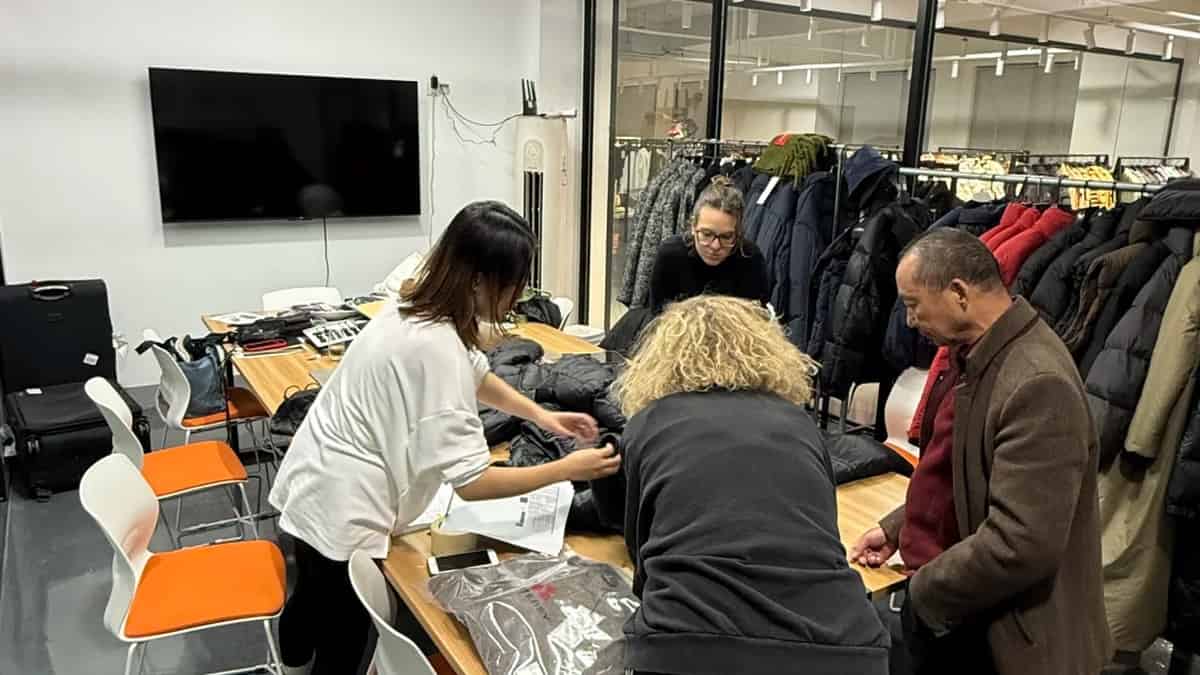
A sample approval meeting tends to focus on what's visible: colour, shape, logo, overall finish. Those things matter. But the problems that appear during bulk production usually started somewhere less obvious — a verbal agreement not written down, a fabric substitution mentioned in passing, a measurement that looked right on a flat table but pulls differently when worn.
This article covers six problems from the factory side, and what buyers can do at the sample stage to prevent them.
PROBLEM 01
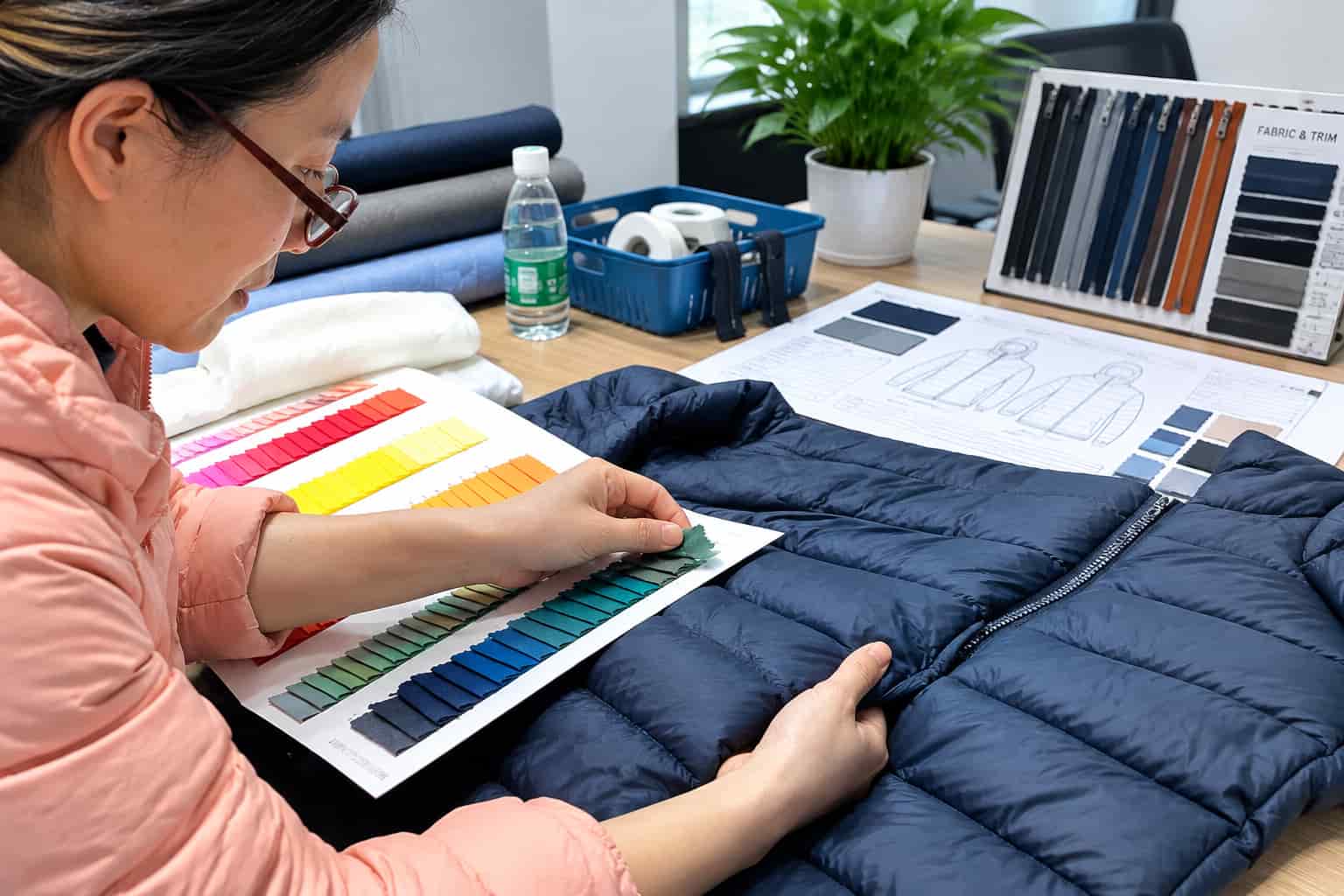
Samples are often made with the nearest available fabric, not necessarily the confirmed bulk material. For custom colours, specific weights, or certified materials such as GRS recycled or PFAS-free DWR, bulk fabric is sourced separately. If that sourcing happens in parallel with sampling rather than before it, the buyer approves construction on one fabric and receives bulk garments made in another.
PROBLEM 02
Changes to pocket depth, zipper pull colour, hood drawcord routing, or hem finish sound minor in conversation. In production, each needs to reach the pattern room, the BOM, the material order and the sewing line separately. If a change exists only in a chat message, some of those steps may not receive the update.
PROBLEM 03
A jacket can measure correctly on a flat table and still pull across the back, restrict arm movement, or sit incorrectly at the shoulder. This matters most for technical styles — softshells with stretch panels, ski jackets with articulated patterning, insulated jackets where fill changes how the garment sits in motion. A chest measurement tells you the circumference; it doesn't show whether the back panel has enough length for a forward lean.
PROBLEM 04
A trim name describes a product family, not a specific component. "YKK #5 coil zipper in black" still leaves open the slider type, pull shape and finish. The same applies to snaps, toggles, elastic and labels. When trims are confirmed by name only, the factory works from its own interpretation — and correcting a mismatch after bulk purchasing is complete is more disruptive than catching it at sample stage.
PROBLEM 05
A sealed seam that passes a visual check can still fail a hydrostatic test if the tape wasn't applied at the right temperature, if pressure was inconsistent, or if there was a surface contamination issue. For waterproof outdoor jackets and ski suits where seam sealing is a performance requirement, a visual review of the sample is not a sufficient approval.
PROBLEM 06
A photo records where the logo was placed on that one sample. Without a marked position — distance from seam, height from hem, distance from centre front — operators estimate by eye during production, which produces visible variation between garments.
The approved sample is a physical reference. The approval file is the written record that production follows. The file should contain enough detail that production can proceed correctly even if the physical sample is not visible at every workstation.
| Item | What it should specify |
|---|---|
| Measurement chart | Approved dimensions for each size, with tolerance for each point |
| Fabric confirmation | Confirmed bulk fabric — weight, composition, finish, supplier. Not sample substitute |
| Trim list | Every component with brand, style, colour, finish and approved physical reference |
| Seam and construction notes | Seam type at each location, sealing requirement, stitch density, seam allowance |
| Logo and label placement | Measured position for every placement — not photo reference only |
| Comment closure record | Each review comment marked as resolved, with how it was resolved |
| Performance requirements | Waterproof rating, breathability, seam tape standard, fill weight — with test method specified |
| Packaging and labelling | Care label content, country of origin, hangtag, poly bag and carton marking |
Changes made after this file is approved should be confirmed in writing before production preparation continues.
These are two different approvals, and confusing them is a common source of late-stage problems.
A development sample is used to refine design — fit, construction, logo, trims. It may be made with substitute materials that are close to, but not identical to, the confirmed bulk specification.
A pre-production sample is made from confirmed bulk materials in production conditions. Its purpose is to confirm that the approved specification can be reproduced accurately before bulk cutting begins. It should close every open comment point and be approved in writing before the production schedule is confirmed.
For repeat styles with no construction changes and previously confirmed materials, an inline check at the start of bulk cutting may be sufficient. For new styles, new fabric or new construction, a pre-production sample reduces the risk of discovering problems after production is underway.
We review the tech pack before the first sample is cut. If there are gaps — undefined trim specifications, missing measurements, unclear seam requirements — we raise these before sampling rather than making assumptions that need correcting later.
A measurement record can be prepared for sample review when required by the buyer. When comments are returned, we number each point and confirm how it will be addressed before the revision sample is cut. We do not proceed to bulk until a pre-production sample has been approved with confirmed bulk materials — particularly for styles with waterproof seam sealing, logo embroidery or custom-dyed fabric.
For remote sample reviews, measurement records, movement photos and close-up construction photos can be prepared when required by the buyer.
Further detail on our development process is available on the OEM and ODM outdoor jacket services page, and our approach to inline and final inspection is on the quality control page.
Send us your tech pack, current sample photos and comment list. We can review the specification and advise on what should be confirmed before bulk cutting begins.
Send Your Sample Review Request →Should I approve the sample before confirming the bulk order?
Yes — and the approval should be recorded in writing. The approved sample, measurement chart, confirmed fabric, trim list and logo placement records together form the production reference. Without that written record, the factory is producing from interpretation rather than confirmed specification.
What is the difference between a development sample and a pre-production sample?
A development sample refines the design and may use substitute materials. A pre-production sample is made from confirmed bulk materials in production conditions, and its purpose is to confirm that the approved specification can be reproduced accurately before bulk cutting begins.
Can the factory make changes after sample approval?
Changes can be made, but they should be confirmed in writing before production preparation continues. Changes to fabric or trims after the material order is placed may affect cost and delivery timing.
What information should I send to start sample development?
Send your tech pack or reference sample, size chart, target fabric specification, trim details, logo artwork and placement requirements, target quantity, delivery market and any performance requirements such as waterproof rating or certifications. If the tech pack has gaps, note them and we will raise questions before the first sample is cut.
How to Choose an Outdoor Jacket Manufacturer in China — factory verification, technical capability review, and what to check before placing a sample order.
Outdoor Jacket Quality Control Process — inline inspection, final inspection and AQL standards used during bulk production.
OEM and ODM Outdoor Jacket Services — development process from tech pack review through to bulk production and shipment.
Custom Outdoor Jacket Manufacturing — product options, specifications and factory capabilities.