
Customizing a down jacket involves more than choosing a shell color and adding a logo. The brand must define the intended climate, fit, insulation, baffle construction, shell performance, trims, size range, testing and target order quantity before a factory can develop a reliable sample.
Quick answer
Start with a technical pack and a clear end-use brief. Specify down composition, fill power, fill weight by size, baffle map, shell and lining, trims, measurements, branding, test requirements and packaging. Approve the materials and a pre-production sample before bulk production.
| Decision | Information to provide | Why it matters |
|---|---|---|
| Use and climate | Urban, hiking, ski, workwear; dry or wet cold | Guides insulation, shell and features |
| Fit and length | Size chart, layering room and silhouette | Affects pattern and fill distribution |
| Insulation | Species, composition, fill power and fill weight | Controls loft, weight, cost and documentation |
| Shell system | Fiber, weave, finish, coating or membrane | Controls hand feel, durability and weather protection |
| Order plan | Quantity by style, color and size | Determines material minimums and line planning |
| Market requirements | Tests, labels, documentation and packaging | Must be planned before material approval |
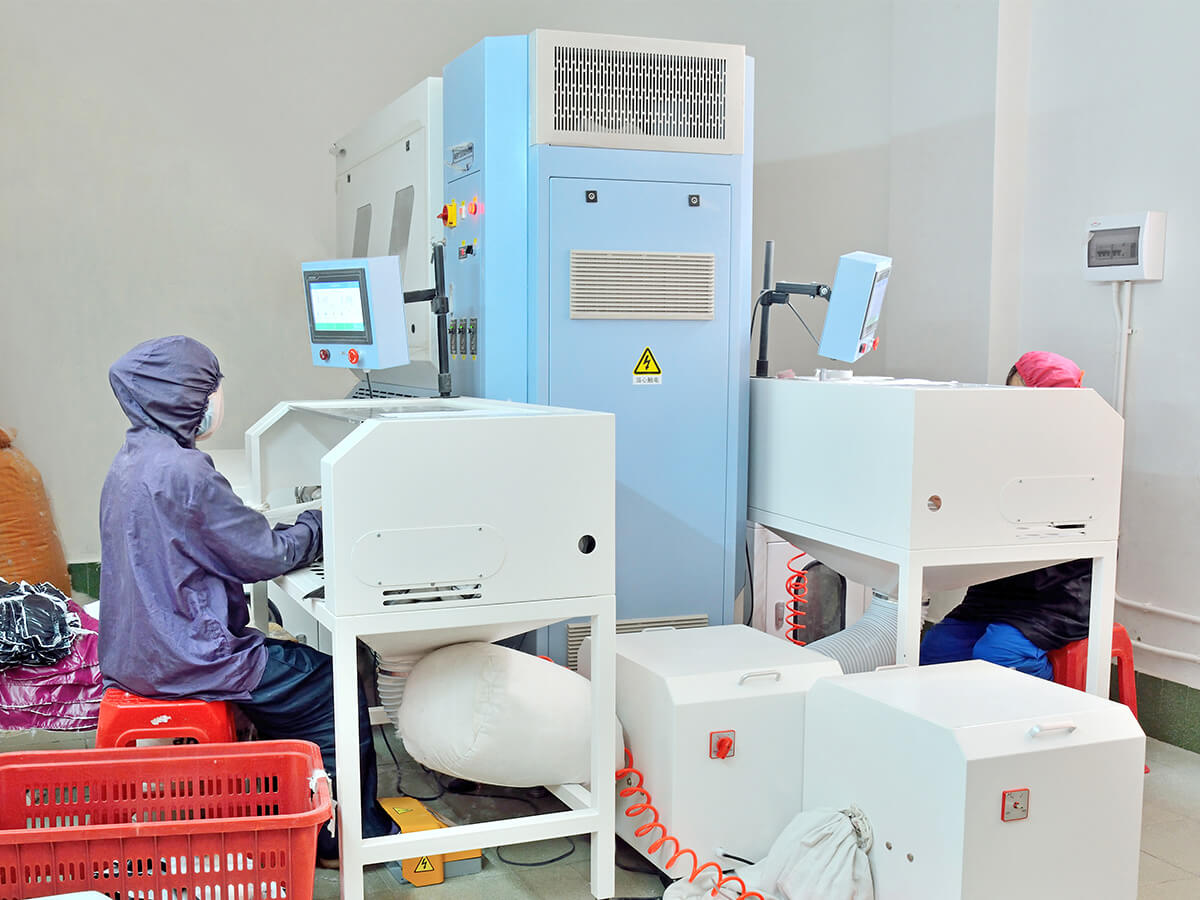
Duck and goose down can both be used in quality products. Specify the down and feather composition and the applicable test method. Color and species do not establish performance by themselves.
Fill power describes the loft of down under a defined test method. A higher result can provide more loft for a given weight, but it should not be used as a stand-alone warmth rating or marketing tier.
Fill weight is the amount of down in the garment. Define it by size and, when necessary, by baffle or garment zone. A jacket can use high fill-power down and still be unsuitable for severe cold if the fill amount and construction are inadequate.
If responsible-sourcing or recycled-content documentation is required, state the exact standard and transaction evidence before ordering. Verify the certificate holder, material scope, validity and connection to the purchased batch.
| Component | Options | What to verify |
|---|---|---|
| Shell | Nylon or polyester woven, ripstop, coated or laminated | Weight, strength, colorfastness, downproof and weather tests |
| Lining | Light woven, printed lining or functional backing | Down leakage, color and next-to-skin feel |
| Stitched-through baffle | Shell and lining quilted together | Cold spots, leakage and visual consistency |
| Box baffle | Internal walls separate chambers | Baffle height, labor and fill distribution |
If the jacket is sold as waterproof, quilting and seam construction require special planning. A water-repellent face fabric does not make the complete garment waterproof.
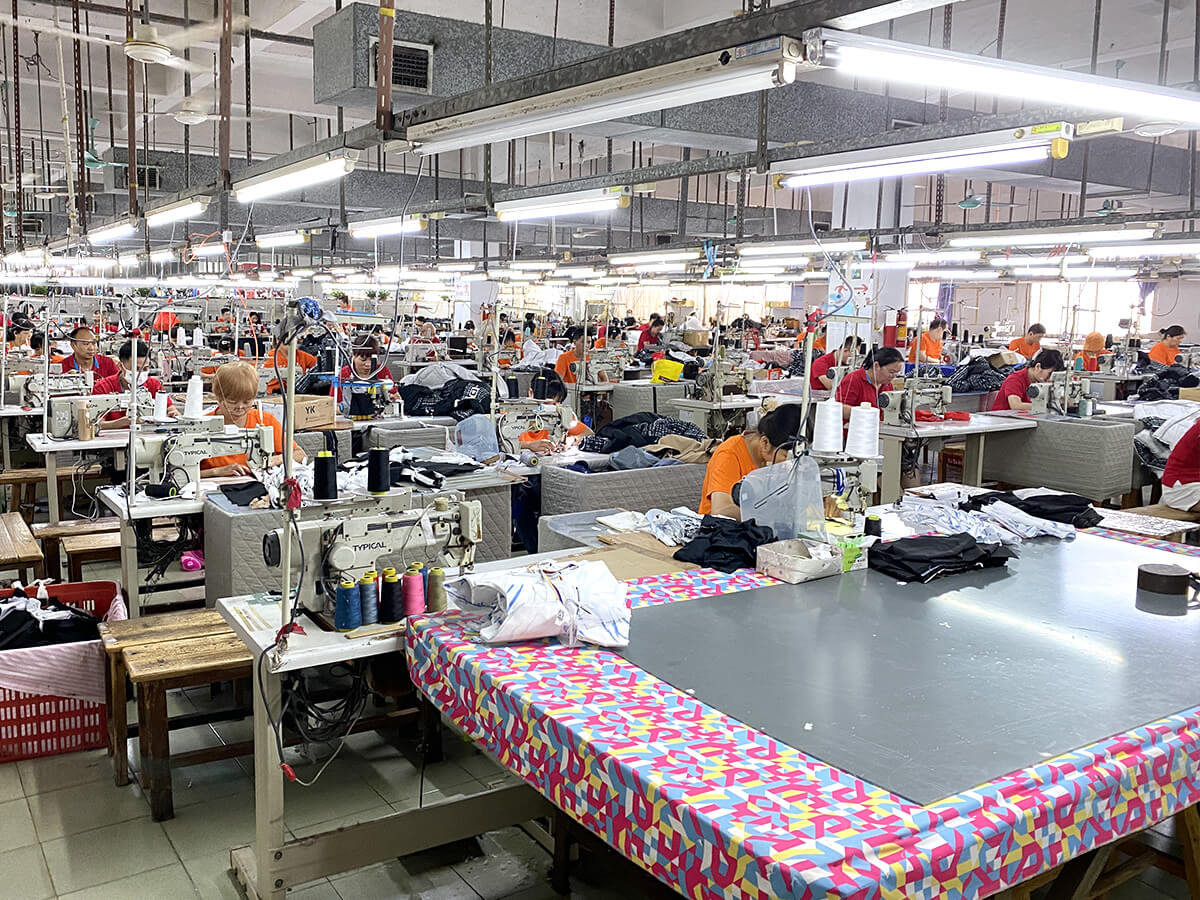
The technical pack should include front and back drawings, construction details, bill of materials, measurement chart, tolerances, grading, colorways, baffle map, insulation specification, fill weight, trims, artwork, labels, testing and packing.
Every sample comment should identify the revision and approval status. Avoid leaving critical changes only in email or chat. The final production file must match the sealed pre-production sample.
Feasibility review: the factory checks product, quantity, materials, tests and timing.
Material selection: the brand approves shell, lining, down and trims.
Pattern and prototype: the first sample establishes shape and construction.
Fit and performance review: comments cover measurements, movement, fill and function.
Pre-production sample: final materials, branding and construction are approved.
Bulk production: incoming material, cutting, baffles, filling and assembly are controlled.
Final inspection: the order is checked against the approved specification before shipment.
The detailed production operations are covered separately in the down jacket manufacturing process guide.
Woven main label, size label and care label
Embroidery, heat transfer, screen print or patch branding
Custom zipper pullers, snaps and cord components
Printed lining, custom quilting and color blocking
Hangtags, barcode labels, polybags and retail packaging
Branding method must suit the shell and insulation construction. Embroidery can create needle holes, and heat can affect lightweight fabrics or coatings, so test artwork on the approved material.
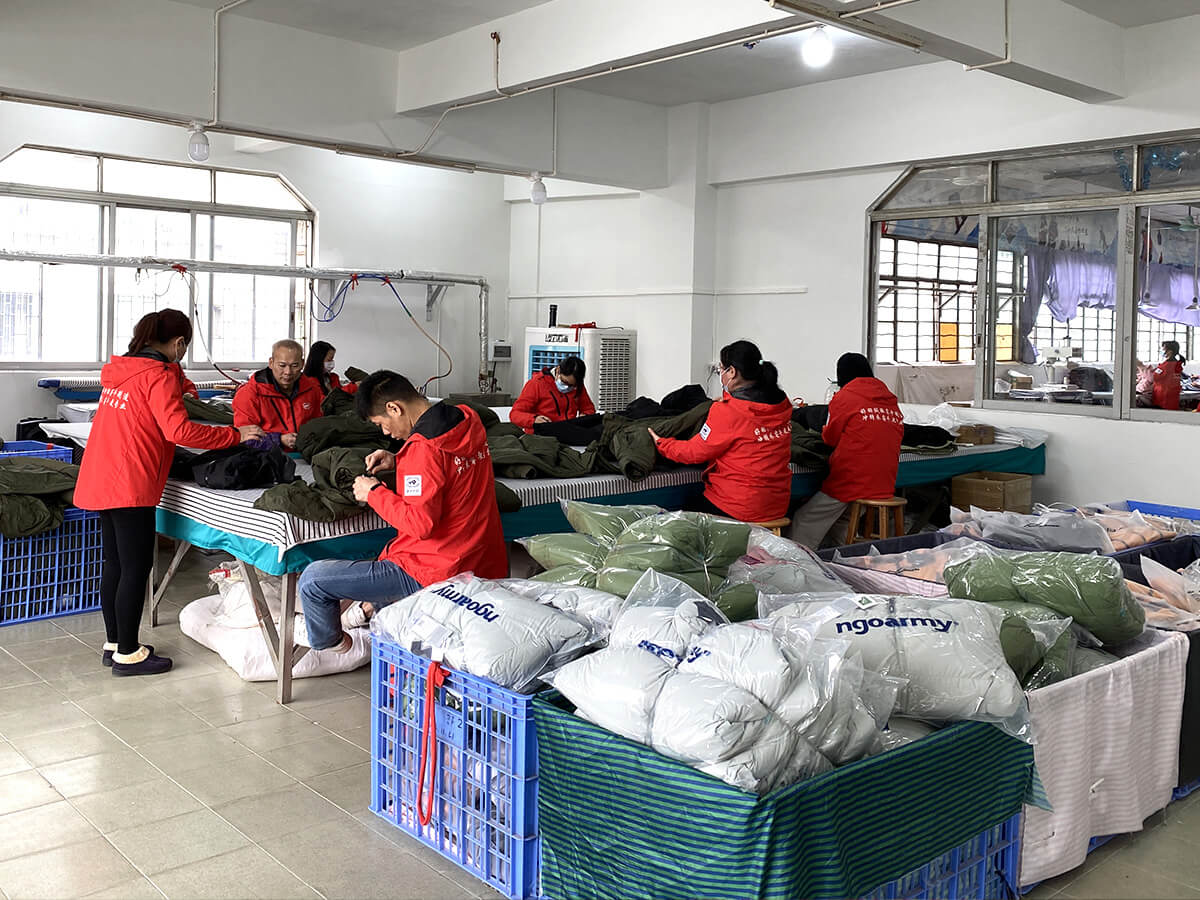
Shell and lining inspection, shade and approved test reports
Down batch documentation and fill specification
Baffle dimensions and fill weight by size
Down leakage and distribution
Measurements, fit and construction
Zipper, snap, hood, cuff and pocket function
Branding, labels, packing and carton marks
RUINIU publishes a starting MOQ of 100 pieces per style and color. Fabric, down, custom colors and trims may have separate minimums, so confirm the final quantity after the bill of materials is approved.
RUINIU's published guidance is approximately 7–10 days for samples and 35–50 days for bulk production. Final timing depends on material availability, sample rounds, quantity and factory capacity.
No. Fill weight, baffle design, shell, fit, coverage and draft control also matter.
A factory may be able to source down with the required documentation, subject to supplier availability and order quantity. Request current certificates and transaction evidence for the actual batch.
Developing a private-label down jacket?
Review RUINIU's custom down jacket program. Send the tech pack, intended climate, fill requirement, quantity by color and delivery date for a project-specific review.