
One of the most expensive lessons we learned as a factory came from a European outdoor brand order early in our softshell production program. The sample had passed every check. The lab dip was approved. The bulk fabric came from a different dye lot, and nobody compared it against the approved standard before cutting started.
That order went back into production. The client missed their Q4 window. We changed our incoming inspection process the following week and have not had the same failure since.
We have seen the same pattern repeat — in our own early production, and in orders brands brought to us after another factory let them down. The causes are almost always the same. And they are almost always preventable.
Here is what actually goes wrong between sample approval and bulk delivery.
Jump to:
Sample production uses whatever fabric is available in the factory at that moment — usually a small test roll from an earlier procurement. By the time bulk production starts, that roll is gone. A new batch gets ordered. Different dye lot. Sometimes a different mill.
On paper, the specification is identical. In the cutting room, nobody compares the new batch against the approved lab dip before cutting starts. The difference doesn't show up until the jackets are sewn and someone holds a bulk piece next to the approved sample under daylight.
At that point, the entire batch is already cut. The options are recut from correct fabric or compensate the client.
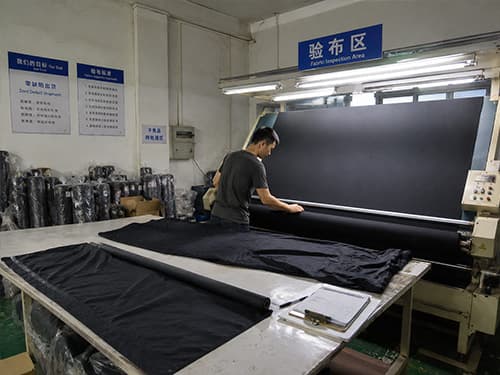
What stops this is incoming fabric inspection before cutting starts — every roll, every batch, checked against the approved lab dip under standard D65 lighting. If the reading is out of tolerance, the roll goes back to the supplier before a single panel is cut. This adds time before production starts. It prevents the situation above from becoming the client's problem.
If your factory cannot tell you exactly when and how they check incoming fabric against your approved lab dip — that is your answer.
This one is harder to catch because it passes the basic spray test. The jackets ship. The client sells them. The customer stands in rain for twenty minutes and the seams leak.
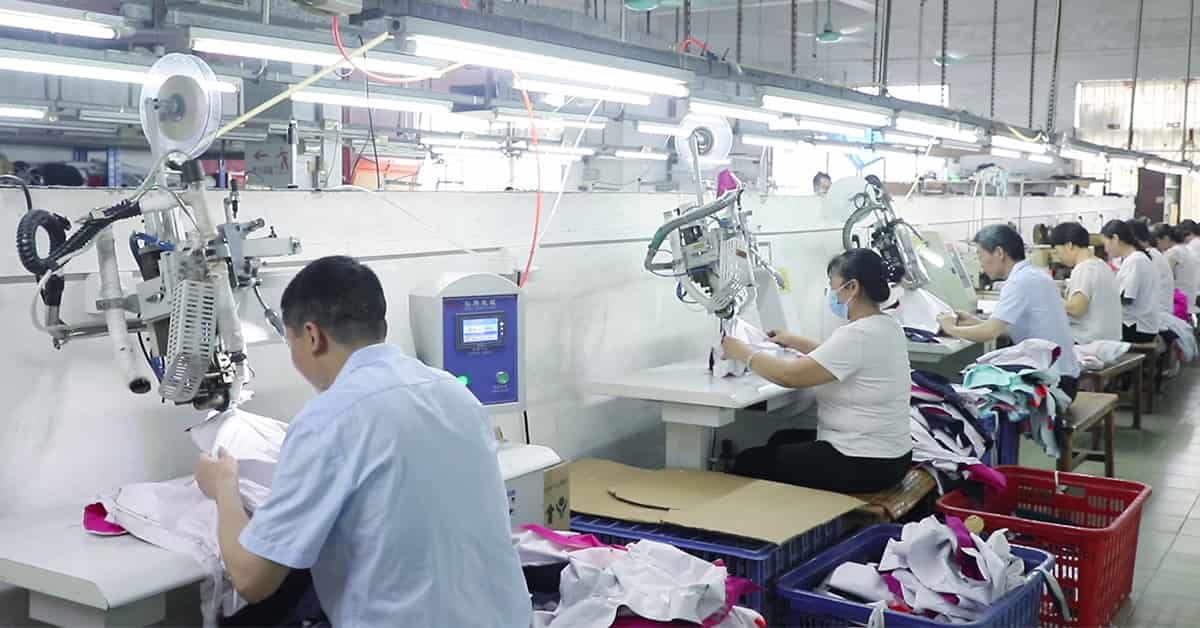
Seam sealing requires three variables calibrated together — hot air temperature, machine speed, and roller pressure. If any one of these drifts during a long production run, the tape bonds correctly in some sections and weakly in others. The weak sections hold water for a spray test. They don't hold under sustained pressure — which is the condition the customer actually experiences.
The second cause is tape that has been stored incorrectly. Degraded adhesive looks identical to fresh adhesive until it fails on the garment.
Finished seam-sealed jackets should be tested under hydrostatic pressure before final inspection — not just spray. Machine settings should be calibrated and logged at the start of every shift. You can review how we approach this in our outdoor jacket quality control process.
If seam tape delamination shows up after delivery, there is no field repair. The jacket has to be replaced. This is why the test has to match the actual use condition, not a light spray in the inspection room.
The sample fits correctly. Bulk measurements pass inline inspection. The client's pre-shipment QC passes. Three weeks after delivery, customers are returning jackets that are too small.
Fabric carries residual tension from the knitting or weaving process. When the finished garment goes through a wash cycle, that tension releases and the fabric contracts. On cotton-content fleece, a 3-5% shrinkage rate is normal for untreated fabric. On polyester softshell, the effect is smaller but still measurable across a full size run.
If the sample was cut from pre-washed fabric and the bulk fabric was not, they will behave differently after the customer's first wash. The measurements can be identical at the point of inspection and wrong at the point of use.
Before bulk cutting starts, fabric samples from every incoming roll should be washed according to the care label instructions for that style — same temperature, same cycle — and measured before and after. If shrinkage is outside tolerance, patterns need to be adjusted before cutting begins. This is the only way to catch this before it becomes the client's problem after delivery.
A trim supplier runs short. The lead time extends beyond the factory's production schedule. Rather than delay the order or inform the client, the factory substitutes a different zipper brand — similar specification, different supplier, not what was approved.
The client finds out at pre-shipment inspection. Or they don't find out until the zippers start failing faster than the specified brand's tolerance.
This is not a technical failure. It is a process discipline failure. The factory prioritized delivery schedule over the client's right to know what is in their product.
Trim specifications — zipper brand, model number, color code, pull style — should be locked in the approved sample and listed in a Bill of Materials for each order. Any change requires written client sign-off before production continues. If a specified trim is unavailable, the client gets notified immediately with alternatives to choose from.
Most brands assume this is standard practice. It is not.
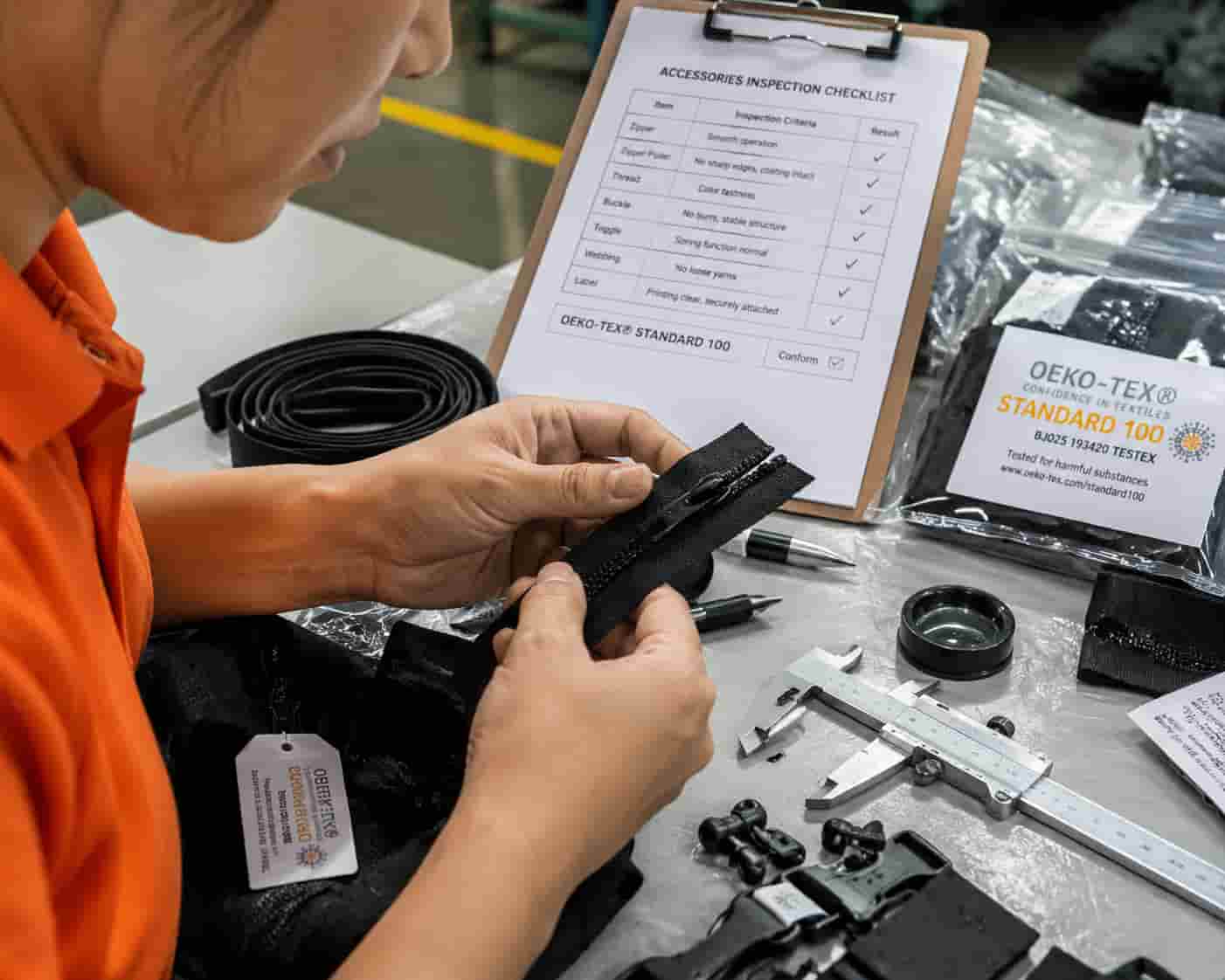
The person who sewed your sample probably won't touch your bulk order.
Sample rooms work on complete garments. One operator builds the jacket from start to finish and understands how every panel connects. A production line operator does one operation — pocket attachment, collar setting, sleeve insertion — repeated hundreds of times per day.
If the construction details from the sample are not transferred to the production line in writing — with measurements, stitch density specifications, and photographs of critical construction points — the line operators fill in the gaps with whatever is standard practice for them. The result is a garment that is technically sewn but doesn't match the sample in the details that matter.
Before bulk production starts, a pre-production sample should be made on the actual production line using production-grade fabric and trims — not by the sample room. This is the sample that goes to final client approval. If there is a difference between what the sample room produced and what the production line produced, it gets identified and resolved before bulk cutting starts.
Before a professional factory starts any custom jacket development, they should be able to answer this question clearly:
"What happens between sample approval and the day bulk cutting starts?"
If the answer is "we start production" — that gap is where your quality risk is.
A factory with controlled processes will walk you through incoming fabric inspection, shrinkage pre-testing, trim lock-in procedures, pre-production line samples, and inline QC checkpoints. None of this is complicated. It just requires someone in the factory to own each step before the next one starts.
The factories that skip these steps are not cutting corners on purpose. They are cutting time. The time they save before production starts usually costs the client more time — and more money — after delivery.
Before starting a production order, a professional factory should be able to explain exactly how they handle each of these failure points. At RUINIU, we support factory visits, live production walkthroughs, and third-party inspections at any stage of your order.
Q: What happens if a quality failure is discovered after bulk delivery?
We investigate the root cause first. If the failure is within our production process — material we sourced, work our team did — we take responsibility and work with the client on resolution. This has meant replacement production and partial compensation depending on the situation. Hiding a production problem costs more than fixing it. We have learned that.
Q: What is the difference between sample inspection and bulk production inspection?
Sample inspection confirms that the design, construction, and materials are correct. Bulk production inspection confirms that every unit coming off the line matches what was approved. A factory that only inspects the sample and assumes bulk will be consistent is skipping the harder half of quality control. Both are necessary.
Q: How can I verify your QC process before placing an order?
Come and see it. We welcome factory visits at our facility in Foshan before you commit to production. You can walk through our incoming fabric testing area, watch seam sealing calibration, and observe inline inspection on an active production run. If travel is not possible, we can arrange a live video walkthrough of the facility and current production lines.
Q: Do you provide test reports for incoming fabric?
Yes. Shrinkage test results, color fastness reports, and waterproof performance data are available for production orders. For orders with specific compliance requirements, independent fabric testing through SGS, Intertek, or Bureau Veritas can be arranged.
Q: What AQL level do you inspect to?
AQL 2.5 for major defects and AQL 4.0 for minor defects on standard production runs. Brands with stricter retail compliance requirements can specify tighter levels or bring in their own inspection agency.
Q: Can I send a QC inspector during production, not just before shipment?
Yes. Inline inspections during active production are welcome. Problems found on the line can still be corrected. Problems found at pre-shipment inspection are already in finished cartons.