
Introduction
When developing a custom down jacket collection, many brands focus on fabric, colors, and design details first. But insulation selection is usually what actually determines final product performance, price positioning, and target market — and it's one of the most common questions we get from apparel buyers:
Should we go with 600 fill power, 700, or 800?
The honest answer is: it depends on more than warmth. Fill power affects weight, packability, product positioning, and manufacturing cost — and higher isn't automatically better for every product.
At RUINIU, we go through this exact question with outdoor brands during early development almost every season, because the insulation spec they land on ends up shaping both how the jacket performs and how it's priced on the shelf.
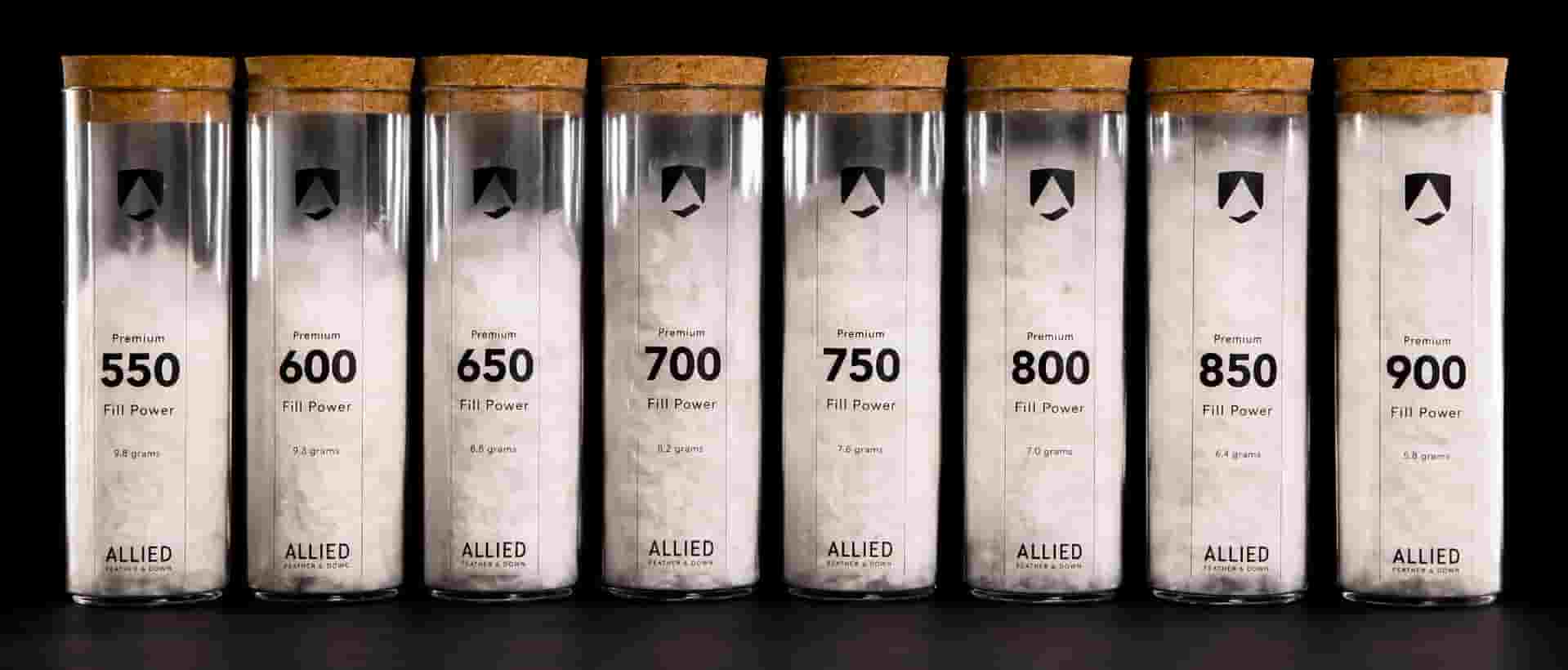
Fill power measures how much space one ounce of down occupies after being compressed and released. Higher fill power means the down has more loft and traps more air per gram of material.
| Fill Power | Characteristics | Typical Application |
|---|---|---|
| 600 Fill Power | Reliable warmth, cost‑effective | Everyday winter jackets, workwear, lifestyle outerwear |
| 700 Fill Power | Better warmth‑to‑weight balance | Outdoor jackets, premium casual collections |
| 800 Fill Power | Lightweight, high loft performance | Technical outdoor jackets, premium down products |
One thing worth clearing up: fill power on its own doesn't mean "warmer." A jacket with higher fill power can use less down while hitting the same insulation level as a jacket using more, lower‑grade down. What actually determines final warmth is a combination of fill power, down weight, construction, fabric, and baffle design — not the fill power number in isolation.
If you just want the short answer:
| Product Positioning | Recommended Fill Power |
|---|---|
| Corporate winter jackets | 600 Fill Power |
| Outdoor lifestyle collections | 600–700 Fill Power |
| Premium hiking jackets | 700–800 Fill Power |
| Lightweight technical products | 800+ Fill Power |
Here's the reasoning behind that table:
If you're running a commercial or mid‑range collection, 600 is usually the practical starting point. It's the workhorse spec — lower material cost, dependable insulation, and it's easy to hold your target retail price across a large production run. Most winter lifestyle jackets, corporate outerwear, and workwear lines we build for clients sit in this range, and honestly, most end customers can't tell the difference between a well‑built 600 jacket and something higher‑spec, unless they're comparing pack size side by side.
700 is where most brands land when they want a noticeable step up without blowing the cost structure. It compresses better, weighs less for the same warmth, and reads as more premium — which matters if you're positioning against hiking or outdoor lifestyle competitors. This is the spec we get asked about most often from brands moving up from a basic collection into something they can market as "performance."
800 only really earns its cost in technical products. If you're building something for alpine use, or a product where pack size and weight genuinely matter to the end user, 800 delivers real gains. But we'll say this directly to clients who ask: if you're designing an everyday winter jacket, jumping from 700 to 800 fill power is rarely worth the added cost — the end customer won't feel the difference, but you'll feel it in your unit economics.
What's your target market? A jacket built for city winters has different requirements than one built for an alpine expedition.
What's your retail price target? Fill power moves material cost, and material cost moves your margin or your price tag — usually both.
How good is the construction? A well‑designed jacket with tight baffles and good fabric can outperform a poorly built jacket with higher fill power. Spec alone doesn't guarantee performance.
What climate are you selling into? Colder markets can justify higher insulation levels; milder markets often don't need the premium spec at all.
Fill power is one variable among several that we evaluate when developing a custom down jacket:
Down ratio — typically 80/20 or 90/10 down‑to‑feather. Higher down content generally means better loft and softness.
Down source and certification — for brands that need traceability, RDS (Responsible Down Standard) certified down verifies the material was sourced responsibly. We support RDS‑certified down on request for brands that need it in their supply chain documentation.
Shell fabric — down jackets need a fabric that resists feather leakage. Common choices include high‑density down‑proof weaves, nylon shells, and lightweight recycled fabrics.
Quilting and baffle construction — baffle size, stitching method, and pattern layout all affect how evenly the insulation stays distributed and whether you end up with cold spots after wash and wear.
We work with outdoor brands, private label programs, and workwear suppliers to develop custom down jackets across different fill power specs, price points, and performance targets — including duck down, goose down, and synthetic insulation alternatives, custom shell fabrics, quilting development, and RDS‑certified material sourcing where required.
If you're still deciding between fill power specs for an upcoming collection, get in touch with our team and we can walk through the tradeoffs based on your target market and price point before you commit to a sample.
Is higher fill power always better for down jackets?
Not necessarily. Higher fill power improves loft and warmth‑to‑weight performance, but the right choice depends on product positioning, climate, and target price — not just the highest number available.
What is the difference between 600 and 800 fill power?
800 fill power offers better loft and weight efficiency for the same warmth. 600 fill power delivers reliable insulation at a more accessible cost, which is why it's still the default for most commercial collections.
Can brands customize down fill power for OEM jackets?
Yes. We develop jackets across different down specifications based on your design brief, target market, and budget.
Does RUINIU provide certified down options?
Yes. We support RDS‑certified down for brands that require verified, responsible sourcing in their supply chain.
What fill power does RUINIU recommend for new outdoor brands?
For many new collections, 600–700 fill power provides a practical balance between performance and cost. The right call still depends on target market, climate, and where you're positioning the product at retail.
Choosing between 600, 700, and 800 fill power isn't about picking the highest number you can afford. In our experience, the best‑performing collections aren't always the ones using the highest fill power — they're the ones where the insulation actually matches the product's purpose, the target market, and where it sits on price.