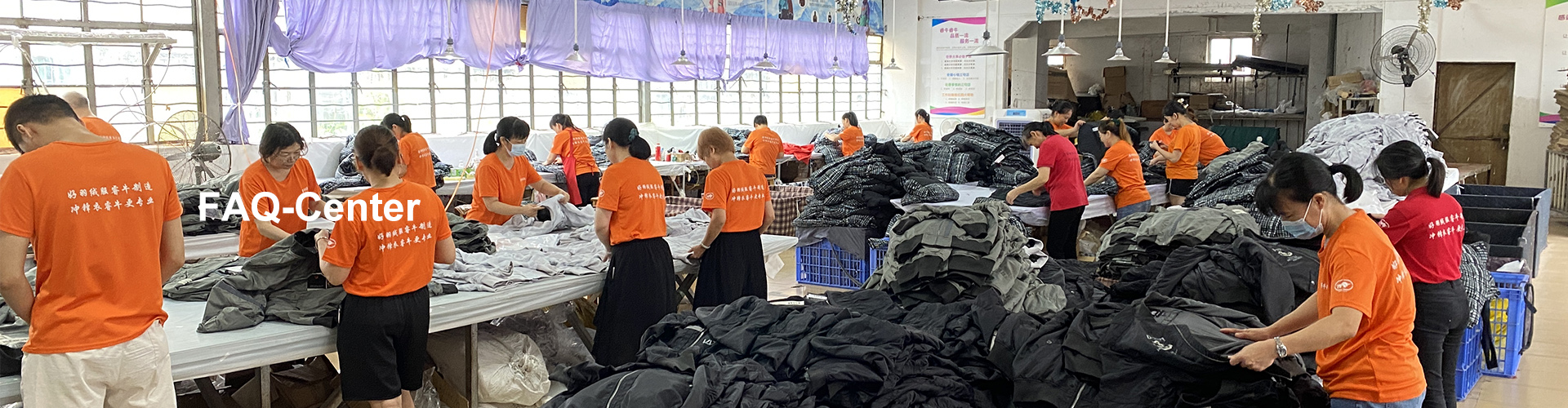

The EU Digital Product Passport (DPP) rules for textile apparel are still being developed. Outdoor brands should not wait for the final legal template before organizing supplier data. Ask jacket suppliers for product identification, fiber composition, material certificates, recycled-content evidence, performance testing, production-batch information and quality records. RUINIU can organize the available project records and identify which documents are held by the factory, which are issued by material suppliers and which need to be arranged.
Contents
The Digital Product Passport is an EU framework for making product information available across the value chain. For apparel, the final data fields and technical rules are not yet fixed. Textile apparel is a priority product group under the Ecodesign for Sustainable Products Regulation (ESPR), and the European Commission currently lists Q4 2027 as the planned adoption period for the textile delegated act. The timetable may change as the legislative and technical work develops.
For a jacket brand, the practical step is supplier data preparation. A factory does not replace the brand or the EU responsible economic operator in creating the final DPP. The factory supplies accurate production and material evidence that the brand can use in its own compliance process.
See the European Commission textile and apparel DPP update.
Milestone | Current position |
|---|---|
ESPR Regulation | In force since 2024. |
DPP Registry | Operational from 20 July 2026 for products covered by the applicable rules. |
Unsold apparel destruction | Large companies from 19 July 2026; medium-sized companies from 19 July 2030, subject to the regulation and exemptions. |
Textile delegated act | Planned for Q4 2027; the final legal text is not yet available. |
Transition period | The Commission indicates at least 18 months after the relevant delegated act, subject to the final implementation rules. |
The 2026 registry and unsold-apparel rules do not mean that every outdoor jacket already has a complete mandatory DPP. They do mean that brands should start collecting reliable supplier evidence now.
Read Regulation (EU) 2024/1781 on EUR-Lex.
A useful supplier data pack should identify the exact style, materials, production batch and supporting evidence. Request the information at sample approval and confirm the final version before bulk cutting.
Data category | Records to request |
|---|---|
Product identity | Style number, color, size range, season, product version and production quantity. |
Fiber composition | Shell, lining, insulation, trims and packaging composition. |
Material source | Mill or supplier reference, lot number and receiving record where available. |
Recycled content | Supplier declaration and applicable GRS documentation. GRS documents are issued by the relevant material supplier and are provided with the supplier authorization letter. |
Performance testing | Waterproofing, breathability, abrasion, colorfastness, pilling or seam-sealing results, according to the product specification. |
Chemical compliance | REACH-related material documents and restricted-substance records. These documents are issued by the applicable accessory or material supplier and supported by authorization. |
Production traceability | ERP records connecting the project to fabric batches, production line, cutting, sewing, finishing and inspection stages. |
Quality management | IQC, IPQC and OQC records, final inspection reports and ISO 9001 quality-management evidence. |
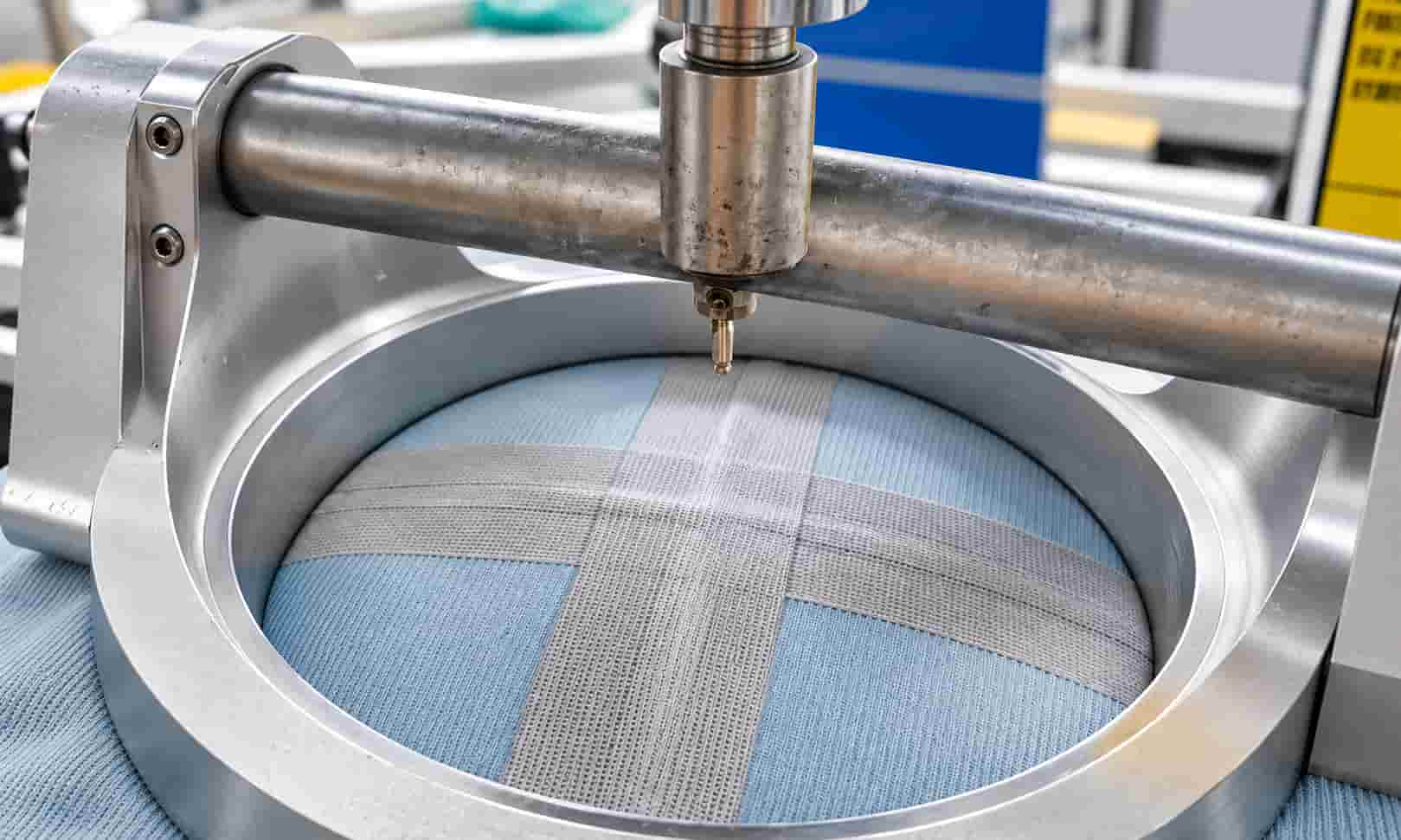
Not every certificate has the same owner. A buyer should check the document holder, certificate scope, product or material reference, validity date and whether the document covers the exact material used in the order.
Factory documents: ISO 9001 evidence, ERP production records and factory quality-control reports.
Material-supplier documents: GRS and OEKO-TEX certificates, REACH-related declarations and other fabric or accessory compliance records.
Project-specific evidence: PFAS-free C0 DWR declaration, waterproof testing, seam-sealing checks and final inspection results for the agreed style.
RUINIU holds authorization letters for applicable supplier-issued GRS, OEKO-TEX and REACH documentation. The document source and scope should be shown clearly in the buyer's supplier file.
Jacket type | Priority supplier data |
|---|---|
Membrane specification, hydrostatic pressure, breathability, DWR treatment, seam-sealing method and test records. | |
Fiber composition, fabric weight, anti-pilling requirement, recycled polyester evidence and colorfastness. | |
Down ratio, fill power, insulation source, shell composition and production-batch information. | |
Snow protection, seam sealing, insulation, fabric performance, durability and final inspection records. |
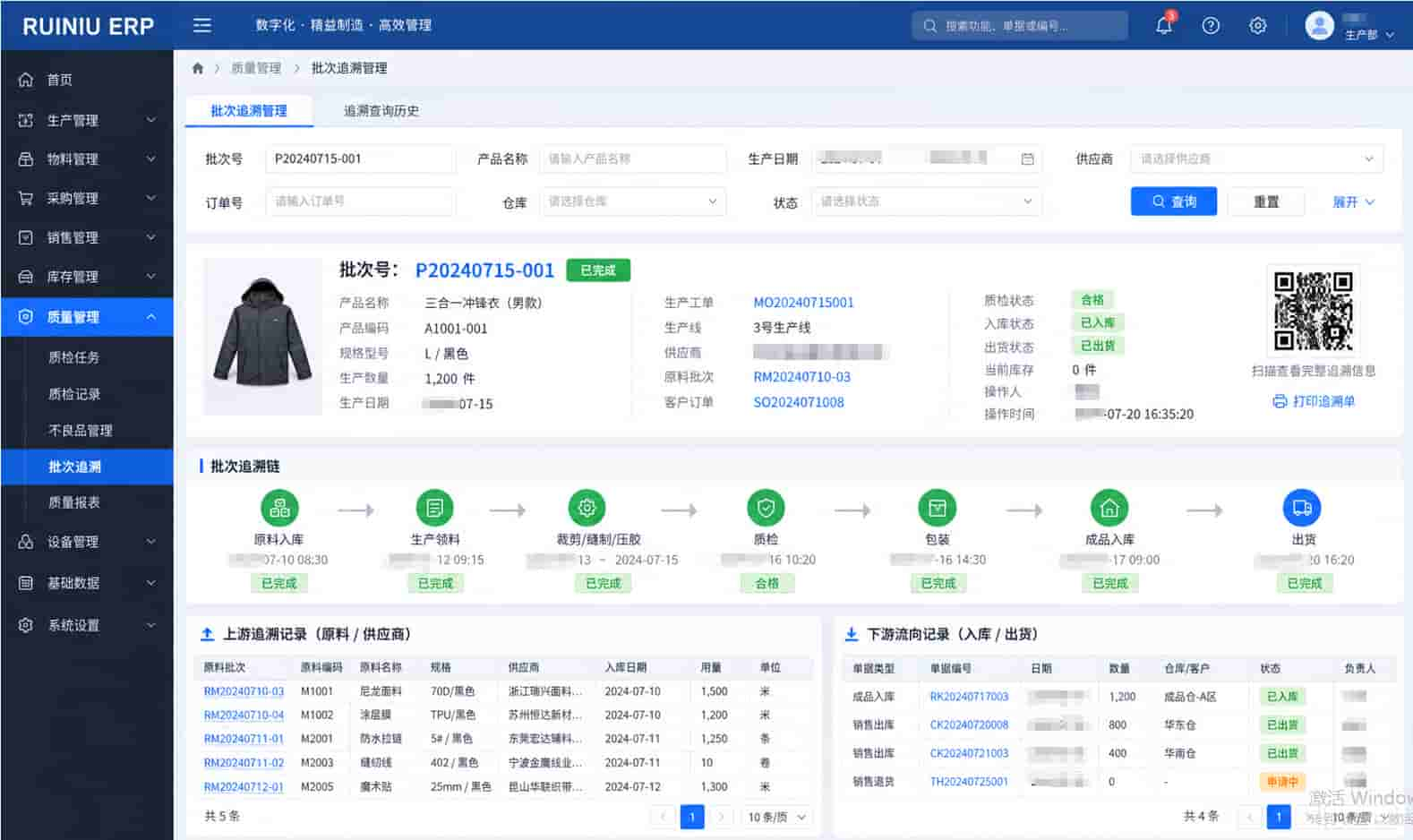
RUINIU is an OEM and ODM outdoor apparel manufacturer in Foshan, China. For applicable projects, the factory can organize product and production evidence by style, material and batch. The working data package may include ERP traceability, fabric and accessory records, testing results, seam-sealing inspection, IQC/IPQC/OQC records and final quality reports.
RUINIU's ISO 9001 quality-management evidence supports the factory quality process. GRS, OEKO-TEX and REACH documents are issued by the relevant material or accessory suppliers and are provided together with authorization letters where applicable. PFAS-free C0 DWR information is prepared for projects using that specified finish.
Records are retained according to the agreed project and quality-management requirements. Buyers should confirm the required retention period in the purchase specification or supplier quality agreement.
For background on the production workflow, visit RUINIU OEM and ODM services and quality control for outdoor jackets.
No. Textile-specific DPP requirements are still being developed. Brands should prepare supplier data now, but should not describe a jacket as legally DPP-compliant until the applicable EU requirements and product scope are confirmed.
For the applicable materials, these documents are issued by the relevant material or accessory suppliers. RUINIU provides the available documents together with supplier authorization letters so the buyer can verify the source and scope.
For applicable RUINIU projects, ERP production records can be organized by style, material batch, production line and inspection stage. The exact fields depend on the project specification and the records requested by the buyer.
Send the tech pack, material specification, target market, required certificates, expected quantity and delivery plan. RUINIU can then confirm which records are available, which are supplier-issued and which need to be arranged before sampling.
Send your tech pack, fabric specification or product brief. RUINIU will review the required material, testing, traceability and production records, then identify which documents are available, which are supplier-issued and which should be arranged before sampling.
OEM and ODM manufacturingOutdoor jacket quality controlCustom outdoor jacketsCustom fleece jackets
Information checked in October 2026. EU implementation dates may change as legislative and technical work progresses. This article is a supplier-data guide, not legal advice.