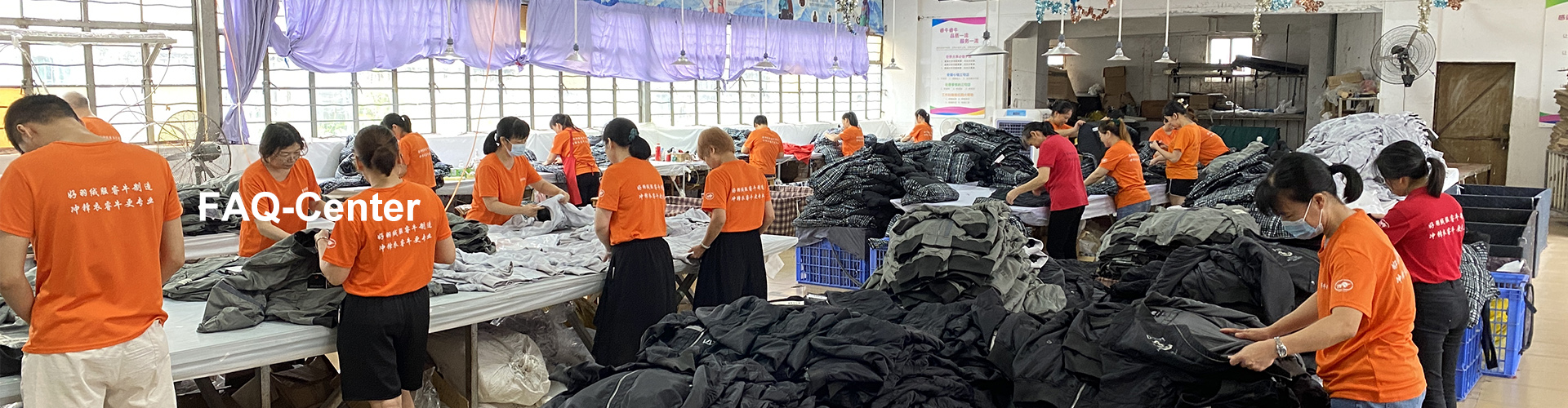

Choosing an outdoor jacket manufacturer in China requires two checks: confirm who the supplier is, then confirm that its technical processes match your product. A business licence or factory video can support identity verification, but neither proves that the supplier can consistently make your waterproof shell, softshell, insulated jacket or ski style.
Quick answer: verify the legal entity, factory address and payment beneficiary; inspect relevant production and QC processes; review similar product evidence; then use sampling and a controlled trial order to test the supplier's actual performance. Treat certificates, videos and sales claims as evidence to cross-check, not automatic proof.
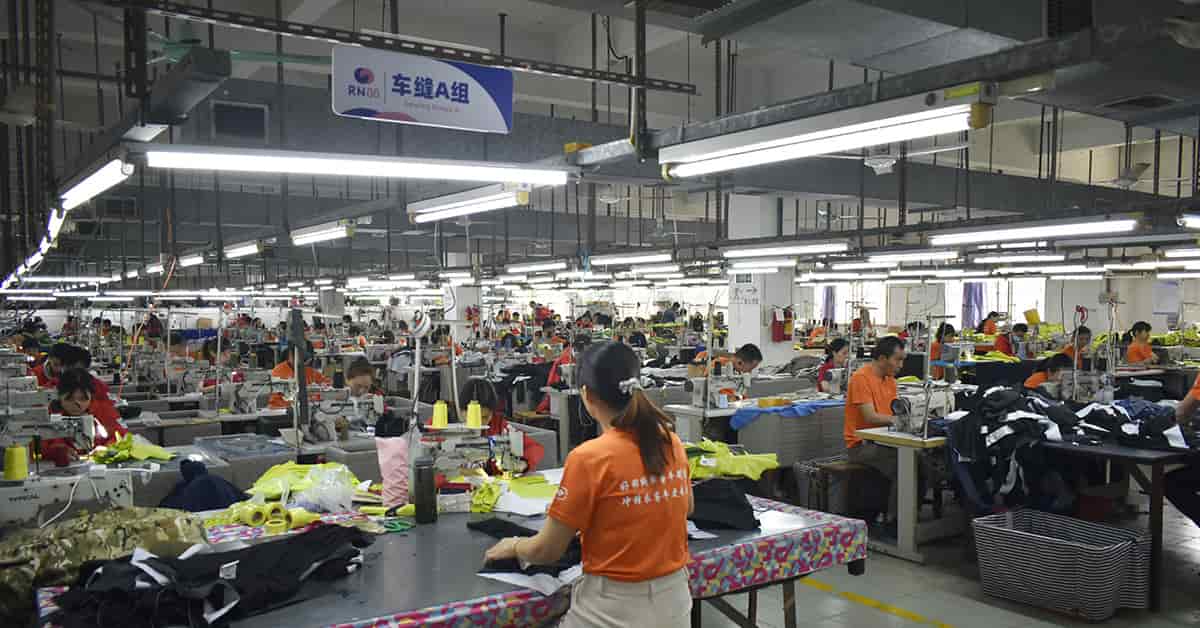
A manufacturer operates production processes. A trading company purchases from one or more factories and manages the commercial relationship. Some suppliers use a mixed model, producing certain products and outsourcing others.
None of these structures is automatically good or bad. A trading company can be useful for a mixed product range, while a specialist factory can offer closer process control. The important point is transparency: who makes the jacket, who buys the materials, who controls quality, who is named on the contract and who receives payment?
| Check | Evidence | What to compare | Why it matters |
|---|---|---|---|
| Legal identity | Business licence and registered company details | Company name, registration number and business scope | Shows which entity exists legally |
| Operating site | Live tour, visit or independent audit | Address, signage, active lines and product type | Connects the company to a real production location |
| Contracting entity | Quotation, contract and invoice | Names and addresses across documents | Clarifies who accepts the order and obligations |
| Payment beneficiary | Bank account details on verified documents | Beneficiary name against the contracting entity | Reduces payment-diversion and identity risk |
| Certificate scope | Full certificate and official verification | Holder, site, product scope and validity | Prevents unrelated or expired documents being reused |
For a detailed identity-verification workflow, use our guide on how to verify a clothing factory in China.
Do not audit every supplier against the same equipment list. The relevant process depends on the product. A fleece programme needs fabric-surface and dimensional controls. A down jacket needs filling and baffle controls. A waterproof shell requires laminate handling, seam construction, tape compatibility and appropriate performance checks.
Ask to see a current product with similar materials and construction, but respect other customers' confidential information. Review workmanship, seam geometry, internal finishing, measurements and functional details. A broad catalogue is less useful than evidence that the supplier understands your particular risk points.
Which shell constructions and seam tapes are used regularly?
How are tape temperature, pressure and speed approved for a new fabric?
Which seams are fully sealed, critically sealed or left unsealed?
What inline checks identify lifting, tunnelling, wrinkles and missed sections?
Which waterproof tests are performed internally and which are sent to an external laboratory?
How are failed results investigated and corrected before bulk release?
Using an external accredited laboratory is not automatically a weakness. The key is whether the factory has a defined test plan, controls its daily process and acts on results. An in-house machine without a calibrated method or trained operator is not stronger evidence.
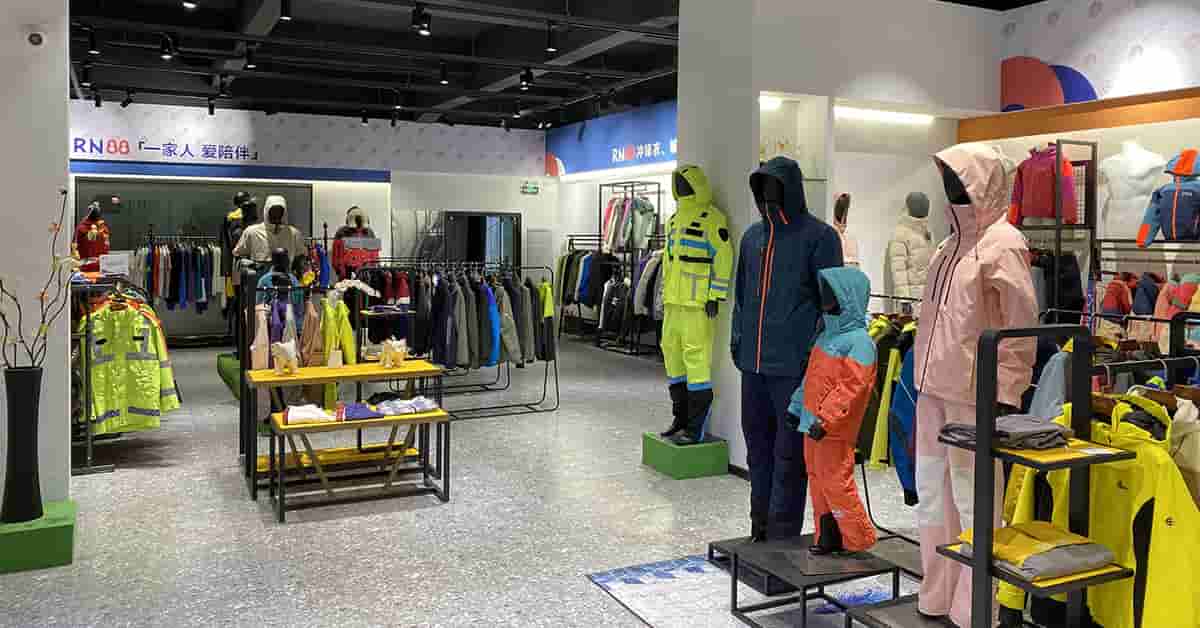
Performance numbers should be tied to an exact material, test method and report. A membrane rating from a mill should not be presented as the guaranteed result of every finished jacket. Likewise, a certificate must match the holder, scope and validity claimed.
For PFAS-free DWR or OEKO-TEX claims, ask which component is covered and what evidence supports the production lot. The guide to PFAS-free DWR and OEKO-TEX for outdoor jackets explains the difference between a chemical claim, certification and destination-market compliance.
Factory size alone does not guarantee on-time delivery. Ask what will be produced on the intended lines during your season, which processes are subcontracted and when materials must arrive to reserve capacity. A smaller specialist line may suit a technical order better than a larger general line, while a high-volume programme may require more line capacity and production engineering.
Request a milestone schedule rather than one final ship date. It should include material approval, bulk material arrival, pre-production meeting, cutting, sewing, special processes, inline inspection, final inspection and dispatch.
A sample order shows how the supplier interprets a tech pack, raises conflicts, discloses substitutions and records measurements. Use numbered comments and require the next sample to close each point. The supplier should identify any feature that cannot be produced as drawn before bulk pricing is final.
Do not judge only the appearance of the first sample. Check pattern balance, movement, seam allowance, internal construction, pocket function, hood adjustment, logo application and the relationship between the approved sample and production instructions.
Legal entity, address, contract party and payment beneficiary verified
Product experience relevant to the proposed jacket construction
Pattern, sample and technical comment process demonstrated
Incoming-material identification and lot control visible
Special processes reviewed, including seam sealing or filling where applicable
Inspection standards, tolerances and defect classification documented
Testing plan linked to exact materials and finished-product claims
Subcontracted processes and responsible facilities disclosed
Capacity plan reviewed for the intended order period
Corrective-action process demonstrated with non-confidential examples
Company names differ across licence, quotation, invoice and bank details without a clear explanation.
The supplier refuses a live view, visit or reasonable independent inspection of the production site.
Certificates are cropped, expired or outside the proposed product scope.
Waterproof, chemical or sustainability claims have no exact material reference or report.
Substitutions are made during sampling without written approval.
Lead time, MOQ and price remain unchanged even after major specification changes.
After identity and capability checks, compare the working relationship using our guide to choosing an outdoor jacket OEM partner. Product options are available on the custom outdoor jacket manufacturing page.
No. The right structure depends on the programme. What matters is transparent responsibility, appropriate technical control and evidence that the selected production site can meet the specification.
No. An audit is a snapshot. Quality still depends on the approved materials, production file, inline control, testing and final inspection for each order.
Not necessarily. Some specialist tests are appropriately performed by external laboratories. The factory should still control daily production risks and manage external results through a clear quality plan.