
Quick answer: P&G needed 5,000 branded down jackets for its China workforce, on a 35‑day production window. Ruiniu, based in Foshan, Guangdong, China, produced them with a nylon shell and 700 fill power down, embroidered the logo directly onto the down‑filled panels, and shipped on schedule. The main technical challenge was controlling down leakage after embroidery, because stitching creates additional points that require careful control on down‑proof fabrics.
P&G runs a winter gifting program for its China‑based staff. For the 2025‑26 season, the order was for 5,000 down jackets with the company logo embroidered on the chest, and a hard deadline: 35 days from confirmed order to shipment.
A 35‑day timeline requires coordination between material preparation, embroidery, production scheduling, and inspection. Two areas needed the most attention during development.
P&G's sourcing team reviewed several factories before placing the order. A few quoted lower prices than Ruiniu did.
The final evaluation focused on whether the production plan matched the required timeline and specifications. Ruiniu, outdoor apparel OEM manufacturer located in Foshan Guangdong China, provided fabric samples, current line schedules, and a stage‑by‑stage production plan, which let the buyer evaluate whether the delivery target matched actual production capability before moving forward.
These are the specs confirmed for the P&G order after sample approval:
| Item | Detail |
|---|---|
| Garment | Corporate winter down jacket |
| Shell fabric | Down‑proof nylon |
| Fill | 700 fill power down |
| Branding | Embroidered logo, chest placement |
| Logo application | Chest embroidery, based on approved artwork and sample placement |
| Quantity | 5,000 units |
| Quality control | Final inspection before shipment, including appearance, stitching, and down leakage checks |
| Lead time | 35 days, order to shipment |
For this application, 700 fill power provided the right balance between warmth, cost control, and supply stability across 5,000 units.
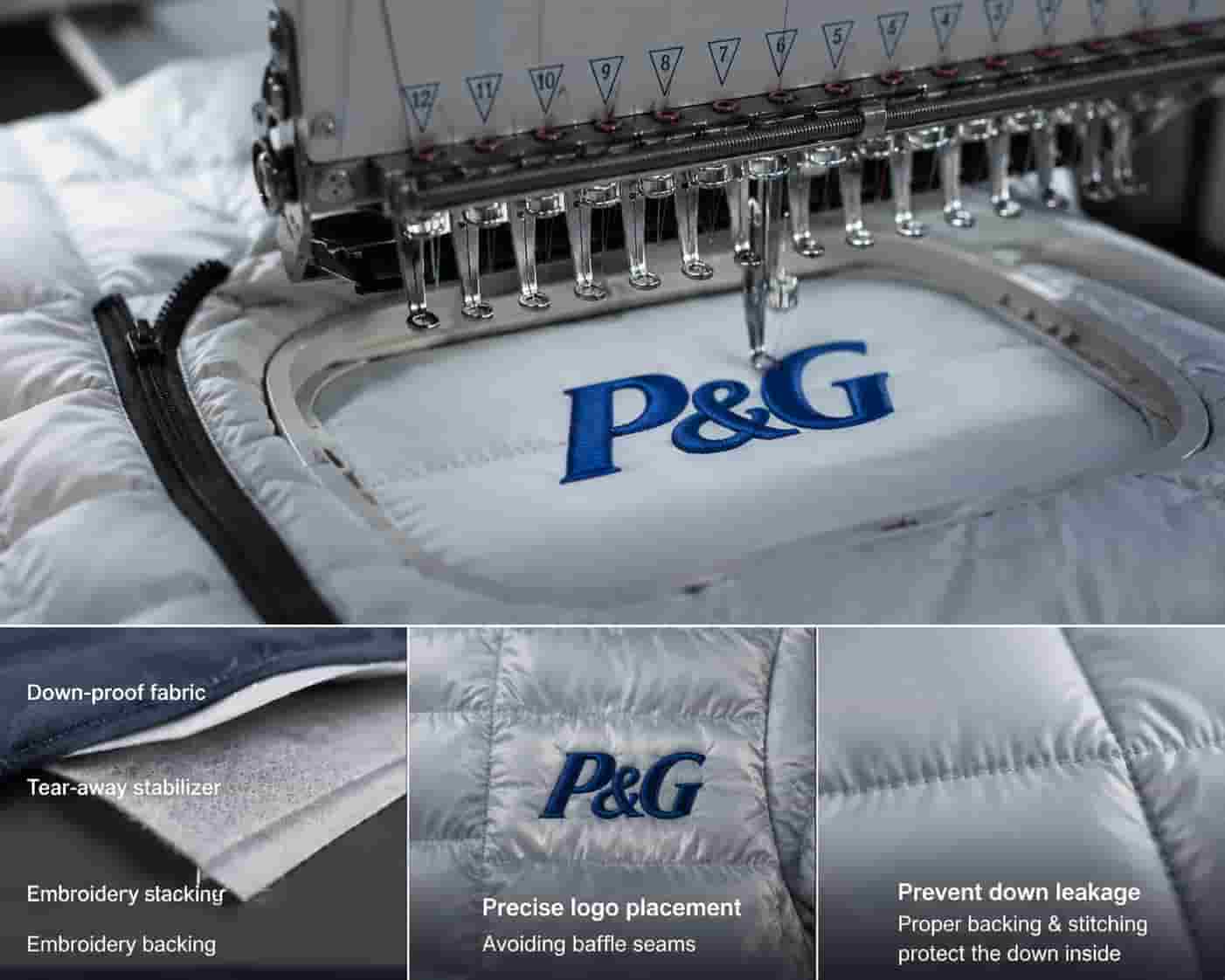
Embroidering a logo onto a t‑shirt or a fleece is straightforward. A down‑filled panel is a different problem, because every needle puncture through down‑proof fabric can become a point where down slowly works its way out.
Unlike regular garments, embroidery on down jackets needs to consider both appearance and insulation performance before production. Three issues came up when planning the embroidery for this order:
Needle density near baffle seams. The logo placement had to avoid crossing quilted baffle lines — stitching across a seam weakens it right where leak risk is already highest.
Stabilizer backing. Without the correct backing, the down panel shifts under the embroidery machine and the logo distorts, pulling the surrounding fill out of shape.
Order of operations. Embroidery was done on flat panels before down filling. Doing it the other way around, filling first, would have made leak risk much harder to control.
Before bulk embroidery started, the team ran the logo on sample panels to confirm placement, stitch density, and backing. That step added roughly two days to the front end of the schedule. Skipping it would have saved those two days but risked discovering a leak problem after several thousand units were already stitched — a much more expensive fix.
A 5,000‑unit order like this normally runs longer than the agreed timeline if each stage waits for the previous one to finish. To hit the deadline, several stages ran in parallel instead:
Fabric sourcing started while pattern approval was still being finalized, instead of waiting for sign‑off.
Pattern cutting ran on CAD‑based cutting once the pattern was locked.
Embroidery was processed on flat panels, ahead of the down‑filling stage.
Down filling ran on automated equipment set to hold gram‑weight accuracy per baffle.
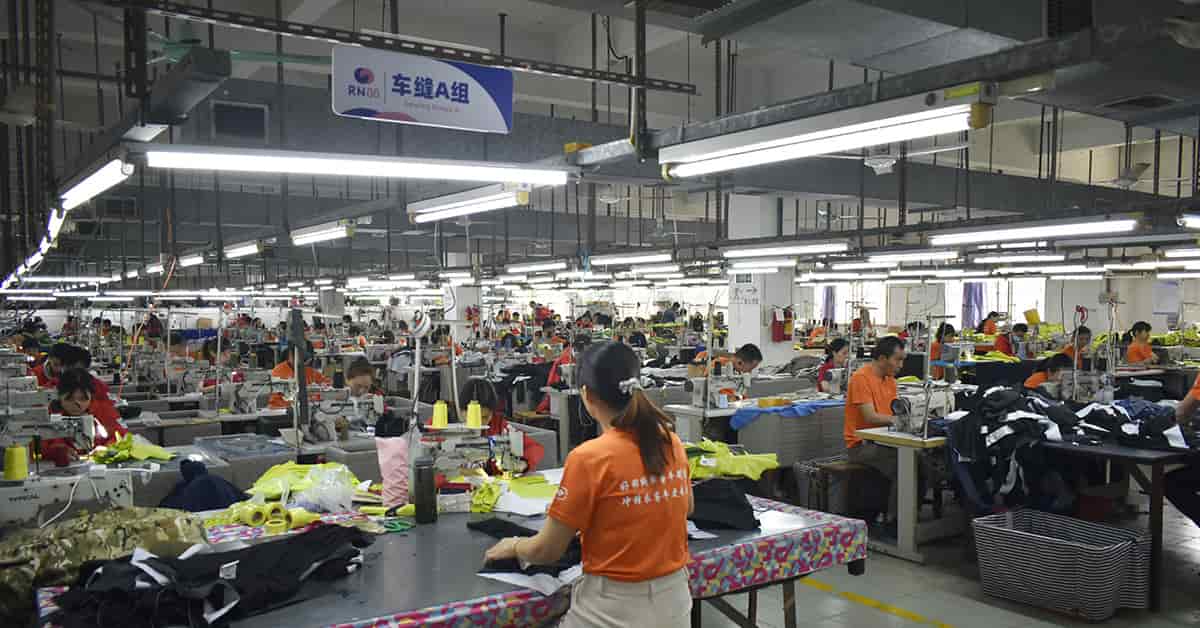
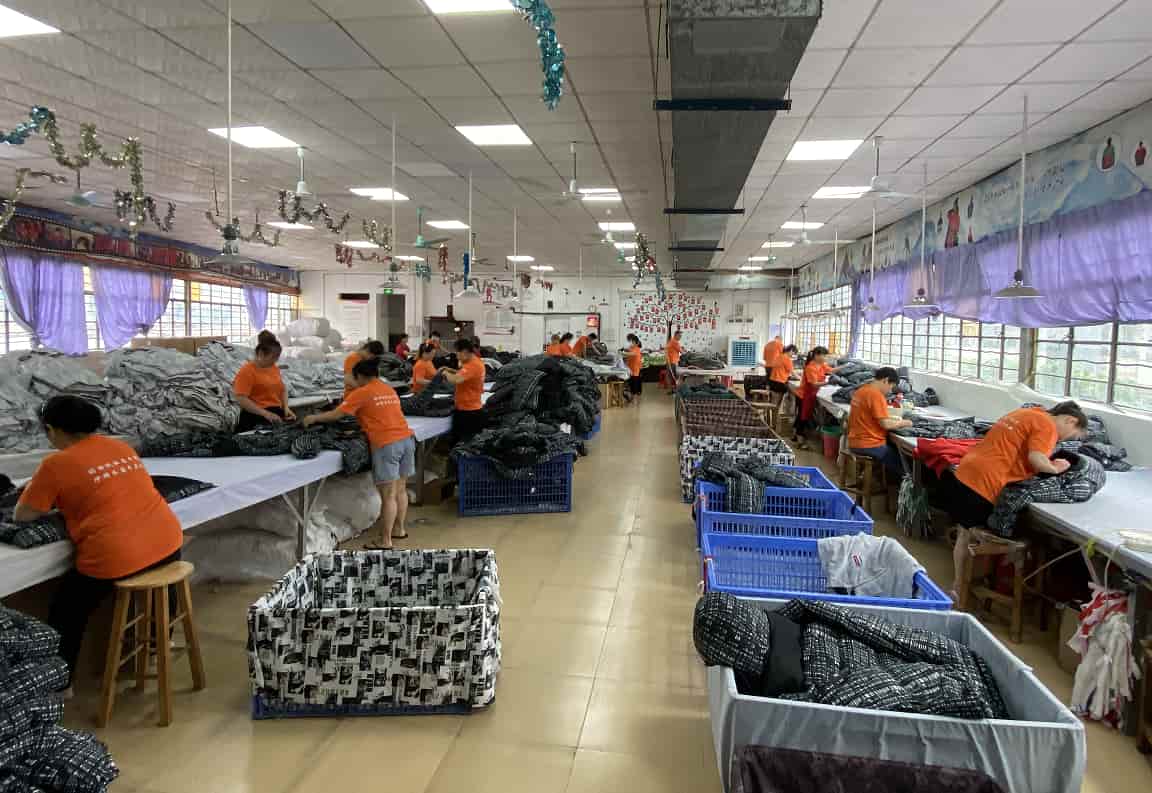
Sewing assembly was split across multiple lines running in parallel rather than one continuous line.
Inspection checked every unit for stitching tension and down‑proof integrity before packing.
The order shipped within the agreed delivery window. The jackets were completed to the approved sample specification and passed final inspection before leaving the factory.
Answer: The jackets were for daily commute and office wear, so they didn't need to handle extreme cold. 700 fill power gave enough warmth for that use case while keeping cost and supply stable across 5,000 units. 800+ fill power would have added cost without a real benefit on this project.
Answer: The logo was first stitched onto sample panels to check placement relative to the baffle seams, stitch density, and stabilizer backing. Embroidery was done before down filling, not after, to reduce the risk of the needle punctures affecting a filled panel.
Answer: Fabric sourcing, cutting, embroidery, filling, sewing, and inspection were scheduled so several stages overlapped instead of running one after another. Multi‑line parallel sewing was the main change from a standard schedule.
Share your design, quantity, and delivery requirement. Our team can review the production approach with you.
Discuss Your Project →