By Iris Jiang, Outdoor Apparel QC and OEM Content Lead at RUINIU · Updated October 21, 2026
A windbreaker is a lightweight woven jacket designed primarily to reduce wind exposure, not a guaranteed waterproof rain jacket.
RUINIU manufactures custom windbreakers in Foshan, China, for outdoor brands, workwear programs and private-label buyers. Fabric selection is set by the jacket’s climate, activity, target weight, finish, lining and test requirement, not by the fiber name alone.
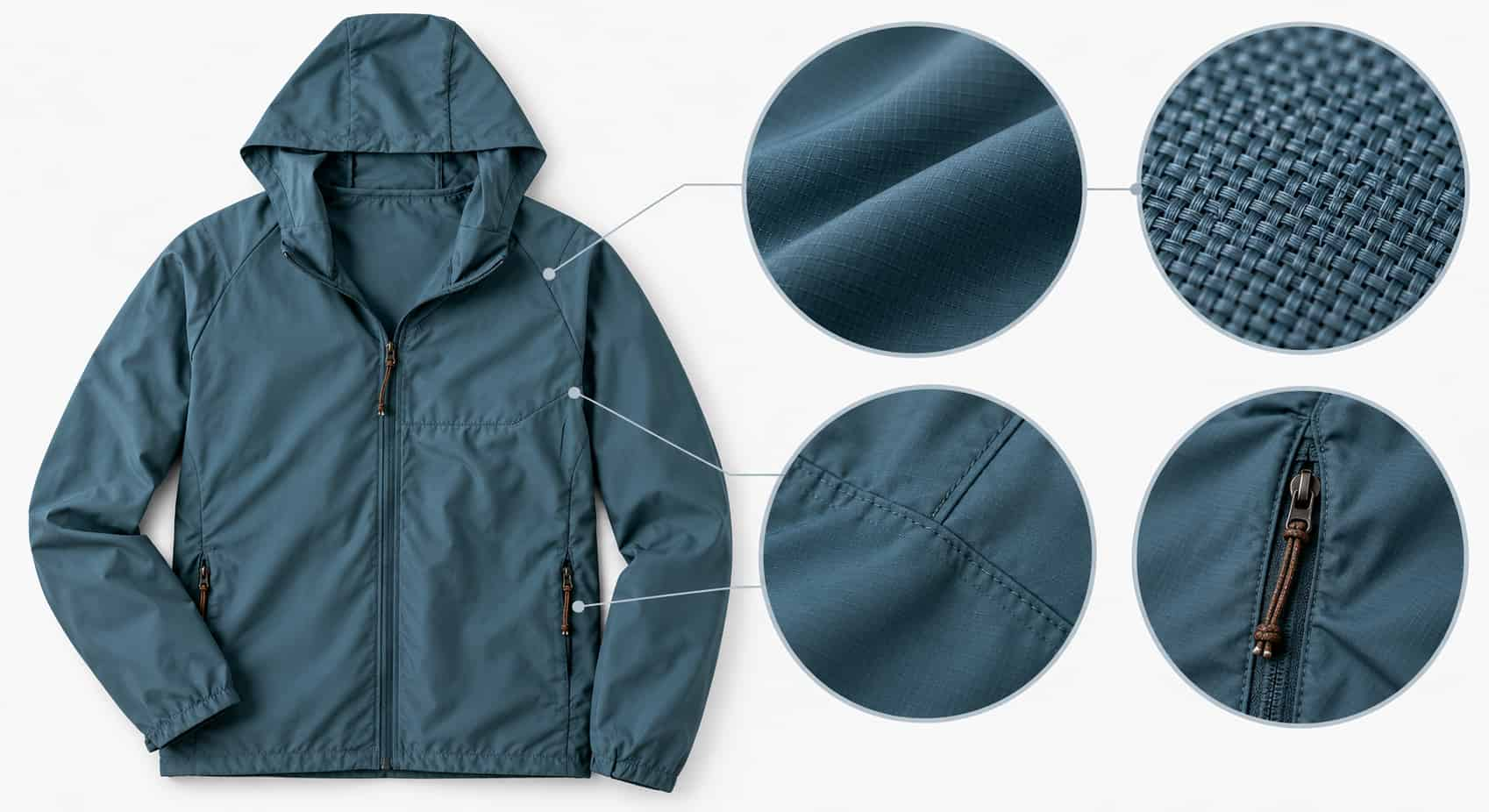
Most windbreakers use lightweight nylon or polyester. For packable outdoor shells, RUINIU generally starts with 35–70 GSM ripstop nylon. For printed teamwear and promotional programs, 50–90 GSM polyester pongee is usually easier to print, dye and source.
| Fabric | Typical weight | Best for | Wind blocking | Breathability | Water performance |
|---|---|---|---|---|---|
| Nylon taffeta / plain weave | 40–80 GSM | Casual and uniform shells | High when tightly woven | Good if uncoated | DWR; coating optional |
| Ripstop nylon | 35–70 GSM | Packable outdoor shells | High | Good if uncoated | DWR or light coating |
| Polyester pongee | 50–90 GSM | Printed teamwear and promotional programs | High when tightly woven | Good if uncoated | DWR; coating optional |
| Stretch woven | 70–120 GSM | Running, cycling and active outdoor use | Medium to high | Good | DWR |
These are category ranges for initial review; the approved swatch and supplier data sheet control the final specification. Softshell laminate is a separate, heavier construction... See our custom softshell jacket manufacturing page.
Nylon has good tear strength for its weight and comes in crisp or soft finishes. Lightweight ripstop nylon is the common choice for packable outdoor shells because the grid construction limits the spread of small tears. Taffeta and plain-weave versions suit casual or uniform jackets.
Nylon is heat sensitive, so check temperature limits for heat-transfer printing and pressing, then judge hand feel and shade on the approved sample.
Polyester is widely used for windbreakers because it dries quickly, holds color well and is available in many weights and constructions. It can be printed or dyed for branded collections, sports teams and promotional programs. A dense polyester weave blocks wind effectively without making the garment heavy.
Ask whether the color and finish will be achieved by piece dyeing, yarn dyeing or printing, as the method affects minimums, appearance and colorfastness.
A windbreaker needs more than a synthetic fiber. Tight plain weaves reduce air passage, ripstop adds a reinforcement grid, and stretch weaves improve movement. Fabric weight affects packability, drape, durability and opacity. Very light materials need careful seam and zipper construction to avoid puckering, so review the swatch and finished sample before approval.
A durable water-repellent (DWR) finish helps light rain bead on the surface, but DWR alone does not make a jacket fully waterproof. A coating or membrane increases water resistance, although breathability, hand feel, seam construction and cost may change. If waterproof performance is required, define a test method and decide whether seams need sealing.
More brands now request PFAS-free C0 DWR for markets and product specifications that require it. The finish, test method and supporting documents should be confirmed in writing before material approval.
For applicable materials and accessories, GRS, OEKO-TEX and REACH documents are issued by the relevant suppliers. RUINIU provides the available supplier documents together with authorization letters. RUINIU operates under an ISO 9001-certified quality management system covering garment manufacturing and quality control. PFAS-free C0 DWR documentation is prepared when that finish is specified.
Related reading: what a windbreaker jacket is · complete windbreaker sourcing guide
For European programs, request the applicable REACH documents, PFAS-free C0 DWR evidence and fiber-label information before approval. For North American children’s products, put CPSIA testing in the brief. In Australia and New Zealand, buyers may call a lightweight windbreaker a “windcheater.” For teamwear and promotional programs, polyester pongee is the practical choice when predictable printing and color matching matter.
Unlined: lowest weight and compact packing, but the interior finish remains visible.
Mesh: improves next-to-skin comfort and helps manage moisture.
Tricot or taffeta: provides a smoother interior and covers seam allowances.
Light fleece: adds warmth but moves the garment toward a lined jacket rather than a simple wind shell.
Include these points in the material brief:
fiber content, construction and target weight
required stretch and hand feel
color or print method
DWR, coating or membrane requirement
lining type
test methods for wind, water, strength or colorfastness
target market and care instructions
| Property | Common test reference |
|---|---|
| Wind resistance / air permeability | ISO 9237 |
| Water resistance / hydrostatic head | ISO 811 or AATCC 127 |
| Surface wetting / spray rating | ISO 4920 or AATCC 22 |
| Tear strength | ISO 13937 |
| Abrasion | ISO 12947 (Martindale) |
| Colorfastness | ISO 105 series |
These are common references, not a promise that every project uses every test. Confirm the required standard, test condition and acceptance value in the buyer’s specification.
Nylon suits packable, soft-hand shells; polyester suits printed or dyed teamwear. Compare the actual weave, weight, finish and test requirement before approval.
Most are water-repellent, not waterproof. Waterproof performance requires a suitable barrier, controlled seams and a defined test standard.
Ripstop is a woven construction with stronger reinforcement yarns forming a grid. It improves tear resistance without adding excessive weight.
Most lightweight shells run 35–90 GSM; stretch wovens run 70–120 GSM. Confirm the actual fabric weight on the approved swatch and supplier data sheet.
The quote is driven by fabric construction, weight, DWR or coating, lining, color method, garment details and order quantity. RUINIU’s starting MOQ is 100 pieces per style and color, subject to materials and construction.
For a custom windbreaker review, send the target market, jacket use, preferred fiber, target GSM, color or print method, order quantity and delivery date. RUINIU will review the fabric construction, lining and testing requirements before sampling.
Sampling usually takes 7–10 working days once materials are confirmed. Standard bulk production is usually completed within 35–50 days after sample approval.