
The best hardshell jacket is not the one with the largest waterproof number or the longest feature list. It is the shell whose fabric construction, seam sealing, fit, ventilation and durability match a defined activity, climate and price level. For brands, that means converting the end use into measurable product and manufacturing requirements before requesting a sample.
Buyer summary: choose the laminate structure first, then specify waterproof and breathability test methods, taped-seam coverage, zipper construction, fit, hood and ventilation. Approve the exact fabric-and-tape combination before bulk and test the finished jacket against its intended claim.
A hardshell is designed primarily for protection from wind and precipitation. It normally uses a woven face fabric bonded or coated with a waterproof-breathable layer. Unlike an insulated jacket, a shell usually relies on layers worn underneath for warmth.
“Hard” does not always mean stiff. Modern hardshell fabrics can be light, soft or stretchy. The term describes the jacket's protective role more than one exact fibre or hand feel.
| Construction | Inside structure | Typical design benefit | Development consideration |
|---|---|---|---|
| 2-layer | Face fabric bonded to membrane or coating; separate lining protects the inside | Comfortable lining and flexible styling | Additional lining affects weight, drying and construction |
| 2.5-layer | Face and membrane plus a printed or applied inner protective layer | Low weight and compact packing | Inner print durability and next-to-skin feel need evaluation |
| 3-layer | Face, membrane and backer bonded as one material | Stable technical construction without a loose lining | Laminate choice, seam geometry and tape compatibility are critical |
These categories do not create an automatic quality ranking. A well-developed two-layer commuter shell can be more suitable than a three-layer alpine fabric for its intended customer. Compare exact material specifications and test reports rather than choosing by layer count alone.
Priorities may include low packed volume, ventilation, backpack-compatible pockets and enough room for a light mid-layer. Reinforcement should follow real abrasion areas rather than adding weight everywhere.
A ski shell may need a helmet-compatible hood, glove-friendly adjusters, lift-pass storage, snow management and a fit that works over insulation. The brand should decide which features are essential because every additional component affects cost, weight and failure risk.
Comfort, quiet hand feel, clean styling and practical pocket access may matter more than extreme technical construction. A longer body or two-layer lined design can be appropriate if packability is not the main goal.
A specification such as “10K waterproof” is incomplete without a test method, unit, conditioning and acceptance level. Different methods can produce results that should not be compared as if they were identical. Breathability is also measured through different approaches, so a number from one method is not directly interchangeable with another.
Confirm whether the requirement applies to the fabric, taped panels or finished garment. Fabric performance is necessary, but the completed jacket also includes seams, zippers, pockets, hood joins and openings.
DWR helps the face fabric resist wetting. When the face wets out, the jacket may feel heavier and less comfortable even if the underlying membrane has not leaked. The brand should set an initial spray result and durability requirement after the agreed care cycles.
If a PFAS-free finish is required, specify the claim and evidence separately from waterproof testing. See the guide to PFAS-free DWR and OEKO-TEX for outdoor jackets.
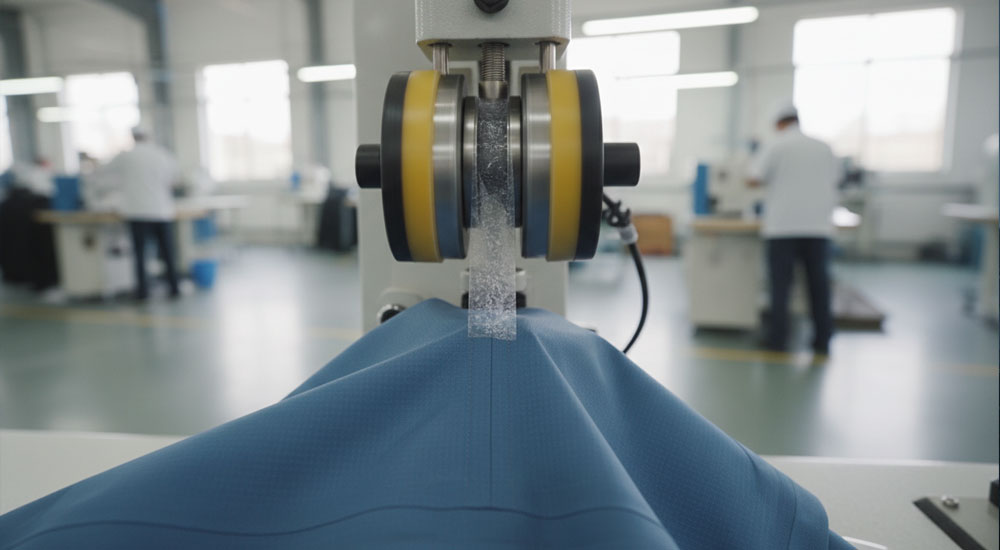
Needle holes can create water paths, so taped coverage must be defined in the tech pack. Fully seam-sealed and critically seam-sealed are different constructions. Mark every seam requiring tape, including pocket and hood joins that may otherwise be interpreted differently.
Tape, laminate and machine settings must be developed as one system. Trial the actual production fabric and colour, then check tape adhesion, wrinkles, tunnelling, lifting and leakage. The detailed seam sealing quality-control guide explains the main process variables.
Product brief: define activity, climate, layering, price level and required claims.
Material selection: approve shell, lining or backer, seam tape, zippers and trims.
Pattern engineering: check movement, hood function, seam placement and pocket access.
Prototype: evaluate construction and fit, recording every material substitution.
Tape trials: establish a workable fabric, tape and machine-setting combination.
Testing: complete agreed material, taped-panel and garment checks.
Pre-production approval: seal the bulk bill of materials, sample and quality plan.
Bulk control: inspect incoming materials, cutting, sewing, seam sealing and final function.
Shell reference, lot, colour and face appearance match approval
Cut panels are not stretched, damaged or mixed between lots
Seam allowances and intersections are suitable for taping
Tape edges, overlap and coverage follow the seam map
Zippers, garages, flaps and pocket bags function as intended
Hood, cuffs, hem and ventilation adjust smoothly with gloves if required
Measurements and range of movement meet the approved specification
Waterproof and laundering tests follow the agreed frequency and method
Final inspection records appearance, workmanship and functional results separately
Activity, climate and target user
Preferred 2L, 2.5L or 3L construction
Test methods and performance targets
Full or critical seam-taping map
Fit, layering allowance and size chart
Hood, pocket, zipper and ventilation details
Chemical, certification and destination-market requirements
Order quantity, colours, sample stages and delivery window
Review our custom waterproof jacket manufacturing options before preparing a specification. If the first prototype is the next step, use the custom jacket sample timeline to plan approvals.
No. It can suit demanding technical use, but the right construction depends on comfort, durability, weight, price and intended activity.
Not by itself. Seam coverage, zippers, openings, workmanship and finished-garment design also affect the result.
It can be a versatile shell, but each activity creates different fit, feature, durability and weight priorities. Define the primary use before compromising across all three.