
A hybrid jacket uses different materials or insulation systems in planned zones. A common construction combines a warmer quilted or insulated body with stretch woven panels at the sides, underarms or sleeves.
Other hybrid designs combine fleece, nylon, softshell, down or synthetic insulation according to the intended activity, climate and layering system. Retail buyers may also call these products mixed media jackets or body-mapped jackets.
“Hybrid” describes the construction, not one fixed performance rating. The finished result depends on the fabrics, panel locations, seams, insulation distribution and agreed testing plan.
The panel map should explain what each zone needs to do and why that material is used there. It should be clear enough for the pattern, cutting, sewing and QC teams to follow.
| Zone | Typical function | Questions before approval |
|---|---|---|
| Chest and back body | Warmth, wind resistance and visual identity | Is the insulation continuous? Does quilting change the finished measurement? |
| Shoulders and upper back | Weather exposure, abrasion or reinforcement | Will this panel carry pack straps or experience repeated rubbing? |
| Side body and underarm | Stretch, mobility and ventilation | Does the joining seam restrict movement or create pressure points? |
| Sleeves and elbows | Reach, articulation and durability | Does the sleeve fabric recover after movement and washing? |
| Hood, cuffs and hem | Weather closure and fit adjustment | Are elastic, cord locks, binding and lining compatible with the shell? |
| Pockets and trim zones | Storage, reinforcement and branding | Can the zipper, pocket bag and reinforcement be sewn without excess bulk? |
Choose by function first. Then confirm that the materials can be cut, sewn, pressed and washed together. A fabric that performs well by itself can still cause a seam or fit problem after it is joined to another fabric.
| Material route | What to compare | Evidence to request |
|---|---|---|
| Stretch woven panel | Stretch direction, recovery, GSM and abrasion | Fabric specification, test method and wash appearance |
| Quilted or insulated panel | Fill type, thickness, quilting layout and compression | Insulation specification, finished thickness and sample measurements |
| Coated or laminated panel | Water resistance, breathability and bonding compatibility | Test method, fabric report and construction approval |
| Fleece or brushed backing | Pilling, shedding, bulk and color transfer | Material data and wash-test observations |
| Contrast or trim fabric | Color, gloss, shrinkage and care compatibility | Approved lab dip or color standard and wash comparison |
If the product makes a waterproof or breathable claim, specify whether the target applies to the fabric or the finished garment. Seams, zippers and the washing method can change the final result.
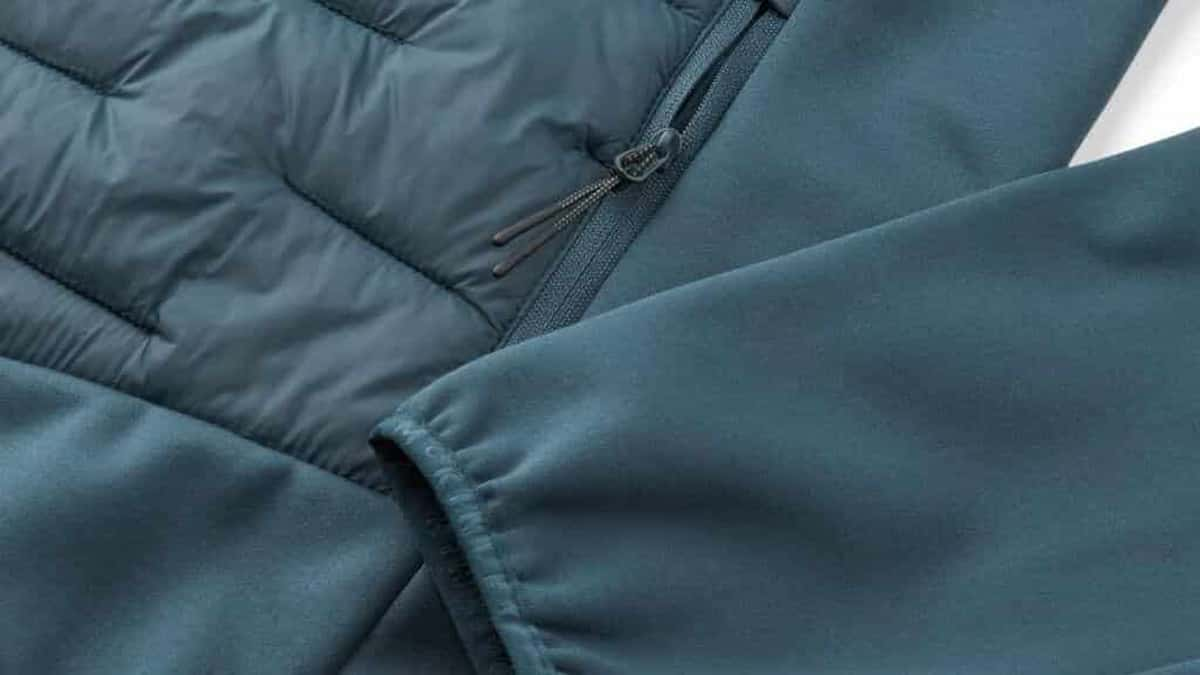
Different stretch and recovery: a stretch side panel pulls against a stable woven body and may create puckering.
Different thickness: padded panels create excess bulk at seams and intersections.
Different shrinkage: one fabric may relax or shrink more than its neighbor after washing.
Different surface and color: panels may differ in gloss, pilling, DWR response or color appearance.
Unapproved substitution: a change in GSM, coating, backing, stretch recovery or insulation can alter fit and sewing behavior.
Review the garment as one system rather than as a list of fabrics. Panel proportions should also be checked across the complete size range.
A hybrid jacket may combine woven shell fabric, knit fleece or rib, lining, zipper tape and sewing thread. These materials can react differently to washing, steam and heat.
Test each fabric and dye lot under the agreed wash, steam or finishing condition.
Record lengthwise and crosswise shrinkage for each material.
Pair fabrics by compatible shrinkage behavior where possible.
Confirm any pre-washing, steam setting or other pre-shrink process before bulk cutting.
Relax knit or elastic materials according to the material test and production trial.
Do not automatically apply one shrinkage allowance to every panel. A coated woven front, stretch sleeve and knitted side panel may need different pattern allowances based on the measured test result.
For panels that will be bonded, fused or heat pressed, confirm the actual production temperature, pressure and time through a preliminary trial before final cutting.
Use a suitable differential-feed or overlock setup when stretch knit joins stable woven fabric.
Confirm presser-foot pressure, stitch length and thread tension through a seam sample.
Do not stretch the knit into the seam during sewing.
Check puckering, seam alignment and seam allowance after pressing and washing.
If cut panels have not been sewn, stop the affected bundle and re-test or condition the material before trimming. If a panel is already too small, check whether the approved seam allowance allows a safe correction. If not, replace the panel.
Light puckering may improve with controlled steam finishing on the correct form. Severe distortion usually requires a construction review or replacement of the affected panel.
A panel map identifying every zone, seam and insulation boundary.
Grain direction and stretch direction for each relevant panel.
An insulation map showing type, location, weight or thickness and quilting layout.
A color standard for each panel, such as an approved lab dip.
The measurement method for each panel, including whether stretch panels are relaxed.
A material-substitution rule requiring written buyer approval.
The agreed wash, shrinkage, appearance and performance checks.
Check material transitions at every stage, not only on the finished jacket.
| Stage | What to check |
|---|---|
| First sample | Mobility, seam bulk, balance, panel alignment and appearance |
| Size set | Panel transitions, insulation distribution and measurements across sizes |
| Pre-production sample | Bulk-intended materials, labels, trims and packaging requirements |
| Incoming materials | Panel fabric, color, GSM, width, stretch and visible defects |
| Cutting | Panel labels, grain direction, stretch direction and insulation placement |
| Sewing | Seam allowance, puckering, alignment, skipped stitches and bulk at joins |
| Filling and quilting | Fill distribution, quilting spacing and compression |
| Final inspection | Measurements, workmanship, color, function and packing against the agreed inspection plan |
For related technical requirements, see Technical Outerwear Guide for OEM Buyers , Softshell Jacket Specifications for OEM Buyers and Quality Control Before Bulk Shipment .
Reference images, sketches or a tech pack.
A panel map showing the material and insulation by zone.
The base-size measurement chart and complete size range.
Fabric composition, GSM, stretch, finish and color targets.
The intended climate, activity and layering use.
Logo, label, zipper, trim and packaging requirements.
Quantity by size and color, target market and required testing.
Related product references: Custom Sherpa Fleece Hybrid Jacket , Custom Down Jackets and Custom Men's Puffer Jackets .
Discuss a Hybrid Jacket OEM Project
Send your panel layout, material ideas, insulation plan, size range, quantity and target use. RUINIU can review the construction route and confirm which details need sampling or testing before bulk production.
OEM and ODM Jacket Development · Request a Project Review · WhatsApp +86 189 2865 0351 · jacket3@ruiniufashion.com
A softshell is a type of fabric and jacket construction. A hybrid jacket combines different materials or insulation systems in planned zones. A hybrid jacket can include softshell panels at the sides or sleeves together with an insulated body.
It can, if the insulation map, fill specification, quilting plan, care method and sample approval are confirmed for the specific style.
No. Use different materials only when they solve a defined function such as mobility, warmth, abrasion resistance or weather protection.
Agree the test plan by project. It may include fit and measurements, panel appearance after washing, color comparison, seam workmanship and any waterproofing or breathability claim made for the garment.
Test each material and dye lot, record the results, relax knitted or elastic materials, match compatible materials and confirm the pattern allowance through a sewing and wash trial before bulk cutting.
Not without written approval. A change in GSM, coating, backing, stretch recovery or insulation can change fit, seams, appearance and care performance.