

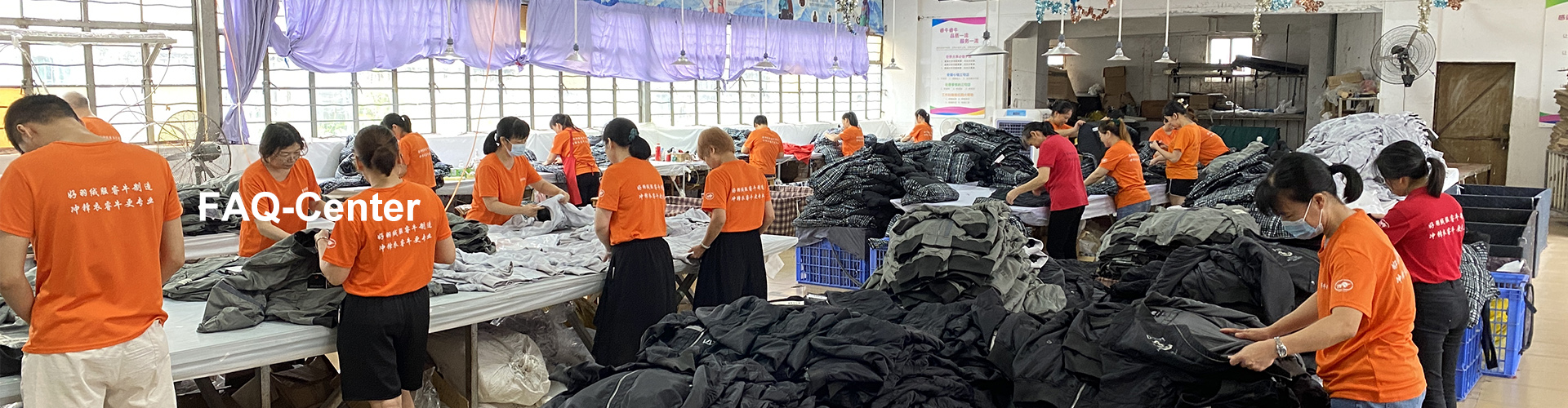
How Waterproof Jackets Are Made: OEM Manufacturing & Seam Sealing Guide
Introduction: How Professional Waterproof Jackets Are Built
A waterproof jacket is not defined by fabric alone. In professional outdoor apparel manufacturing, performance depends on a precise combination of fabric engineering, seam construction, hot-air sealing technology, and rigid quality control systems.
At RUINIU, we focus on technical outdoor apparel OEM production, including waterproof hardshells, softshell jackets, ski wear, and functional outerwear for global brands. This guide explains how waterproof jackets are made from an actual factory perspective—not marketing theory, but a real, battlefield-tested production workflow.
Technical Manufacturing Summary Overview
| Production Stage | Key Technology | Factory Control Points |
|---|---|---|
| Stage 1: Fabric Validation | 10K / 20K / 30K Waterproof Membranes | In-house Hydrostatic Head Testing |
| Stage 2: Precision Cutting | Automatic CNC Fabric Cutting Systems | Multi-layer Alignment Accuracy |
| Stage 3: Seam Sealing | Hot-Air Tape Lamination (300°C – 400°C) | Pressure Uniformity & Peel-Strength Check |
| Stage 4: Final QC Gate | AQL 2.5 Quality Inspection Standard | 100% Water-Leakage Batch Testing |
Phase 1: Technical Fabric Specification & Engineering Validation
Waterproof jacket manufacturing performance starts with fabric engineering. Before bulk production begins, every batch of incoming material must be evaluated based on rigorous technical specs:
Waterproof rating & Hydrostatic head test (mmH₂O validation)
Breathability rating (MVP / RET values)
Membrane structure (PU / TPU / PTFE laminations)
DWR coating performance (including eco-friendly PFAS-Free DWR updates)
RUINIU Factory Capability Overview: We don't just rely on standard fabric supplier datasheets. For every batch of 3-layer laminated or functional fabrics arriving at our warehouse, we conduct our own Hydrostatic Head Test using our in-house lab equipment to ensure the material strictly meets the 10K/20K standard before it ever touches the cutting table. Check our detailed Waterproof Fabric Guide (10K–30K Explained) to understand how we test fabric compatibility before mass assembly.
Phase 2: Custom Jacket Sample Development Process & Timeline
Sample development is the first real checkpoint in jacket manufacturing. This is where most complex OEM project decisions and production tolerances are finalized. A typical technical sample workflow includes:
Tech pack review & CAD pattern making
Shell and lining fabric precision cutting
Sewing assembly & seam sealing trial
Waterproof pressure testing & revision approval cycle
Sample Lead Time: Standard styles take 7–10 working days, while complex technical ski jackets or mountaineering outerwear require 10–15 days. Delays usually stem from raw fabric sourcing variations or design revisions from the brand.
Phase 3: Bulk Production & Technical Outerwear Assembly
Once counter-samples are approved, production moves into mass manufacturing. Unlike basic garment factories, technical outerwear requires high-level production line efficiency and multi-layer alignment accuracy. Key processes include:
Automatic CNC fabric cutting: Guarantees 100% dimensional accuracy across panels and prevents layered fabric distortion.
Skilled sewing assembly: Specialized heavy-duty machinery allocated by garment type for critical stress-point reinforcement.
In-line inspection: Monitoring tolerances throughout the stitch cycle.
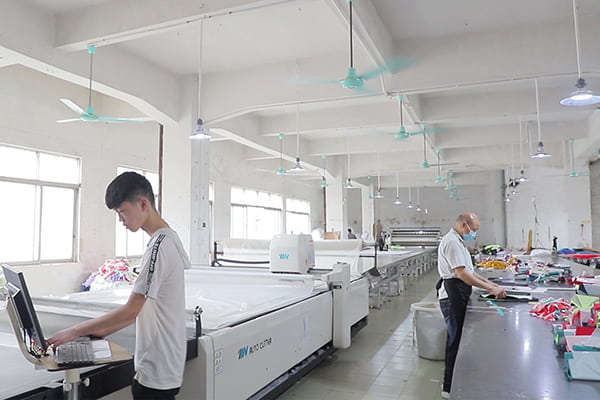
Phase 4: Seam Sealing Technology & Quality Control System
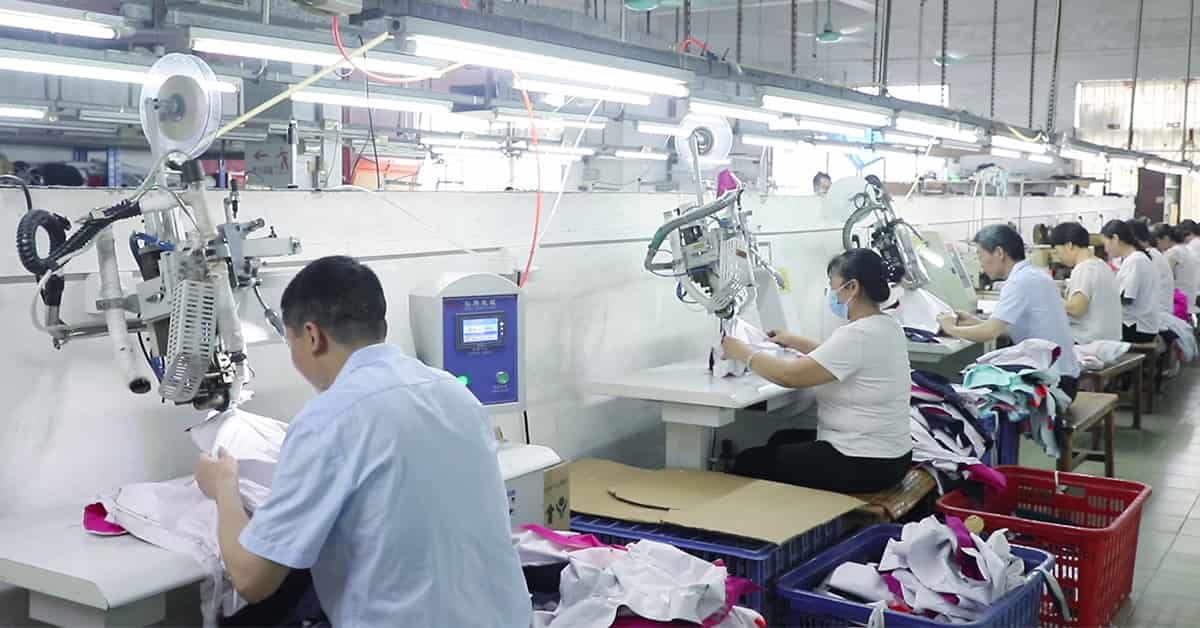
The seam sealing process is the core technology of waterproof jacket manufacturing. Without proper seam sealing, even high-end waterproof fabric will fail at the needle holes. At RUINIU, we treat seam tape peeling not as an unavoidable defect, but as a manageable process control issue.
1. Main Seam Sealing Methods
Hot-air seam sealing tape lamination
Ultrasonic bonding / welding systems
Laser-cut tape lamination systems
2. Factory-Controlled Parameters & Anti-Peeling Protocols
Temperature calibration: Machine temperature is calibrated daily between 300°C – 400°C based on whether the fabric uses a PU, TPU, or PTFE membrane to prevent fabric scorching or weak bonding.
Pressure uniformity testing: Uneven roller pressure leads to weak bonding areas on curved seams (like armpits and hoods). We utilize pressure-sensitive test strips and rely on operators with 5+ years of experience to monitor pneumatic control.
Batch waterproof testing: Random samples are continuously pulled and tested under water pressure to simulate extreme rain conditions, ensuring zero delamination risk during overseas transit or long-term retail display. Read our analysis on Softshell vs Hardshell Jacket Comparison.
Phase 5: Final Quality Control Gate (AQL 2.5 Standard)
Before retail packaging and container loading, every batch undergoes a strict quality gate review to secure the brand's reputation and reduce retail return rates in Europe and North America.
Waterproof performance testing (seam leakage evaluation)
Seam elongation and tensile strength inspection
Waterproof zipper smooth-function cycle testing
Stitching density review (SPI verification)
Our AQL 2.5 final inspection includes a mandatory 100% water-leakage check on randomly selected finished jackets from the production line using our hydrostatic pressure test lab. We put the jackets under continuous simulated heavy rain pressure to guarantee that not a single drop penetrates the critical sealed seams. Only products passing 100% of these verification stages are approved for export shipment.
Why This Manufacturing Process Matters for Brands
For outdoor apparel brands, especially in Europe and North America, waterproof jacket quality directly impacts:
Brand reputation and retail market positioning
Retail return rates (reducing costly warranty claims)
Outdoor performance reliability in life-critical mountain environments
Long-term customer trust and brand loyalty
That is why rigorous OEM manufacturing control is not optional—it is the foundation of your supply chain.
For new fashion startups or established technical outerwear brands looking for a reliable, verified supply chain partner in China, discovering a verified production site is critical. Learn more in our comprehensive guide on How to Find Clothing Manufacturers in China.
Ready to Develop Your Next Technical Outdoor Jacket Project?
For new fashion startups or established technical outerwear brands looking for a reliable, verified OEM/ODM supply chain partner in China, RUINIU provides transparent, factory-direct manufacturing solutions.
Low MOQ: Starting from 100 pcs per style
Fast Sampling: Technical prototypes ready in 7-10 days
Compliance: PFAS-Free DWR, GRS, and OEKO-TEX certified fabric sourcing
Get Your Custom Sample Plan & OEM Quote Today
Conclusion
Waterproof jacket manufacturing is a system of engineering precision, not simple garment production. From initial fabric selection and membrane validation to hot-air seam sealing parameters and final AQL inspection, every single millimeter determines how the product performs in real, harsh outdoor conditions. At RUINIU, we focus on stable, transparent OEM & ODM production for global outdoor brands requiring high-technical outerwear manufacturer standards.