
+86 18928650351
jacket3@ruiniufashion.com
EN
Frequently Asked Questions

Softshell vs Hardshell Jacket Guide | OEM Factory China

Jun 27,2026 9

Softshell vs Hardshell Jacket: Complete OEM Technical Guide for Outdoor Jacket Brands

Introduction

Softshell and hardshell jackets are often compared in retail product catalogs, but on a real OEM factory floor, they are engineered on completely different manufacturing systems.

At RUINIU, we manufacture both apparel profiles for global technical outerwear brands, covering professional ski wear, heavy-duty hiking gear, and alpine outerwear. The key operational difference isn't the design aesthetic—it is the underlying fabric structure, the waterproof sealing framework, and hot-air welding capabilities.

What Are Softshell Jackets Made Of? (Material Engineering View)

Softshell garments utilize flexible, composite, multi-layer fabrics designed primarily for active mobility, stretch comfort, and high thermal breathability.

Typical Material Structure:

  • Outer Layer: Woven polyester or nylon blended with spandex for multi-directional stretch.

  • Middle Layer: Highly breathable, windproof stretch membrane (TPU or hydrophilic PU membrane optional).

  • Inner Backing: Brushed fleece or micro-grid fleece for warmth retention.

Factory Production Insight

Softshell composite fabrics behave with high elasticity during mass production, introducing specific constraints:

  • Elastic Tension Control: Fabric must rest after unrolling to prevent panel shrinkage and ensure CNC cutting precision.

  • Dynamic SPI Calibration: Stitches per inch must be dynamically balanced with stretch threads to prevent seam cracking under active stress.

  • Seam Sealing Limitation: Traditional hot-air tape lamination is rarely applied fully because fabric elasticity reduces tape bonding permanence.

The Factory Verdict: Softshell is mechanically optimized for ergonomic movement and windproof breathability, not extreme hydrostatic waterproofing.

What Is a Hardshell Jacket? (Waterproof Engineering System)

A hardshell jacket is not just a garment; it is a rigid, multi-layered waterproof protective armor system engineered to withstand prolonged high-pressure downpours.

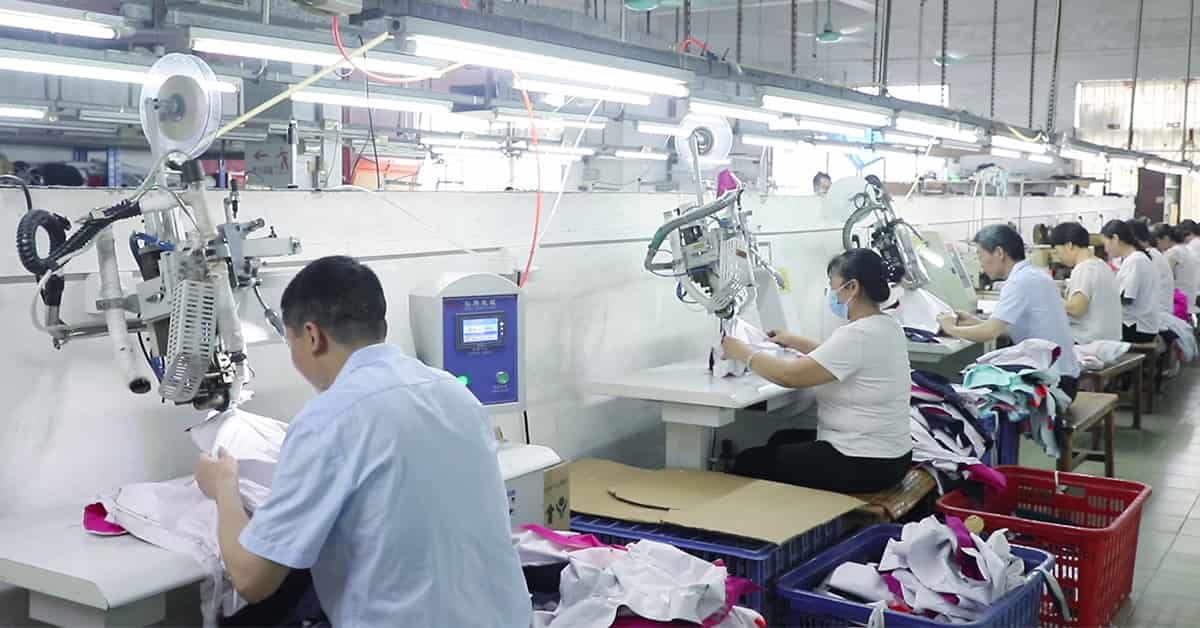
Calibrated hot air seam sealing production line for technical hardshell jackets at RUINIU factory

Typical Material Structure:

  • 2-Layer (2L): Outer face fabric laminated to a waterproof membrane, protected by an independent drop-mesh lining.

  • 2.5-Layer (2.5L): Outer shell + membrane + a printed raised pattern on the inside to protect the membrane without a heavy lining.

  • 3-Layer (3L): High-density face fabric + high-performance membrane (PU, TPU, or PTFE) + a protective tricot knit lining mesh fused into a single solid textile asset.

Factory Production Reality

Hardshell processing is highly demanding and intolerant of manufacturing drift:

  • 100% Seam Sealing Coverage: Every single stitch line, pocket attachment, and hood panel intersection must be completely waterproofed.

  • Thermal Bonding Precision: Hot-air tape welding requires exact temperature mapping (300°C – 400°C) synchronized with the specific melting window of the inner lining.

  • Rigid Hydrostatic Quality Checks: Every mass-produced batch must undergo mandatory hydrostatic panel stress verification before leaving the workshop floor.

Softshell vs Hardshell Jacket (Factory Technical Blueprint)

Structural FeatureSoftshell ManufacturingHardshell Manufacturing
Waterproof RatingWater-resistant (DWR coating only)Fully waterproof (10,000 mm - 30,000 mmH₂O)
Breathability VectorExceptionally high active CFM airflowControlled MVTR moisture vapor transmission
Fabric Hand-FeelFlexible, silent stretch compositeRigid, structured multi-layer laminate
Seam Sealing RequirementPartial reinforcement on critical seams100% full panel hot-air tape sealing
Production ComplexityMedium (Requires tension-controlled stitching)High (Requires advanced hot-air lamination lines)
Primary Commercial UseActive lifestyle, urban transit, corporate gearSkiing, alpine mountaineering, extreme weather protection

OEM Manufacturing Process: How They Are Built

Softshell Production Flow Line

  • Step 1: Elastic fabric relaxation and tension stabilization before pattern marking.

  • Step 2: Specialized stretch stitching (utilizing flatlock, overlock, or coverstitch configurations).

  • Step 3: Structural edge-binding and localized water-resistant structural reinforcement.

  • Step 4: Integrated assembly with brushed fleece linings or bonding trims.

Hardshell Production Flow Line

  • Step 1: Raw Material Lamination → Fusing the face fabric, high-performance waterproof membrane, and inner tricot securely.

  • Step 2: CNC Laser/Die Cutting → High-precision computerized panel trimming to guarantee seamless matching during tape welding.

  • CNC high precision fabric laser cutting machine panel alignment inside clothing factory in China
  • Step 3: Sewing Structural Assembly → Needle path optimization with strict micro-needle profiles to minimize perforation damage.

  • Step 4: Hot-Air Seam Sealing (The Core Process) → Advanced application of specialized waterproof tape over all interior seam allowances using calibrated temperature and pressure. Run speeds are drastically reduced around complex curved geometries (like underarms and hoods).

  • Step 5: Hydrostatic Testing QA → Random batch testing on finished seams to verify real-world pressure tolerances.

Why Softshell Cannot Mechanically Replace Hardshell

From a strict clothing engineering standpoint, softshell constructions cannot replace hardshell performance in extreme alpine environments.

Because stretch fabrics flex dynamically under movement, the internal seam tape is subjected to continuous mechanical shearing forces. Under high-pressure rainstorms, the elastic backing will inevitably experience microscopic tape shifting, leading to seam delamination. This is why professional mountaineering and professional ski wear brands always rely on a rigid hardshell baseline.

Sourcing Logic: When to Develop Softshell vs Hardshell

Develop Softshell If Your Collection Targets:

  • Urban outdoor lifestyle and premium corporate identity jackets.

  • Mild-weather travel apparel, trail running, or early-autumn cross-country hiking lines.

  • Market segments where stretch comfort and silent mobility take precedence over rain storm thresholds.

Develop Hardshell If Your Collection Targets:

  • Technical winter skiwear, snowboarding apparel, and alpine mountaineering gear.

  • High-performance workwear or safety gear intended for heavy, prolonged rain exposure.

  • Premium collections where technical certification labels (20K/20K waterproof/breathable benchmarks) drive marketing value.

OEM Commercial Advice: Most globally successful apparel brands do not choose between them; they build an integrated layering system, launching both profiles concurrently to optimize brand scaling and target different price tiers.

Related OEM Technical Production Guides

To maximize your outerwear line development, review our accompanying technical factory documentation:

Work Directly with RUINIU OEM Jacket Factory

At RUINIU, we bridge the gap between complex apparel engineering drawings and dependable, high-yield mass production shipments.

Our On-Site Factory Capabilities Include:

  • Advanced automated hot-air seam-sealing machinery with real-time temperature curve locking.

  • In-house technical hydrostatic pressure laboratory verification.

  • Fast-track prototype production: Full pattern and technical sample development within 7 to 10 working days once materials are verified.

Ready to benchmark your new technical outdoor line? Contact our engineering staff today to map out your technical material specifications and secure a direct factory manufacturing estimate.

Frequently Asked Questions (FAQ)

Q1: What is the main structural difference between softshell and hardshell jackets?

The core difference lies in the fabric construction and seam execution. Softshell jackets are built using flexible, stretch-woven composite fabrics with brushed fleece linings focused on comfort and wind resistance. Hardshell jackets feature rigid, laminated multi-layer fabrics (2L, 2.5L, or 3L) and a fully seam-sealed interior system engineered for absolute waterproof protection.

Q2: Can a softshell jacket be fully waterproofed?

No, true softshell garments are highly water-resistant but not completely waterproof. Because softshell materials are elastic, applying full hot-air seam tape lines across high-stretch panels leads to tape delamination over time. Softshell jackets are optimized for light rain and heavy breathability, while hardshells are meant for absolute storm proofing.

Q3: Why is hardshell jacket production more expensive than softshell?

Hardshell manufacturing requires high-density laminated fabrics and specialized technical processes, including high-precision CNC laser trimming and 100% full hot-air seam sealing tape execution. The technical machinery needed, slower machine run times on curved panel geometries, and strict hydrostatic batch quality testing add to the overall manufacturing complexity and cost.

Q4: How do I choose between softshell and hardshell for my upcoming brand line?

If your brand focuses on active urban wear, casual hiking, or corporate promotional apparel, start with a flexible softshell jacket due to its fast market turnover and popular wearability. If you are positioning your brand within the technical winter sports, skiing, or mountaineering market, high-performance hardshell apparel is a mandatory core asset.

Conclusion

Softshell and hardshell jackets serve distinct functional and commercial roles in outdoor apparel manufacturing. Softshell designs prioritize stretch, breathability, and daily active comfort for mild outdoor scenarios, while hardshell laminated systems deliver reliable, long-lasting waterproof protection for extreme weather and professional outdoor activities.

Understanding their differences in fabric structure, production difficulty, and performance thresholds helps outdoor brands formulate targeted product lines, control production costs, and match market positioning accurately. As a professional OEM outdoor jacket manufacturer, RUINIU provides customized softshell and hardshell production solutions for global brands with standardized production processes and strict batch quality control.

OEM jacket manufacturer China , OEM outdoor jacket factory , outdoor jacket factory , softshell vs hardshell jacket ,

Related news

Your Name
Email Address
Your Message
As a collection of clothing design, production and service in one professional garment enterprise, Ruiniu Garment’s mission:To deliver premium quality apparel, achieve win-win growth with partners, and contribute to smart, comfortable clothing for all.

Quick Contact

  • Address3rd Floor, Xiyueqijian Complex Building,Leigang Community, Guicheng Subdistrict,Nanhai District Foshan,Guangdong,China
  • Phone+86 18928650351
  • Emailjacket3@ruiniufashion.com
  • WhatsApp+86 18928650351
© 2024 Foshan Ruiniu Clothing Co.,Ltd. All Rights Reserved. Privacy Terms & Conditions Sitemap
  • Address3rd Floor, Xiyueqijian Complex Building,Leigang Community, Guicheng Subdistrict,Nanhai District Foshan,Guangdong,China
  • Phone+86 18928650351
  • Emailjacket3@ruiniufashion.com
  • WhatsApp+86 18928650351
© 2024 Foshan Ruiniu Clothing Co.,Ltd. All Rights Reserved.
WhatsApp
Email
Inquire
TOP