
By Iris Jiang, QC at RUINIU | Published October 23, 2026| Published October 23, 2026
Use a waterproof zipper when the opening itself must be sealed. For many outdoor jackets, a water resistant or even a standard zipper covered by a storm flap and a top garage, with sealed surrounding seams, is the practical choice. Select the zipper according to the jacket's water-resistance claim, weight target, price target and front construction. Always specify the zipper type, brand or series, color and applicable test method. The word "waterproof" alone is not a complete specification.
"Waterproof zipper" on a tech pack can refer to several zipper constructions with different performance and cost levels. A factory may read it as a coated reverse-coil zipper while a buyer expects a sealed zipper. The difference affects the sample, the front pattern and the final water-resistance result.
This guide compares the common zipper levels and gives wording you can place directly in an outdoor jacket specification.
In this guide
In short, a water resistant zipper sheds light rain, while a waterproof zipper is built to seal the opening. Zipper suppliers describe their series in the same way. For example, YKK explains its AquaGuard coated zippers as water resistant and its AQUASEAL series as waterproof. See the YKK explanation of water resistant vs waterproof zippers.
Level | How it keeps water out | Common applications | Trade-off |
|---|---|---|---|
Standard | Standard coil, molded-tooth or metal zipper with no water-protective treatment. Protection comes from a storm flap or zipper garage. | Fleece, down jackets, casual outerwear and many windbreakers | Lowest cost and weight. The opening needs cover when rain protection matters. |
DWR-treated | Coil or molded-tooth zipper whose tape carries a durable water repellent finish, so water beads on the tape. | Softshells, light shells and pockets | Repels light moisture, but the teeth, slider and ends are not sealed. |
Water resistant (PU-coated) | Polyurethane film on the back of the zipper tape, often with the coil turned to the back so the face looks like a flat strip. | Shell jackets, pockets and packs | Sheds rain well, but the slider, ends and teeth can still let moisture through. The tape is stiffer and does not bend tightly. |
Waterproof (sealed) | Laminated tape combined with a sealing construction intended to close the opening itself. | Hardshell fronts, ski shells, waders and drysuits | Usually heavier, stiffer and more expensive. The pattern and seam construction must be designed around it. |
A series name alone is not enough for approval. Request the supplier's applicable test method and report, and confirm that the selected zipper matches the shell fabric and the jacket's intended use.
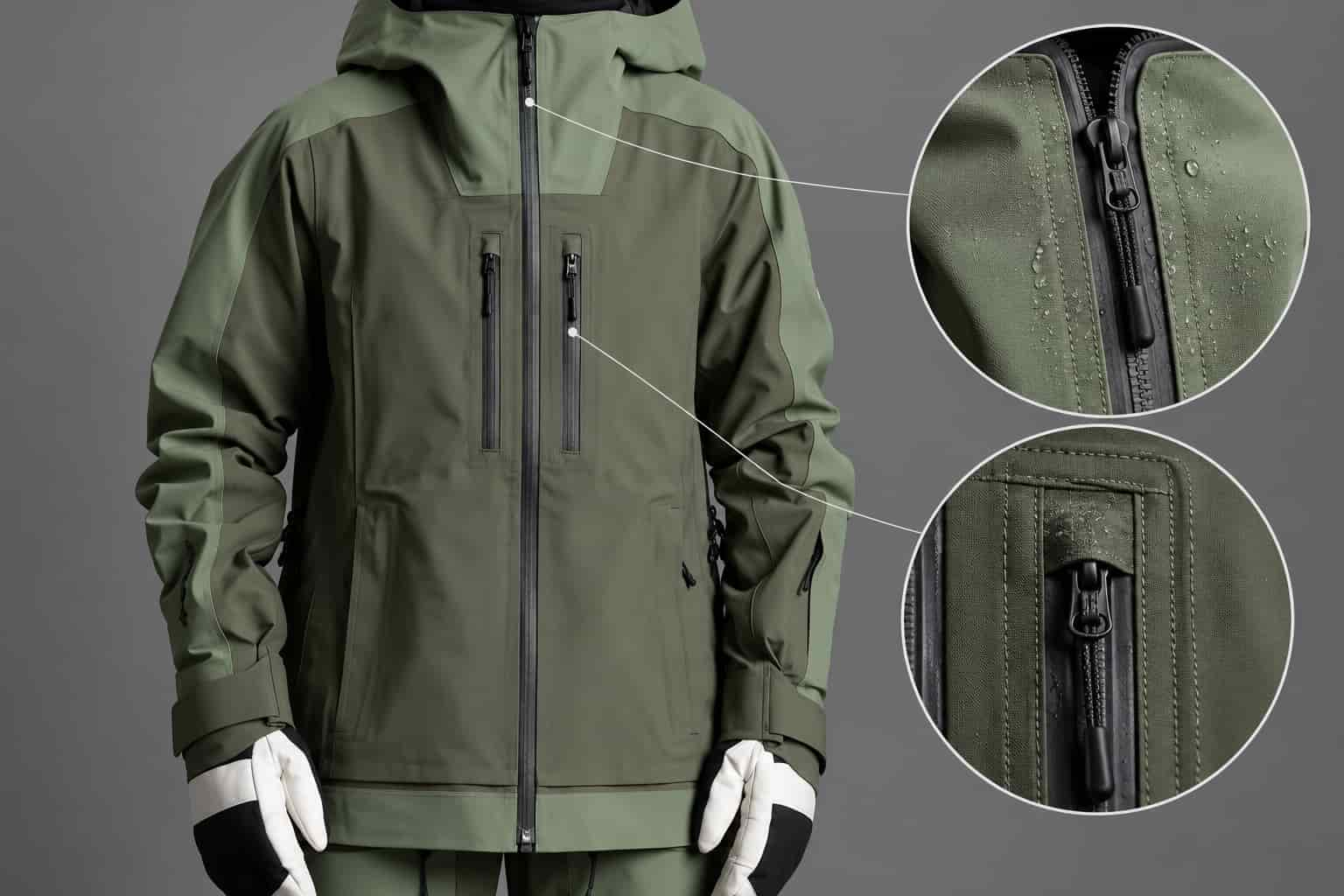
The zipper has to work with the surrounding seams. It may be sewn and taped into the front or bonded to a compatible coated fabric. If the seams around it remain open, water can enter beside the zipper even when the zipper itself is sealed. Our waterproof jacket OEM and seam sealing guide explains how the seams are handled.
Stiffer tape also changes the drape of the placket and collar. The slider may run with more drag, especially in cold weather or when the wearer is using gloves. That movement should be checked on a physical sample.
The pattern is built around the zipper. The garage, chin guard and placket allowance are cut to suit its size and shape, so a late substitution may require pattern and sample changes.
Waterproof zippers are specialist components. Confirm availability, minimum order requirements and supplier lead time before cutting the sample. On a lightweight packable jacket, both cost and added weight can affect the final product decision.
Care and aging also matter. Some PU-coated zipper makers advise against tumble drying and note that long exposure to heat, humidity and sunlight can yellow the film, and repeated bending can make it cloudy. Check the zipper supplier's end-use instructions before writing the care label.
Five questions decide the zipper choice:
Is the jacket sold as waterproof? The front must either use a sealed waterproof zipper, or be covered by a storm flap and top garage with sealed surrounding seams. An uncovered standard coil zipper does not support a waterproof claim.
Will there be a storm flap? With a flap and a garage at the top, a water resistant zipper may provide the required protection at lower cost and weight.
What are the weight and price targets? Using waterproof zippers on every opening adds cost and weight. Many designs seal the main front while using water resistant or standard zippers on selected pockets.
Who will wear the jacket? Ski and mountain users operate zippers with gloves and notice slider stiffness quickly. Lifestyle and commuter buyers may place more emphasis on appearance and smooth operation.
What will the retailer or laboratory test? Confirm whether the finished-jacket test includes the zipper area, front seams and pocket openings.
Writing "waterproof zipper" without a brand, series or test method.
Assuming a reverse-coil zipper is waterproof because it has a coated appearance.
Using a waterproof zipper in a jacket whose surrounding seams are not sealed.
Approving one zipper on the sample and switching to a cheaper "equivalent" with a different tape or slider during bulk production. See why outdoor jacket samples pass but bulk production fails.
The specification should name the component and the approval documents the factory must provide. Fill in the fields below and delete any that do not apply to your design.
Field | What to write |
|---|---|
Zipper level | Waterproof, water resistant or standard, as defined in this guide. |
Brand and series | As named in the approved trim card. |
Size and end type | For example size and open-end or closed-end, one-way or two-way. |
Tape color | Matched to the approved shell swatch. |
Slider and puller | Slider type that matches the zipper series, puller according to artwork. |
Required documents | Supplier test report and test method, provided before bulk approval. |
Change control | Any change of brand, series or supplier requires written approval. |
Example wording
Front zipper: waterproof type, open-end, one-way; brand and series as named in the approved trim card; length by size according to the measurement chart; tape color matched to the approved shell swatch; branded puller according to artwork. Supplier test report and test method required before bulk approval. Any change of brand, series or supplier requires written approval.
Approve a physical zipper on the sample before bulk production. The jacket sample approval guide lists the risks to check at that stage.
Zipper test reports also belong in the supplier file that brands keep for the European market. See our EU Digital Product Passport supplier data guide.
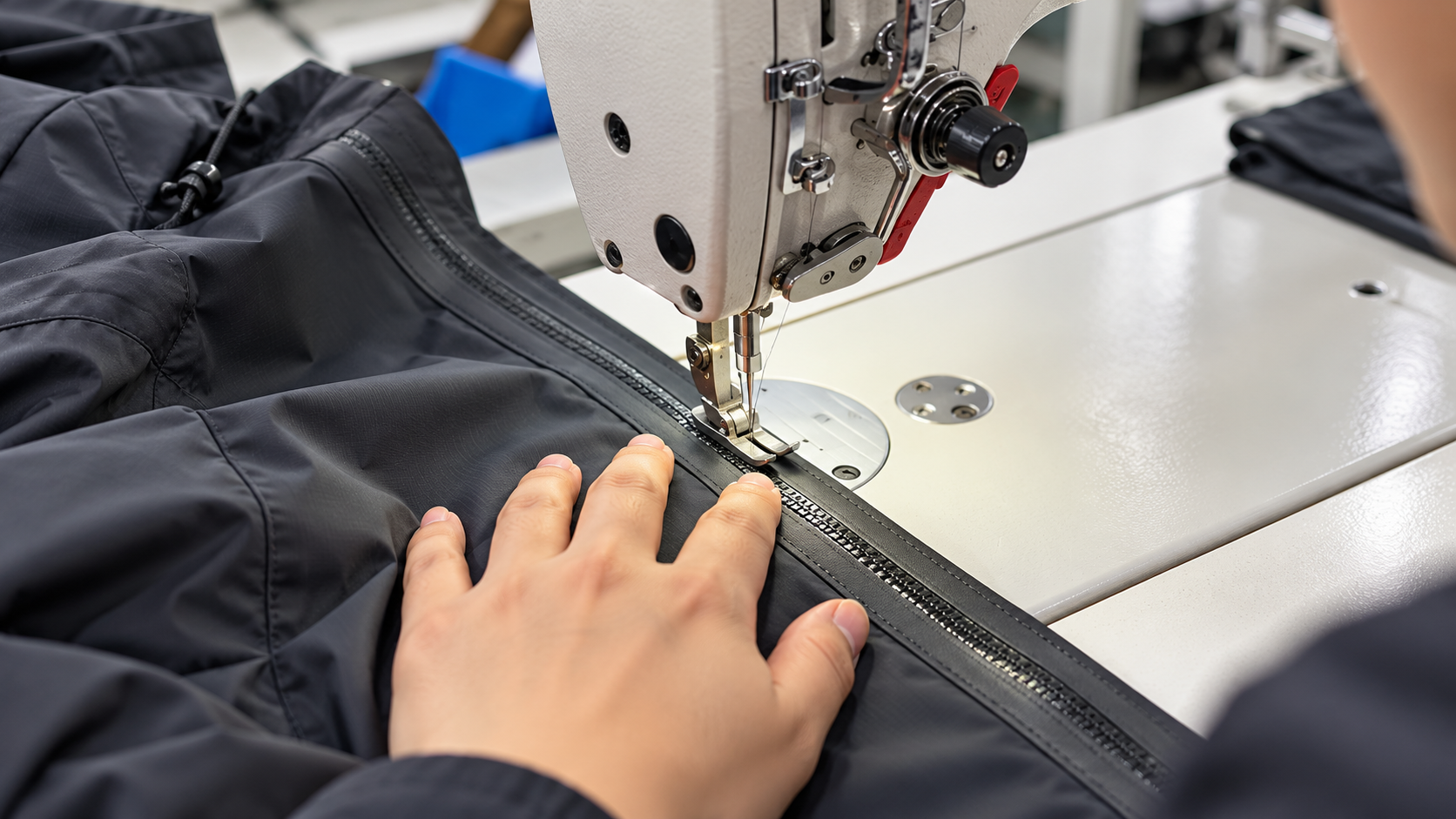
Before quotation, RUINIU reviews the zipper level, front construction, shell fabric and sampling requirements together, because the zipper cannot be judged on its own. At final inspection, zipper operation is checked on the sampled pieces, together with tape alignment and the surrounding construction, against the approved sample. The inspection points used after sampling are described on our quality control page, and the sampling rules are explained in our AQL and final inspection guide.
For product-specific construction references, see our custom waterproof jackets and custom ski suits. To see what we need to quote your project, read what information an outdoor jacket factory needs for an OEM quote.
A water resistant zipper uses coated or treated tape to shed light rain, but its teeth, slider and ends are not sealed. A waterproof zipper uses laminated tape and a sealing construction intended to close the opening, and it is usually heavier, stiffer and more expensive. Ask the supplier for the test method and report for the exact series you plan to use.
Not automatically. A coated reverse-coil zipper may shed rain, but the slider, ends and teeth can still allow moisture through. Shell jackets often add a storm flap or place the slider in a garage.
Yes, when the front is designed to cover it with a storm flap, a top garage and sealed surrounding seams. Without that protection, a standard zipper does not support a waterproof claim.
Not always. Some designs use a waterproof zipper without a flap, while others keep a flap for wind protection or appearance. Decide this at the pattern stage.
Usually, yes. The sealed tape is stiffer and the slider may require more force, particularly in cold conditions or with gloves. Approve a physical zipper sample before bulk production.
Some coated zipper constructions may be bonded or welded to compatible coated fabrics. The result depends on the zipper specification, shell material and available factory equipment, so it must be confirmed during sampling.
Send the jacket category, front design, target market and tech pack or reference jacket. RUINIU can review zipper, front construction, shell fabric and sampling requirements before quotation.
Waterproof Jacket OEM and Seam Sealing GuideJacket Sample Approval 6 RisksInformation Needed for an OEM QuoteCustom waterproof jackets
Zipper series, construction and test results vary by supplier. Confirm specifications against the zipper supplier's current documentation. Reviewed October 2026.